Hospital of Stomatology, Guanghua School of Stomatology, Guangdong Provincial Key Laboratory of Stomatology, Sun Yat-Sen University, Guangzhou, China.
Stomatology Center, Shenzhen People's Hospital, The Second Clinical Medical College of Jinan University, The First Affiliated Hospital of Southern University of Science and Technology, Shenzhen, China.
Front Cell Infect Microbiol. 2020 Dec 23;10:584798. doi: 10.3389/fcimb.2020.584798. eCollection 2020.
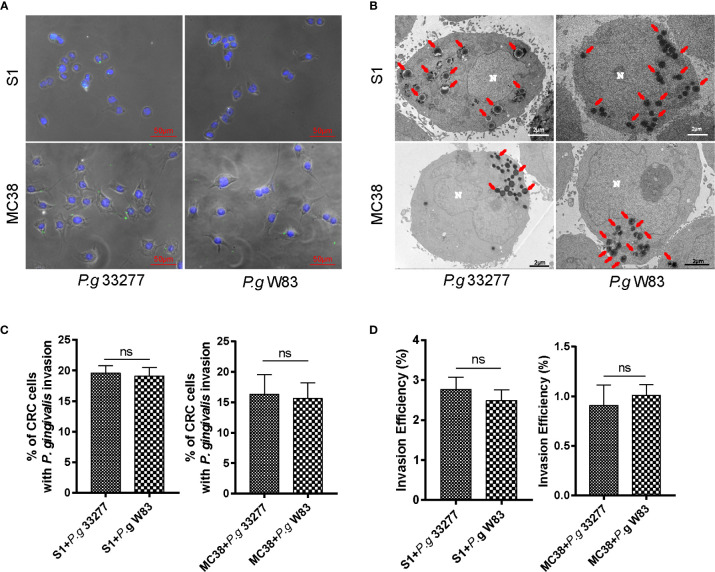
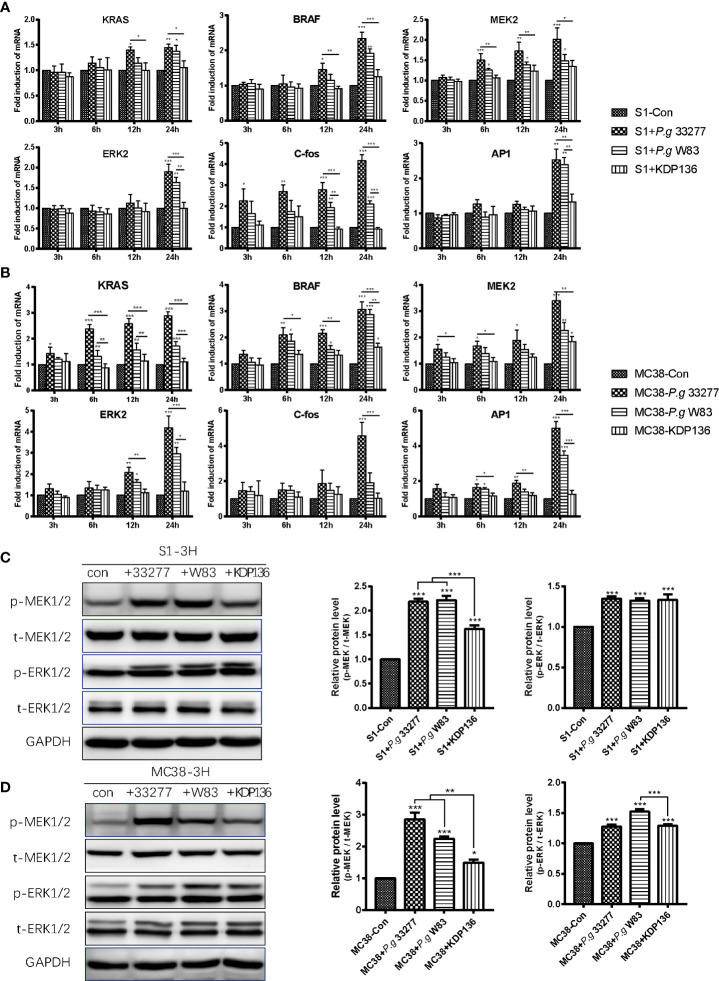
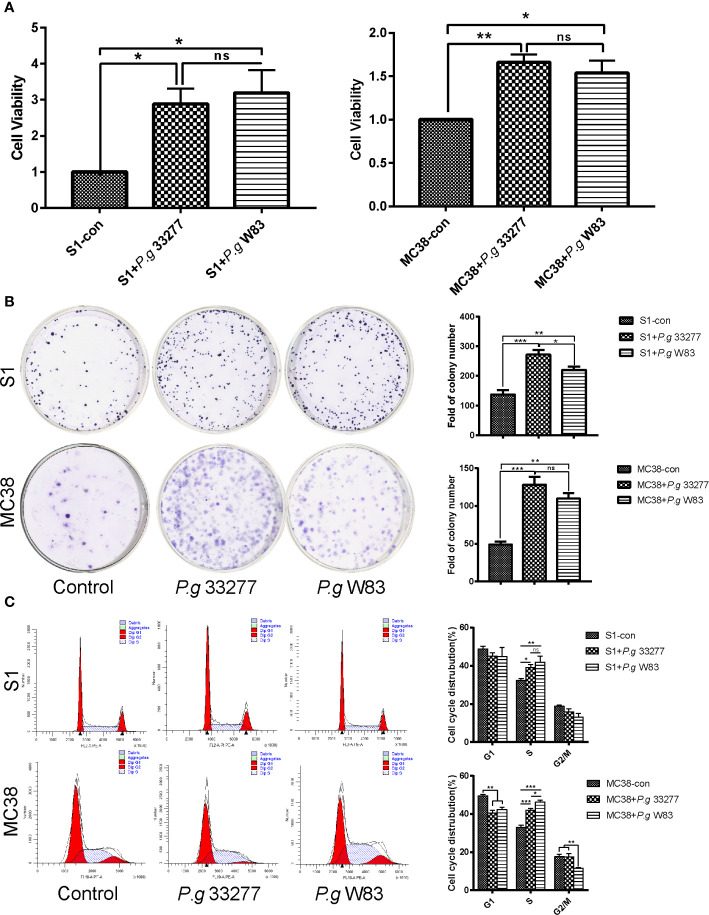
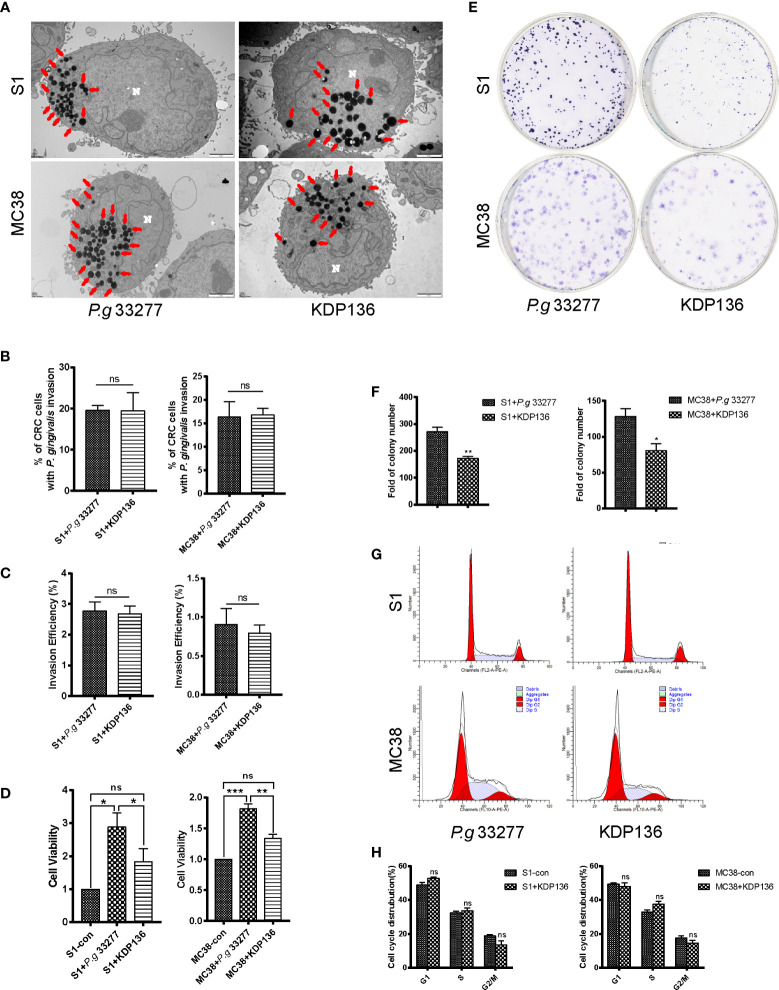
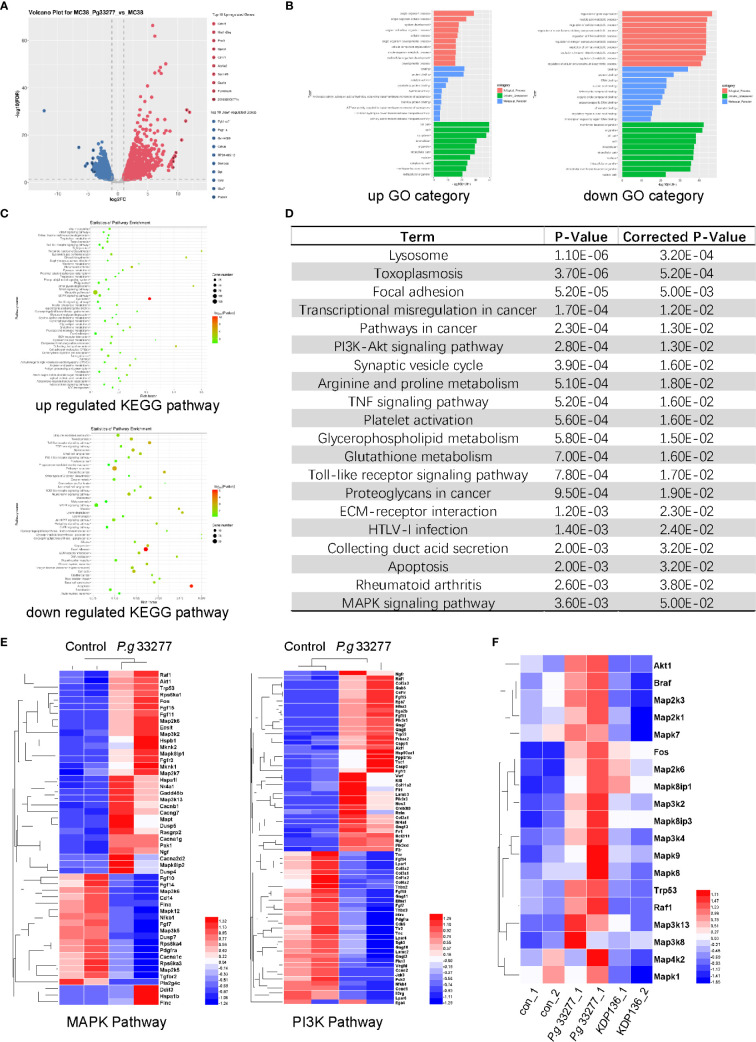
() is a keystone pathogen in periodontitis. However, several clinical studies have revealed an enrichment of in the stool samples and colorectal mucosa of colorectal cancer patients. Thus, the goal of this study was to determine whether can promote colorectal cancer progression . We established an acute infection model (24 h, multiplicity of infection =100) of invasion of colorectal cancer cells to study the alterations induced by in the proliferation and cell cycle of colorectal cancer cells. We observed that can adhere and invade host cells a few hours after infection. Once invaded, significantly promoted colorectal cancer cell proliferation, and the percentage of S phase cells was increased in the cell cycle assay. However, KDP136, a gingipain-deficient mutant of 33277, showed a decreased ability to promote colorectal cancer cell proliferation, indicating that gingipain is associated with colorectal cancer cell proliferation. Furthermore, we extracted RNA from colorectal cancer cells for high-throughput sequencing analysis and reconfirmed the results by quantitative polymerase chain reaction and western blot analyses. The results suggested that the MAPK/ERK signaling pathway is significantly activated by , while these changes were not observed for KDP136. In conclusion, can invade cells and promote the proliferation of colorectal cancer cells by activating the MAPK/ERK signaling pathway. Gingipain is an essential virulence factor in this interaction.
牙龈卟啉单胞菌是牙周炎的关键病原体。然而,几项临床研究表明,结直肠癌患者的粪便样本和结直肠黏膜中富含牙龈卟啉单胞菌。因此,本研究旨在确定牙龈卟啉单胞菌是否可以促进结直肠癌细胞的进展。我们建立了牙龈卟啉单胞菌急性感染结直肠癌细胞的模型(24 小时,感染复数=100),以研究感染后牙龈卟啉单胞菌对结直肠癌细胞增殖和细胞周期的影响。我们观察到,感染后几个小时,牙龈卟啉单胞菌就能黏附和侵袭宿主细胞。一旦侵袭,牙龈卟啉单胞菌能显著促进结直肠癌细胞的增殖,细胞周期检测中 S 期细胞的比例增加。然而,33277 的牙龈卟啉单胞菌缺乏金葡菌蛋白酶缺陷突变体 KDP136 促进结直肠癌细胞增殖的能力降低,表明金葡菌蛋白酶与结直肠癌细胞增殖有关。此外,我们从结直肠癌细胞中提取 RNA 进行高通量测序分析,并通过定量聚合酶链反应和 Western blot 分析进一步验证了结果。结果表明,MAPK/ERK 信号通路被牙龈卟啉单胞菌显著激活,而 KDP136 则没有观察到这些变化。总之,牙龈卟啉单胞菌可以通过激活 MAPK/ERK 信号通路入侵细胞并促进结直肠癌细胞的增殖。金葡菌蛋白酶是这种相互作用中的一个重要毒力因子。