Department of Neurology, MS Center and Neuro-ophthalmology Expertise Center, Amsterdam Neuroscience, Amsterdam UMC, Vrije Universiteit Amsterdam, Amsterdam, The Netherlands.
Department of Ophthalmology, Neuro-ophthalmology Expertise Center, Amsterdam Neuroscience, Amsterdam UMC, Vrije Universiteit Amsterdam, Amsterdam, The Netherlands.
Eur J Neurol. 2021 May;28(5):1617-1626. doi: 10.1111/ene.14723. Epub 2021 Feb 8.
The clinico-radiological paradox in multiple sclerosis (MS) is well recognized, relevant and yet poorly understood. The suitability of an in vivo model for the clinico-radiological paradox was tested, using internuclear ophthalmoplegia (INO) and the medial longitudinal fasciculus (MLF).
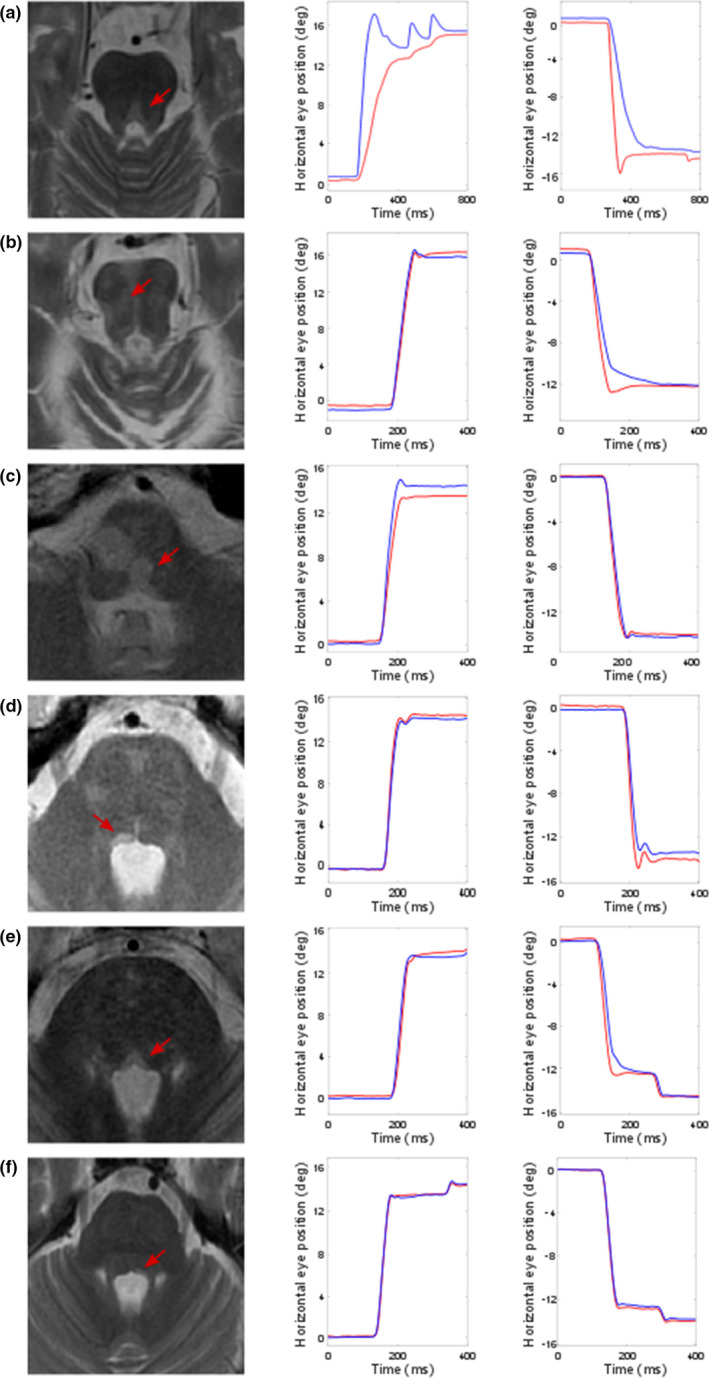
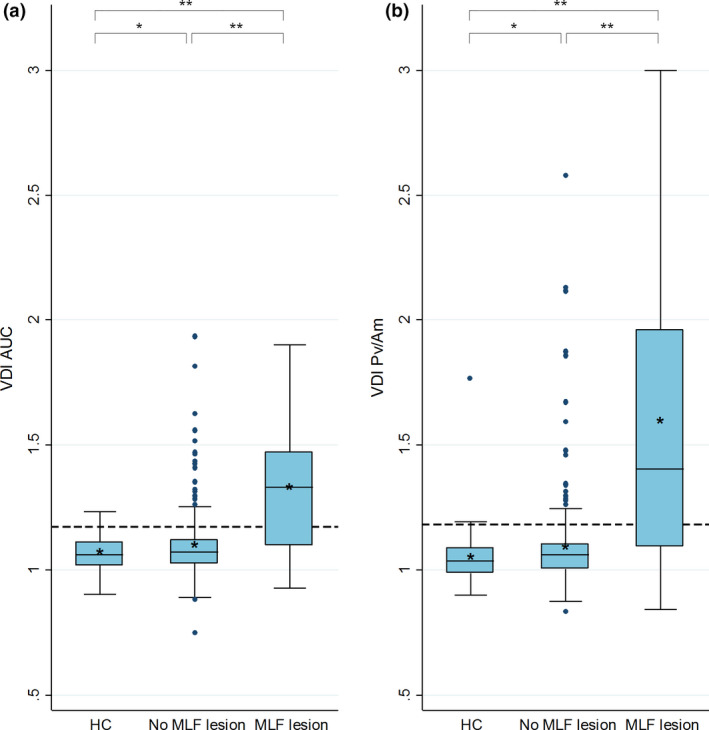
In this cross-sectional study lesions of the MLF were rated by an experienced MS neuroradiologist blinded to all other information. The presence of an INO was objectively determined by a validated infrared oculography protocol (DEMoNS). Clinical information, including the National Eye Institute Visual Function Questionnaire, was obtained.
This study included 202 patients with MS. The clinico-radiological paradox occurred in 50 patients (25%). This consisted of 45 patients having an INO without an MLF lesion and five patients with an MLF lesion but without an INO. The visual function overall score was related to the presence of an INO (p = 0.016), but not to MLF lesions seen on magnetic resonance imaging (MRI) (p = 0.207). A consensus list of potential causes for the clinico-radiological paradox was compiled and the MRI images were deposited in a repository.
This study provides an objective and quantitative model to investigate the clinico-radiological paradox. Our data suggest that pathology of the MLF is more frequently detected and more clinically relevant by infrared oculography than by MLF lesion rating on MRI.
多发性硬化症(MS)的临床-影像学悖论是公认的、相关的,但理解不足。本研究通过核间性眼肌麻痹(INO)和内侧纵束(MLF)来测试体内模型对临床-影像学悖论的适用性。
本横断面研究由一位经验丰富的 MS 神经放射科医生对 MLF 病变进行评分,该医生对所有其他信息均不知情。通过经过验证的红外眼动图协议(DEMoNS)客观确定 INO 的存在。获取临床信息,包括美国国立眼科研究所视觉功能问卷。
本研究纳入了 202 例 MS 患者。50 例(25%)患者存在临床-影像学悖论。具体表现为 45 例患者存在 INO 但无 MLF 病变,5 例患者存在 MLF 病变但无 INO。总体视觉功能评分与 INO 的存在相关(p=0.016),但与 MRI 上观察到的 MLF 病变无关(p=0.207)。我们编制了一份潜在临床-影像学悖论原因的共识清单,并将 MRI 图像存入存储库。
本研究提供了一种客观、定量的方法来研究临床-影像学悖论。我们的数据表明,与 MRI 上 MLF 病变评分相比,红外眼动图更能经常检测到 MLF 的病理学改变,且更具有临床相关性。