Pellegrino Rossella, Thavamani Abhishek, Calvisi Diego F, Budczies Jan, Neumann Ariane, Geffers Robert, Kroemer Jasmin, Greule Damaris, Schirmacher Peter, Nordheim Alfred, Longerich Thomas
Institute of Pathology, University Hospital Heidelberg, 69120 Heidelberg, Germany.
Department for Molecular Biology, Interfaculty Institute of Cell Biology, University of Tuebingen, 72074 Tuebingen, Germany.
Cancers (Basel). 2021 Jan 8;13(2):199. doi: 10.3390/cancers13020199.
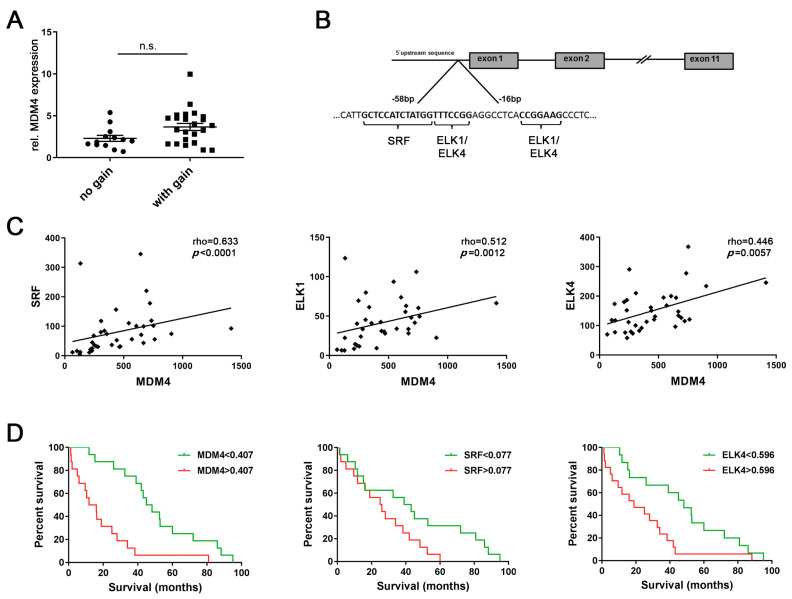
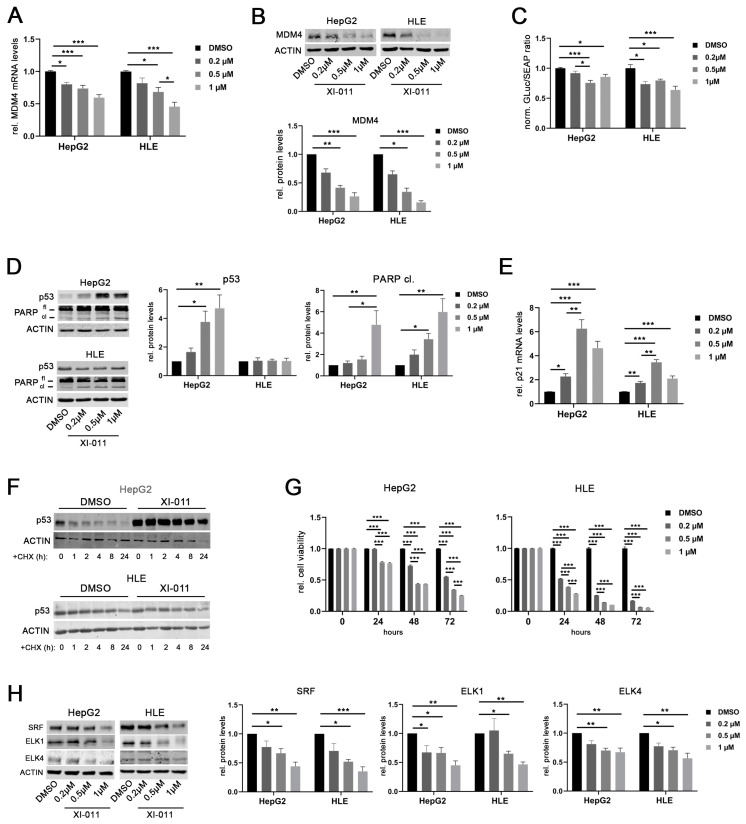
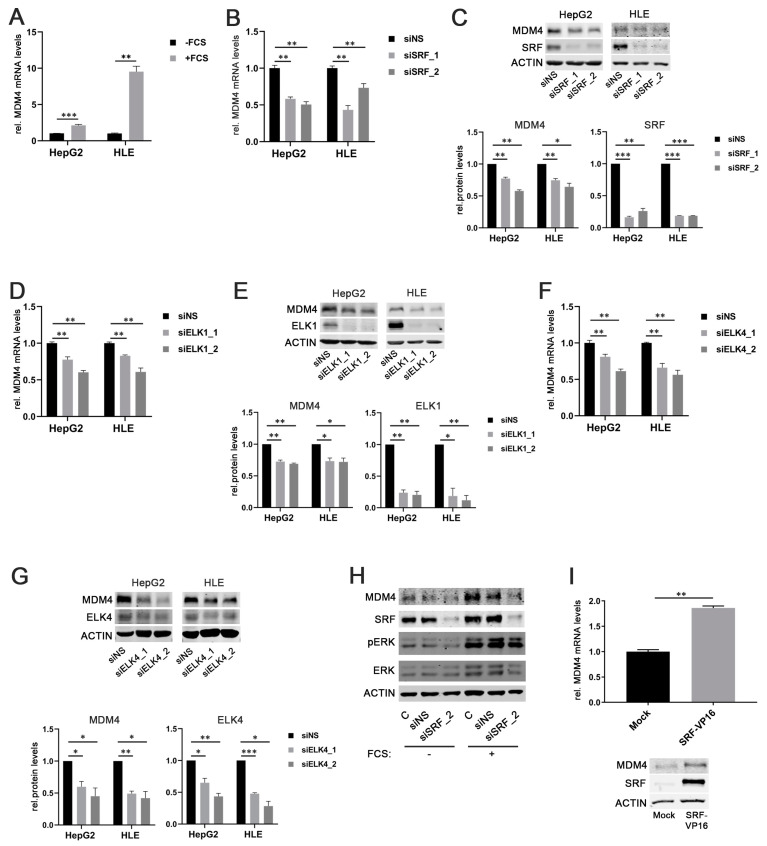
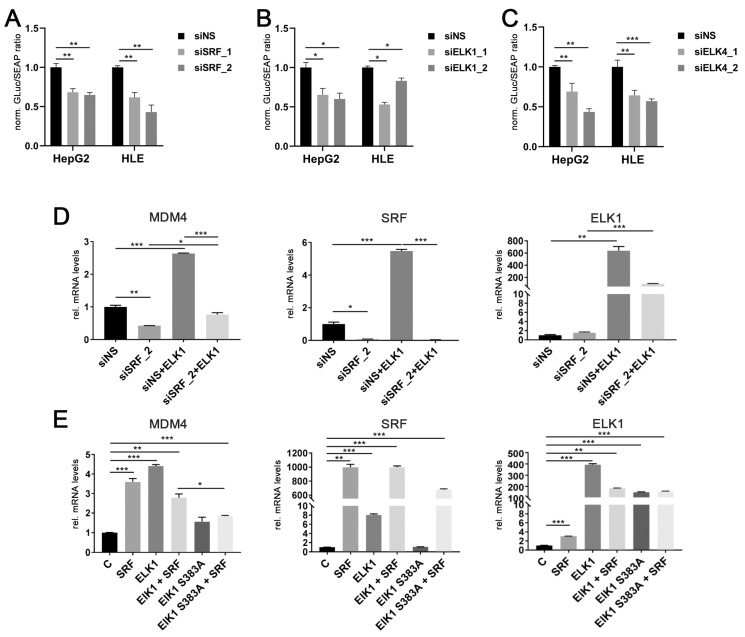
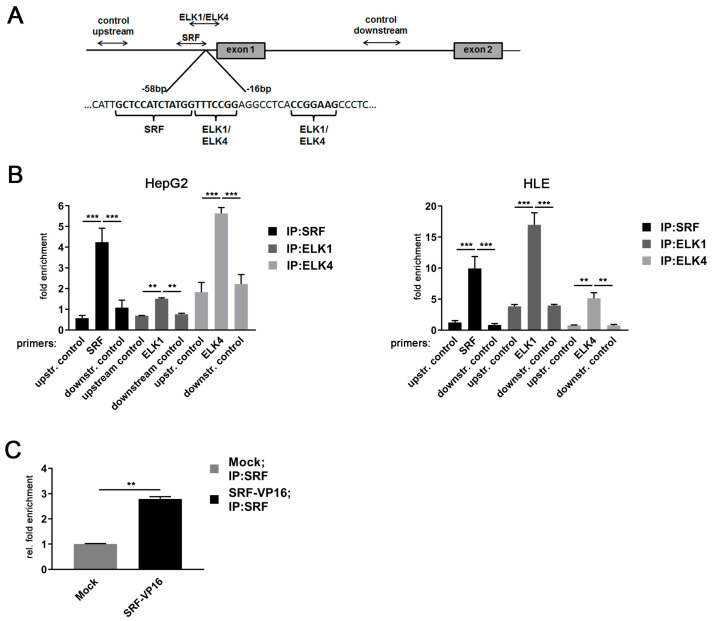
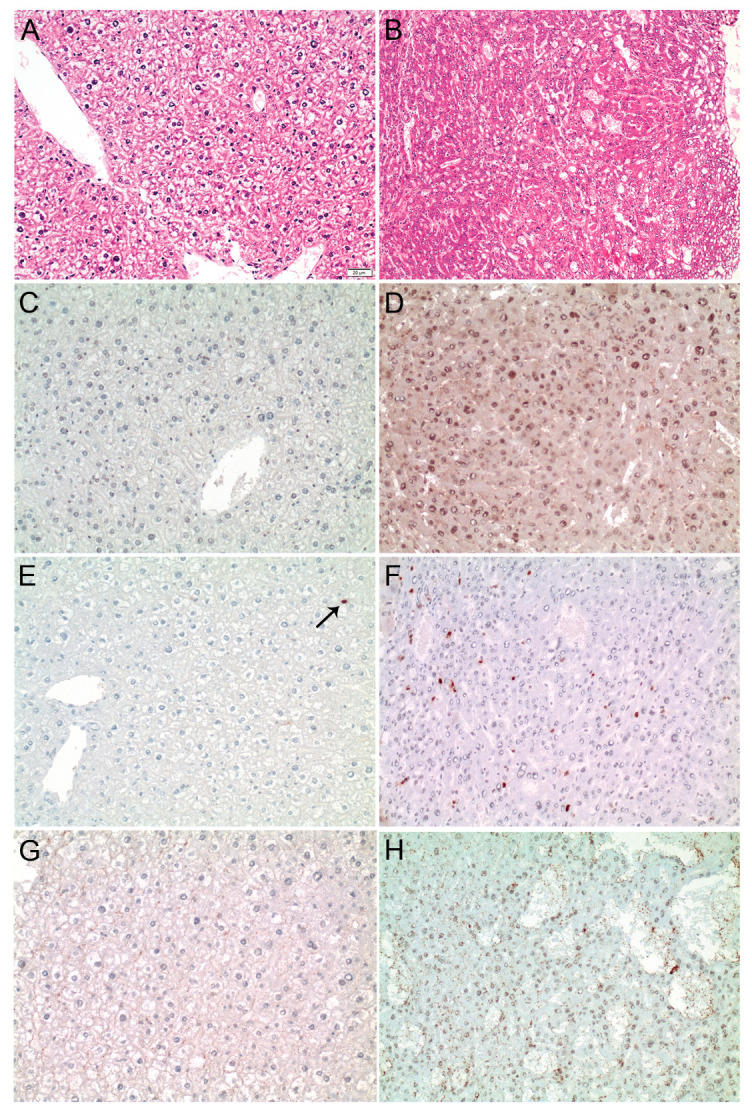
Different molecular mechanisms support the overexpression of the mouse double minute homolog 4 (MDM4), a functional p53 inhibitor, in human hepatocellular carcinoma (HCC). However, the transcription factors (TFs) leading to its transcriptional upregulation remain unknown. Following promoter and gene expression analyses, putative TFs were investigated using gene-specific siRNAs, cDNAs, luciferase reporter assays, chromatin immunoprecipitation, and XI-011 drug treatment in vitro. Additionally, MDM4 expression was investigated in transgenic mice. We observed a copy-number-independent upregulation of in human HCCs. Serum response factor (SRF), ELK1 and ELK4 were identified as TFs activating transcription. While SRF was constitutively detected in TF complexes at the promoter, presence of ELK1 and ELK4 was cell-type dependent. Furthermore, MDM4 was upregulated in SRF-VP16-driven murine liver tumors. The pharmacological inhibitor XI-011 exhibited anti- activity by downregulating the TFs driving transcription, which decreased HCC cell viability and increased apoptosis. In conclusion, SRF drives transcriptional upregulation in HCC, acting in concert with either ELK1 or ELK4. The transcriptional regulation of may be a promising target for precision oncology of human HCC, as XI-011 treatment exerts anti- activity independent from the copy number and the status.
不同的分子机制支持小鼠双微体同源物4(MDM4,一种功能性p53抑制剂)在人类肝细胞癌(HCC)中的过表达。然而,导致其转录上调的转录因子(TFs)仍不清楚。在进行启动子和基因表达分析后,使用基因特异性小干扰RNA、cDNA、荧光素酶报告基因检测、染色质免疫沉淀以及XI-011药物体外处理对假定的转录因子进行了研究。此外,还在转基因小鼠中研究了MDM4的表达。我们观察到在人类肝癌中MDM4存在不依赖于拷贝数的上调。血清反应因子(SRF)、ELK1和ELK4被鉴定为激活MDM4转录的转录因子。虽然在MDM4启动子处的转录因子复合物中可组成性检测到SRF,但ELK1和ELK4的存在具有细胞类型依赖性。此外,在SRF-VP16驱动的小鼠肝肿瘤中MDM4上调。药理学抑制剂XI-011通过下调驱动MDM4转录的转录因子表现出抗HCC活性,这降低了肝癌细胞活力并增加了细胞凋亡。总之,SRF协同ELK1或ELK4驱动肝癌中MDM4的转录上调。MDM4的转录调控可能是人类肝癌精准肿瘤学的一个有前景的靶点,因为XI-011治疗发挥抗HCC活性独立于MDM4拷贝数和p53状态。