Faculty of Science, Japan Women's University, 2-8-1 Mejirodai, Bunkyo-ku, Tokyo 112-8681, Japan.
Faculty of Life Sciences, Kyoto Sangyo University, Kamigamo-motoyama, Kita-ku, Kyoto 603-8555, Japan.
Toxins (Basel). 2021 Jan 7;13(1):40. doi: 10.3390/toxins13010040.
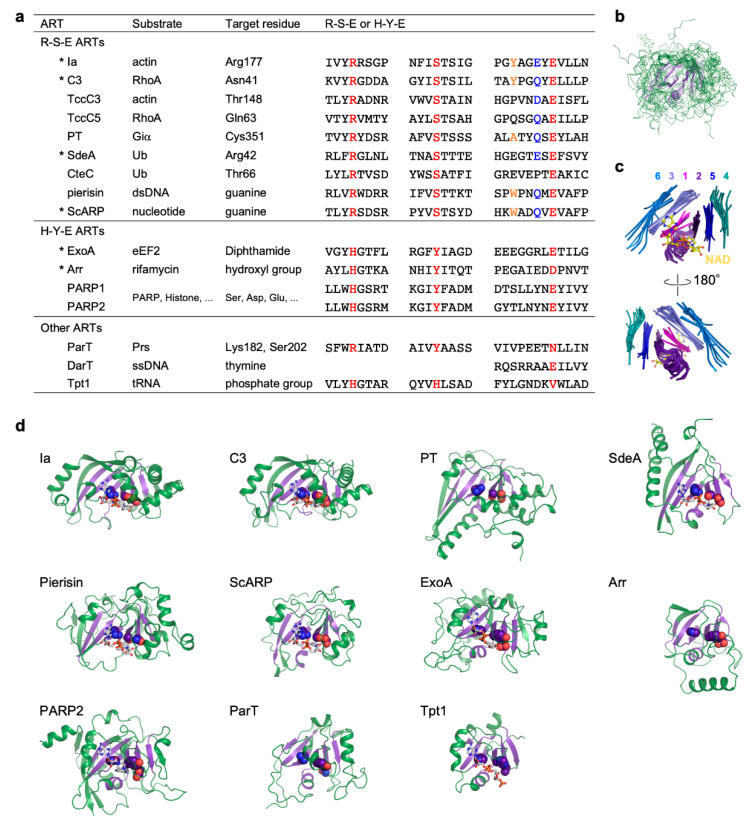
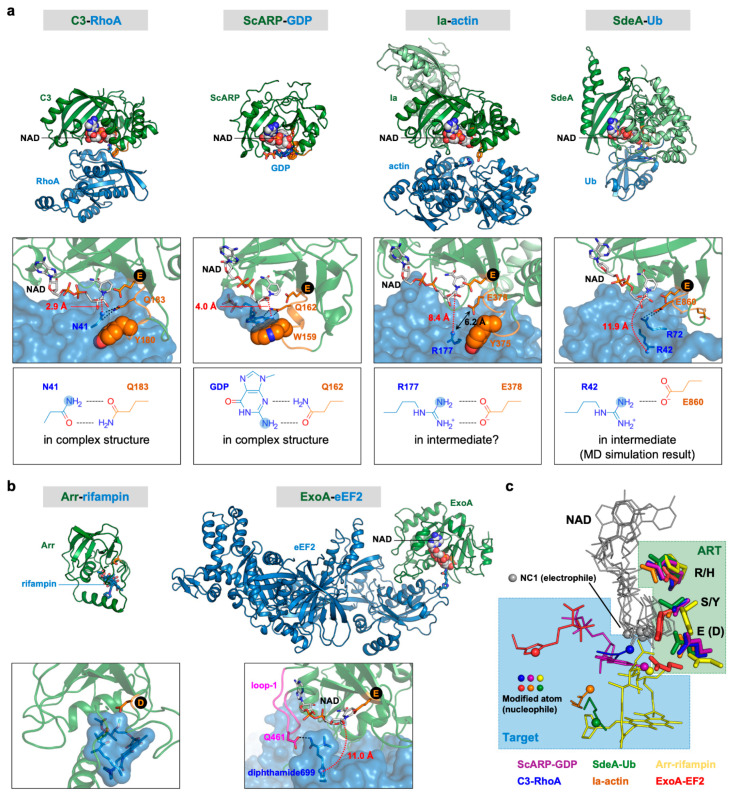
Many bacterial pathogens utilize ADP-ribosyltransferases (ARTs) as virulence factors. The critical aspect of ARTs is their target specificity. Each individual ART modifies a specific residue of its substrates, which could be proteins, DNA, or antibiotics. However, the mechanism underlying this specificity is poorly understood. Here, we review the substrate recognition mechanism and target residue specificity based on the available complex structures of ARTs and their substrates. We show that there are common mechanisms of target residue specificity among protein- and DNA-targeting ARTs.
许多细菌病原体利用 ADP-ribosyltransferases(ARTs)作为毒力因子。ARTs 的关键方面是其靶标特异性。每种个体 ART 修饰其底物的特定残基,这些底物可以是蛋白质、DNA 或抗生素。然而,这种特异性的机制尚不清楚。在这里,我们根据现有的 ART 及其底物的复合物结构,综述了底物识别机制和靶标残基特异性。我们表明,蛋白和 DNA 靶向的 ART 之间存在靶标残基特异性的共同机制。