Department of Pediatrics, Carver College of Medicine, University of Iowa, Iowa City, IA, 52242, USA.
Department of Microbiology/Immunology, Carver College of Medicine, University of Iowa, Iowa City, IA, 52242, USA.
Curr Genet. 2021 Jun;67(3):461-469. doi: 10.1007/s00294-020-01152-1. Epub 2021 Jan 12.
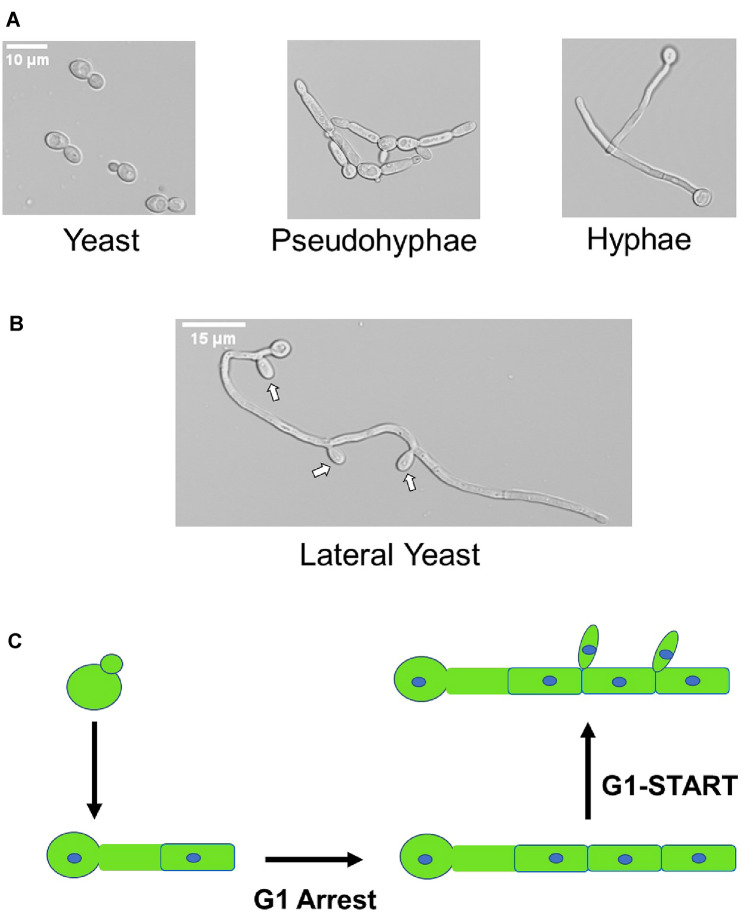
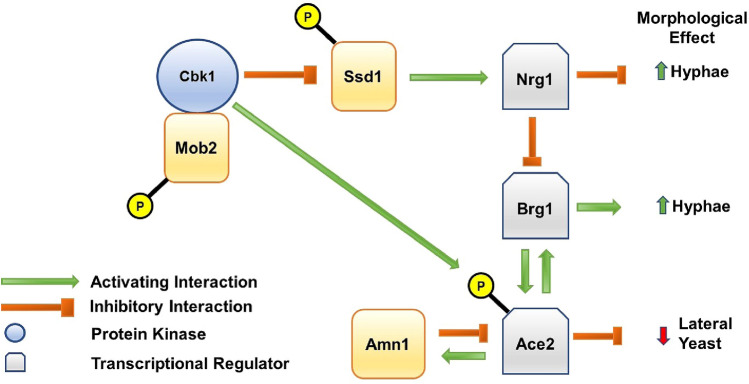
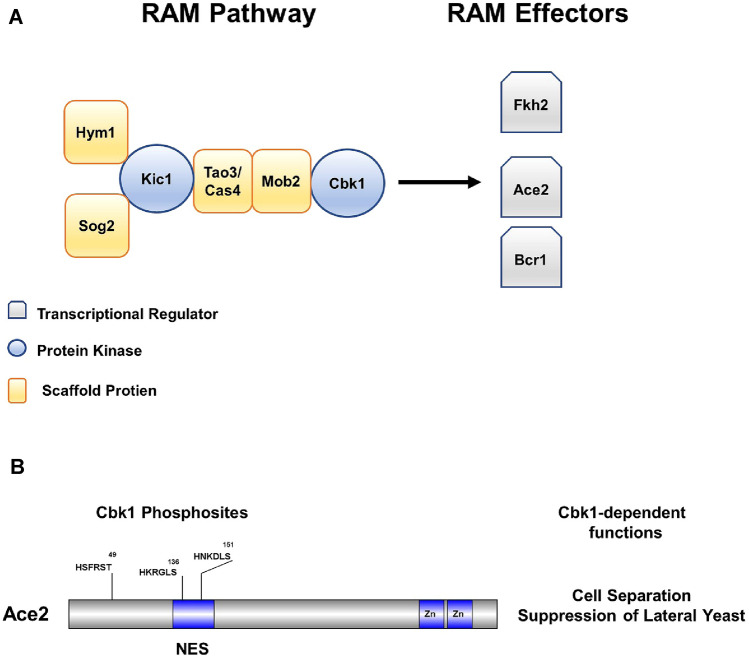
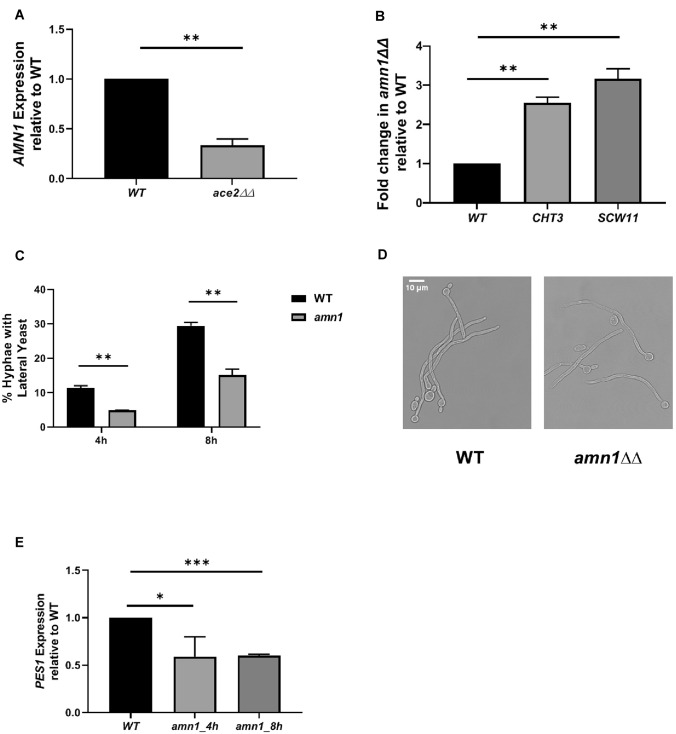
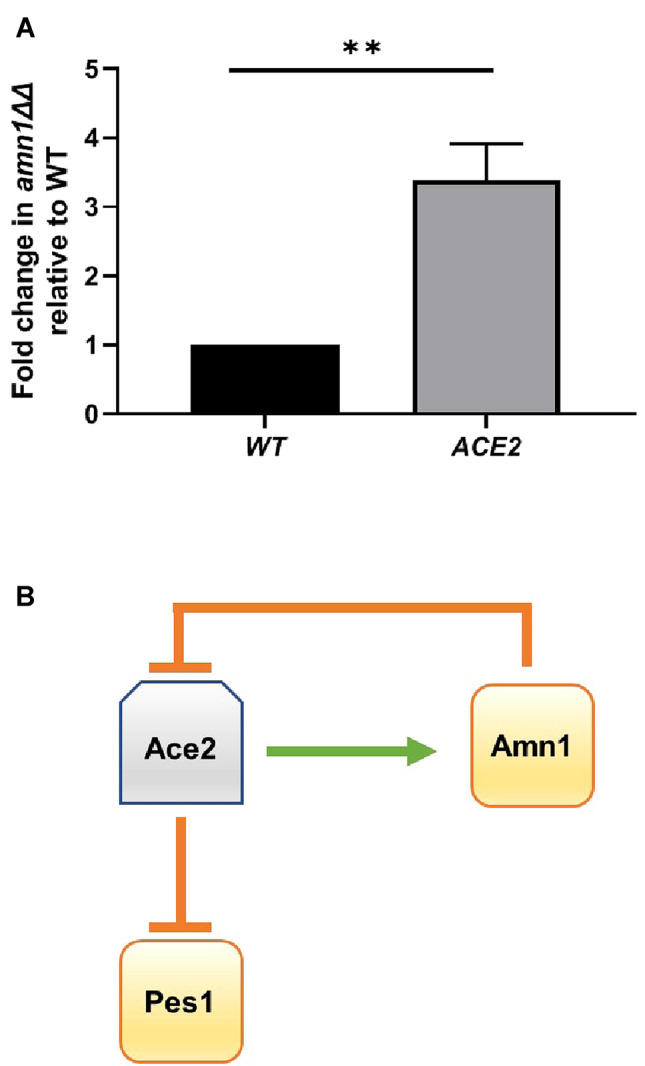
Since its description in S. cerevisiae, the Regulation of Ace2 and Morphogenesis (RAM) pathway has been studied for nearly 20 years in multiple model and pathogenic fungi. In pathogenic fungi, the RAM pathway carries out many functions through mechanisms that remain to be defined in detail. Recently, we reported that Cbk1-mediated phosphorylation of the transcription factor Ace2 functions to repress the hyphae-to-yeast transition in Candida albicans. This transition is understudied relative to the yeast-to-hyphae transition. Subapical hyphal cell compartments are arrested in G1 until the point at which lateral yeast emerge. Here, we discuss this model and report new data indicating that a second G1 associated protein, the mitotic exit regulator Amn1. In S. cerevisiae diploid cells, Amn1 negatively regulates Ace2 at both the gene expression level through a negative feedback loop and at the protein level by targeting Ace2 for degradation. In C. albicans, Amn1 and Ace2 also form a feedback loop at the level of gene expression. Deletion of AMN1 decreases lateral yeast formation relative to wild type in maturing hyphae and is associated with decreased expression of PES1, a positive regulator of lateral yeast formation. These data indicate that the regulation of mitotic exit plays a role in determining the timing of lateral yeast emergence from hyphae in C. albicans. We also propose an integrated model for the interplay between the Cbk1-Ace2 axis and other hyphal stage regulators during the process of filamentation and transition back to yeast.
自酵母中描述以来,调节 Ace2 和形态发生(RAM)途径已在多种模型和致病性真菌中研究了近 20 年。在致病性真菌中,RAM 途径通过仍有待详细定义的机制执行许多功能。最近,我们报道了 Cbk1 介导的转录因子 Ace2 的磷酸化作用,可抑制白色念珠菌中的菌丝-酵母转变。与酵母-菌丝转变相比,这种转变研究得还不够充分。亚顶菌丝细胞区室在 G1 期停滞,直到侧生酵母出现。在这里,我们讨论了这个模型,并报告了新的数据表明第二个与 G1 相关的蛋白,即有丝分裂退出调节剂 Amn1。在酵母二倍体细胞中,Amn1 通过负反馈环在基因表达水平和通过靶向 Ace2 进行降解在蛋白质水平上负调节 Ace2。在白色念珠菌中,Amn1 和 Ace2 也在基因表达水平上形成一个反馈回路。与野生型相比,AMN1 的缺失会减少成熟菌丝中侧生酵母的形成,并且与侧生酵母形成的正调节剂 PES1 的表达降低有关。这些数据表明,有丝分裂退出的调节在决定白色念珠菌中从菌丝中出现侧生酵母的时间方面起着作用。我们还提出了一个整合模型,用于在丝状形成和返回酵母的过程中,Cbk1-Ace2 轴和其他菌丝阶段调节剂之间的相互作用。