Pharmacy Services, King Saud University Medical City, Riyadh, Saudi Arabia.
Department of Clinical Pharmacy, College of Pharmacy, King Saud University, Riyadh, Saudi Arabia.
PLoS One. 2021 Jan 12;16(1):e0245321. doi: 10.1371/journal.pone.0245321. eCollection 2021.
Evidence regarding the prevalence of medication prescribing errors (PEs) and potential factors that increase PEs among patients treated in the emergency department (ED) are limited. This study aimed to explore the prevalence and nature of PEs in discharge prescriptions in the ED and identify potential risk factors associated with PEs.
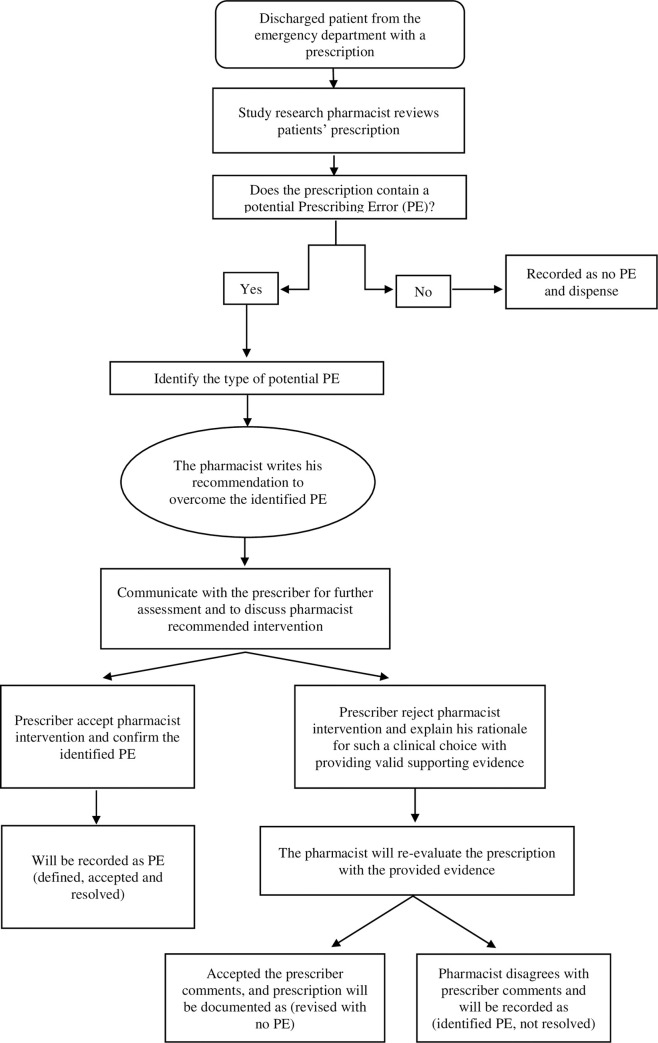
This was a prospective observational cross-sectional study in an ambulatory ED in a tertiary teaching hospital. Data were collected for six months using a customized reporting tool. All patients discharged from ED with a discharged prescription within the study period were enrolled in this study.
About 13.5% (n = 68) of the 504 prescriptions reviewed (for 504 patients) had at least one error. Main PEs encountered were wrong dose (23.2%), wrong frequency (20.7%), and wrong strength errors (14.6%). About 36.8% of identified PEs were related to pediatric prescriptions, followed by the acute care emergency unit (26.5%) and the triage emergency unit (20.6%). The main leading human-related causes associated with PEs were lack of knowledge (40.9%) followed by an improper selection from a computer operator list (31.8%). The leading contributing systems related factors were pre-printed medication orders (50%), lack of training (31.5%), noise level (13.0%), and frequent interruption of prescriber and distraction (11.1%). Prescribers' involved with the identified errors were resident physicians (39.4%), specialists (30.3%), and (24.4%) were made by general practitioners. Physicians rejected around 12% of the pharmacist-raised recommendations related to the identified PEs as per their clinical judgment.
PEs in ED setting are common, and multiple human and systems-related factors may contribute to the development of PEs. Further training to residents and proper communication between the healthcare professionals may reduce the risk of PEs in ED.
有关在急诊科(ED)治疗的患者中药物处方错误(PEs)的发生率和增加 PEs 的潜在因素的证据有限。本研究旨在探讨 ED 出院处方中 PEs 的发生率和性质,并确定与 PEs 相关的潜在危险因素。
这是一项在一家三级教学医院的门诊 ED 进行的前瞻性观察性横断面研究。使用定制的报告工具在六个月内收集数据。在研究期间,所有从 ED 出院并开具出院处方的患者均被纳入本研究。
在审查的 504 份处方(504 名患者)中,约有 13.5%(n=68)至少有一处错误。主要遇到的 PEs 包括剂量错误(23.2%)、频率错误(20.7%)和强度错误(14.6%)。确定的 PEs 中有 36.8%与儿科处方有关,其次是急性护理急诊单元(26.5%)和分诊急诊单元(20.6%)。与 PEs 相关的主要人为相关原因是缺乏知识(40.9%),其次是计算机操作员列表选择不当(31.8%)。与 PEs 相关的主要系统相关因素是预打印的医嘱(50%)、缺乏培训(31.5%)、噪音水平(13.0%)以及频繁打断和干扰处方者(11.1%)。发现错误的医生包括住院医师(39.4%)、专家(30.3%)和(24.4%)为全科医生。根据他们的临床判断,医生拒绝了大约 12%的药剂师提出的与已确定 PEs 相关的建议。
ED 环境中的 PEs 很常见,多个人为和系统相关因素可能导致 PEs 的发生。对住院医师进行进一步培训以及医疗保健专业人员之间的适当沟通可能会降低 ED 中 PEs 的风险。