Programme in Health Services and Systems Research, Duke-NUS Medical School, Singapore City, Singapore.
Operations & Performance Management, Singapore General Hospital, Bukit Merah, Singapore City, Singapore.
PLoS One. 2021 Jan 12;16(1):e0244097. doi: 10.1371/journal.pone.0244097. eCollection 2021.
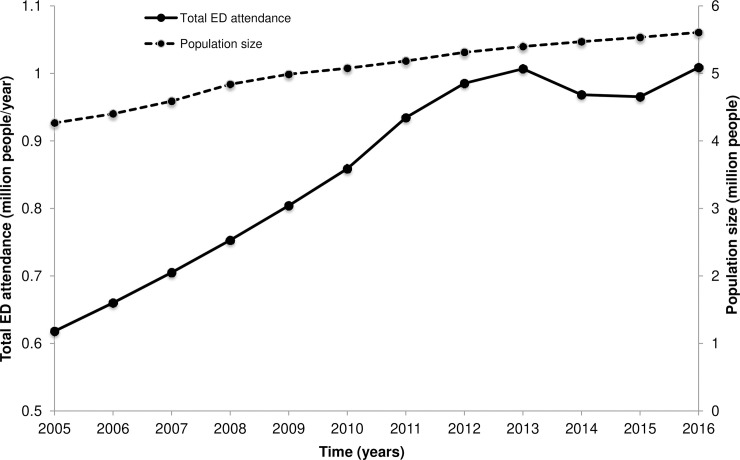
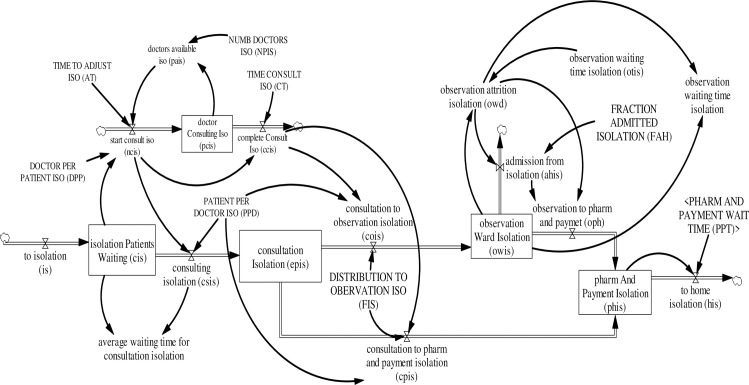
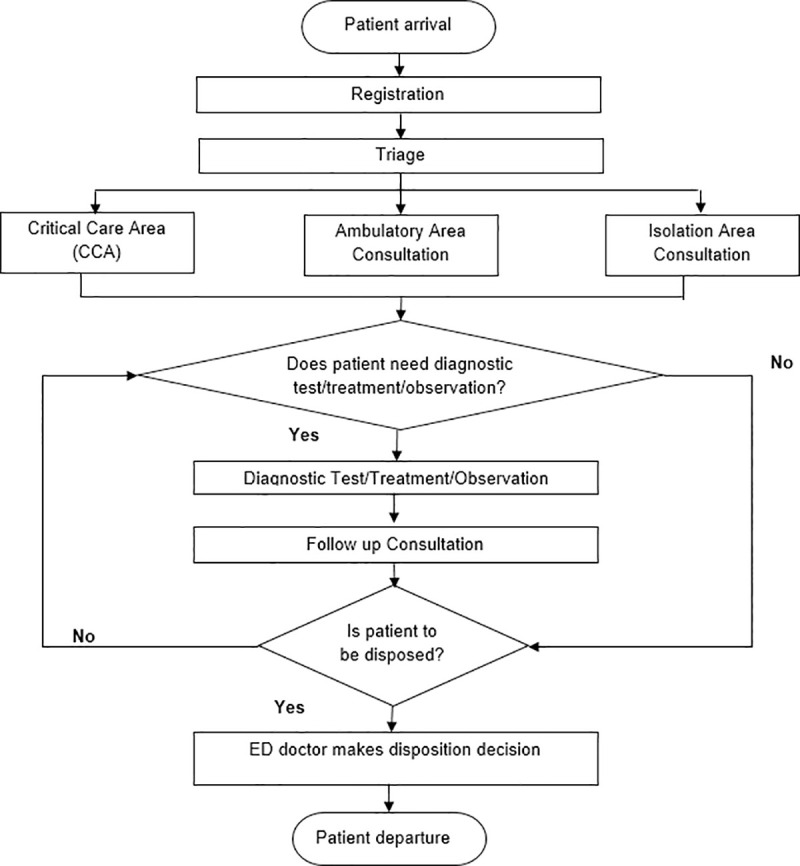
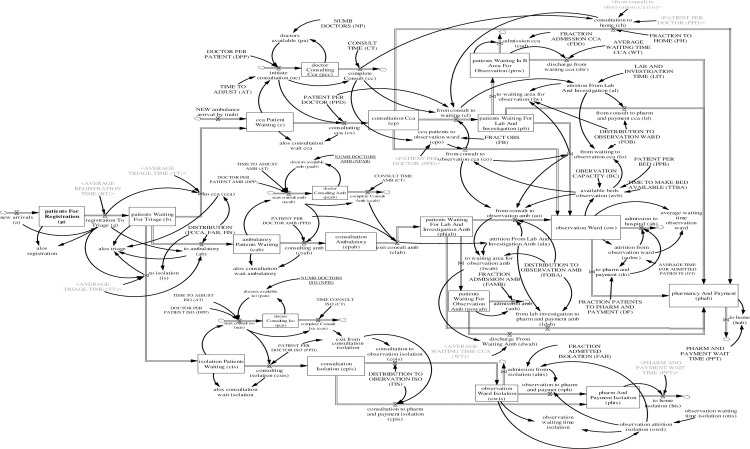
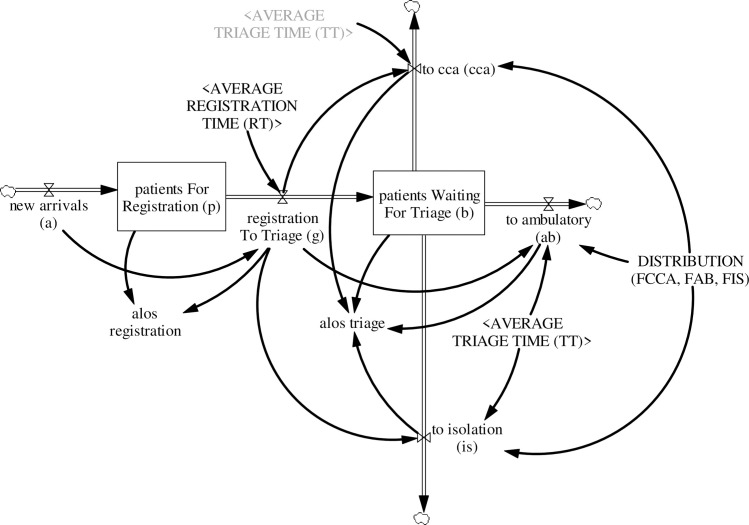
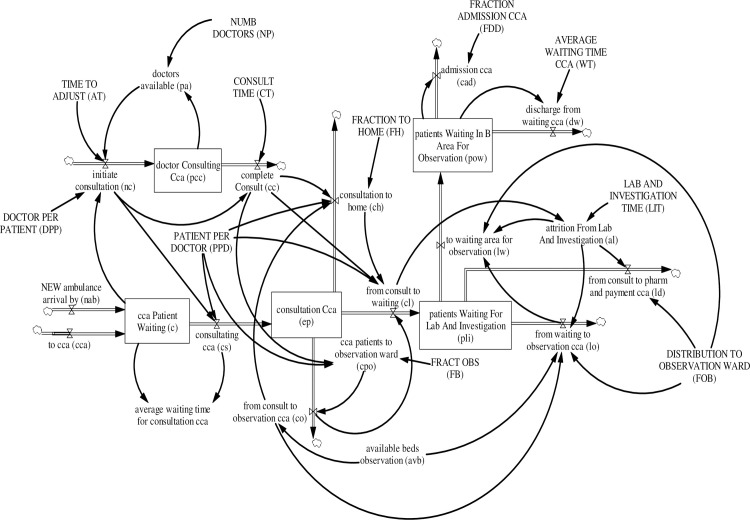
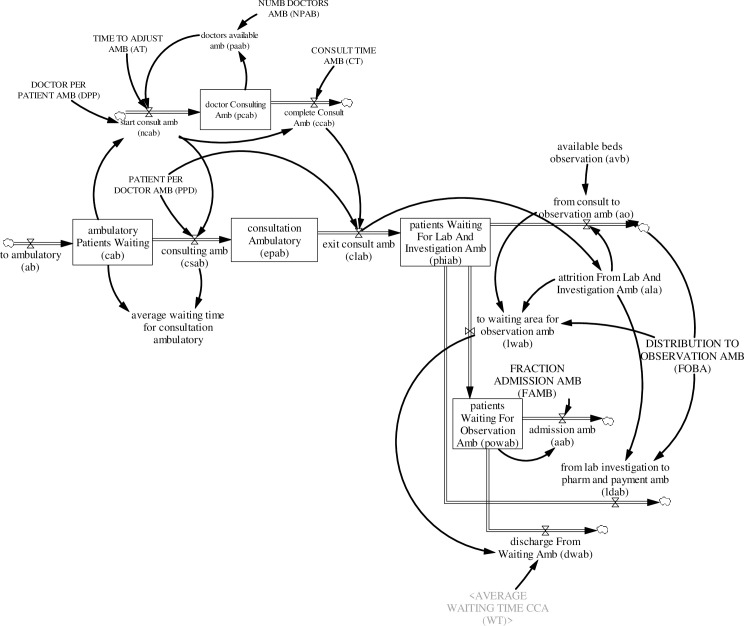
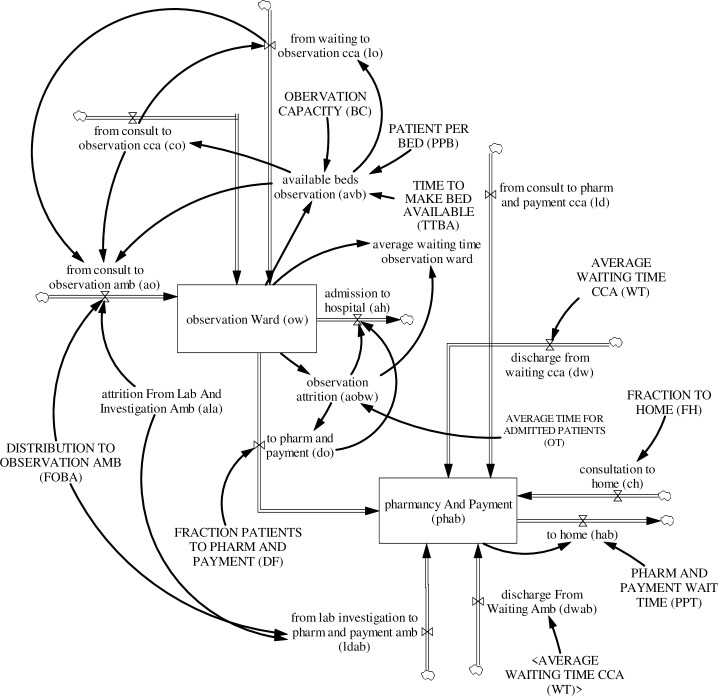
Emergency Departments (EDs) worldwide are confronted with rising patient volumes causing significant strains on both Emergency Medicine and entire healthcare systems. Consequently, many EDs are in a situation where the number of patients in the ED is temporarily beyond the capacity for which the ED is designed and resourced to manage-a phenomenon called Emergency Department (ED) crowding. ED crowding can impair the quality of care delivered to patients and lead to longer patient waiting times for ED doctor's consult (time to provider) and admission to the hospital ward. In Singapore, total ED attendance at public hospitals has grown significantly, that is, roughly 5.57% per year between 2005 and 2016 and, therefore, emergency physicians have to cope with patient volumes above the safe workload. The purpose of this study is to create a virtual ED that closely maps the processes of a hospital-based ED in Singapore using system dynamics, that is, a computer simulation method, in order to visualize, simulate, and improve patient flows within the ED. Based on the simulation model (virtual ED), we analyze four policies: (i) co-location of primary care services within the ED, (ii) increase in the capacity of doctors, (iii) a more efficient patient transfer to inpatient hospital wards, and (iv) a combination of policies (i) to (iii). Among the tested policies, the co-location of primary care services has the largest impact on patients' average length of stay (ALOS) in the ED. This implies that decanting non-emergency lower acuity patients from the ED to an adjacent primary care clinic significantly relieves the burden on ED operations. Generally, in Singapore, there is a tendency to strengthen primary care and to educate patients to see their general practitioners first in case of non-life threatening, acute illness.
世界各地的急诊科(ED)都面临着患者数量的增加,这给急诊医学和整个医疗保健系统都带来了巨大的压力。因此,许多 ED 都面临着一种情况,即 ED 中的患者人数暂时超过了 ED 的设计和资源管理能力——这种现象称为 ED 拥挤。ED 拥挤会降低患者接受的护理质量,并导致患者等待 ED 医生咨询(到提供者的时间)和住院病房的时间延长。在新加坡,公立医院的 ED 总就诊人数显著增加,即在 2005 年至 2016 年间,每年约增长 5.57%,因此,急诊医生必须应对超过安全工作量的患者数量。本研究的目的是使用系统动力学(即计算机模拟方法)创建一个与新加坡基于医院的 ED 紧密匹配的虚拟 ED,以便可视化、模拟和改善 ED 内的患者流程。基于仿真模型(虚拟 ED),我们分析了四项政策:(i)将初级保健服务置于 ED 内,(ii)增加医生的容量,(iii)更有效地将患者转移到住院病房,以及(iv)结合政策(i)至(iii)。在测试的政策中,初级保健服务的共同定位对患者在 ED 的平均停留时间(ALOS)的影响最大。这意味着将非紧急、低严重程度的患者从 ED 分流到附近的初级保健诊所,将显著减轻 ED 运营的负担。一般来说,在新加坡,有一种加强初级保健的趋势,并教育患者在遇到非危及生命的急性疾病时首先看他们的全科医生。