Cognition and Brain Plasticity Unit, Bellvitge Biomedical Research Institute, L'Hospitalet de Llobregat, 08907, Barcelona, Spain.
Escola Universitària d'Infermeria i Teràpia Ocupacional de Terrassa, Autonomous University of Barcelona, C/ de la Riba, 90, 08221, Terrassa, Spain.
BMC Neurol. 2021 Jan 12;21(1):19. doi: 10.1186/s12883-020-02019-1.
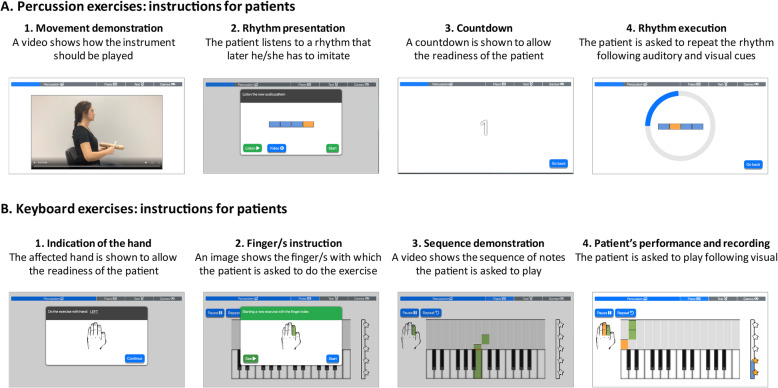
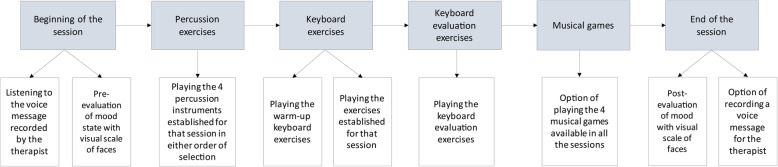
Residual motor deficits of the upper limb in patients with chronic stroke are common and have a negative impact on autonomy, participation and quality of life. Music-Supported Therapy (MST) is an effective intervention to enhance motor and cognitive function, emotional well-being and quality of life in chronic stroke patients. We have adapted the original MST training protocol to a home-based intervention, which incorporates increased training intensity and variability, group sessions, and optimisation of learning to promote autonomy and motivation.
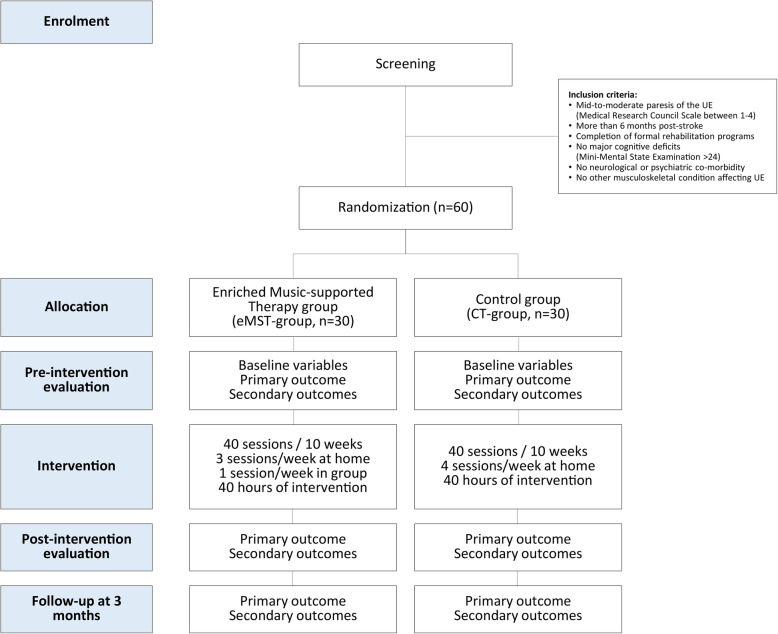
A randomised controlled trial will be conducted to test the effectiveness of this enriched MST (eMST) protocol in improving motor functions, cognition, emotional well-being and quality of life of chronic stroke patients when compared to a program of home-based exercises utilizing the Graded Repetitive Arm Supplementary Program (GRASP). Sixty stroke patients will be recruited and randomly allocated to an eMST group (n = 30) or a control GRASP intervention group (n = 30). Patients will be evaluated before and after a 10-week intervention, as well as at 3-month follow-up. The primary outcome of the study is the functionality of the paretic upper limb measured with the Action Research Arm Test. Secondary outcomes include other motor and cognitive functions, emotional well-being and quality of life measures as well as self-regulation and self-efficacy outcomes.
We hypothesize that patients treated with eMST will show larger improvements in their motor and cognitive functions, emotional well-being and quality of life than patients treated with a home-based GRASP intervention.
The trial has been registered at ClinicalTrials.gov and identified as NCT04507542 on 8 August 2020.
慢性中风患者上肢残留运动功能障碍较为常见,对其自主性、参与度和生活质量有负面影响。音乐支持治疗(MST)是一种有效的干预手段,可以增强慢性中风患者的运动和认知功能、情绪健康和生活质量。我们对原有的 MST 训练方案进行了改编,使之成为一种基于家庭的干预措施,增加了训练强度和多样性、小组活动,并优化了学习过程,以促进自主性和动机。
将开展一项随机对照试验,以检验改良后的 MST(eMST)方案与基于家庭的 GRASP 锻炼方案相比,在改善慢性中风患者的运动功能、认知、情绪健康和生活质量方面的有效性。将招募 60 名中风患者,并随机分为 eMST 组(n=30)或对照组 GRASP 干预组(n=30)。患者将在干预前、干预后 10 周以及 3 个月随访时接受评估。该研究的主要结局是使用 ACTION 研究上肢测试评估患侧上肢的功能。次要结局包括其他运动和认知功能、情绪健康和生活质量指标以及自我调节和自我效能指标。
我们假设与接受基于家庭的 GRASP 干预的患者相比,接受 eMST 治疗的患者在运动和认知功能、情绪健康和生活质量方面的改善更大。
该试验已在 ClinicalTrials.gov 上注册,登记号为 NCT04507542,于 2020 年 8 月 8 日注册。