Institute of Molecular and Genomic Medicine, National Health Research Institutes, Zhunan, Miaoli, Taiwan.
Institute of Biotechnology, National Tsing Hua University, Hsinchu, Taiwan.
J Biomed Sci. 2021 Jan 12;28(1):8. doi: 10.1186/s12929-020-00707-1.
Congenital myopathy (CM) is a group of clinically and genetically heterogeneous muscle disorders, characterized by muscle weakness and hypotonia from birth. Currently, no definite treatment exists for CM. A de novo mutation in Tropomyosin 3-TPM3(E151G) was identified from a boy diagnosed with CM, previously TPM3(E151A) was reported to cause CM. However, the role of TPM3(E151G) in CM is unknown.
Histopathological, swimming behavior, and muscle endurance were monitored in TPM3 wild-type and mutant transgenic fish, modelling CM. Gene expression profiling of muscle of the transgenic fish were studied through RNAseq, and mitochondria respiration was investigated.
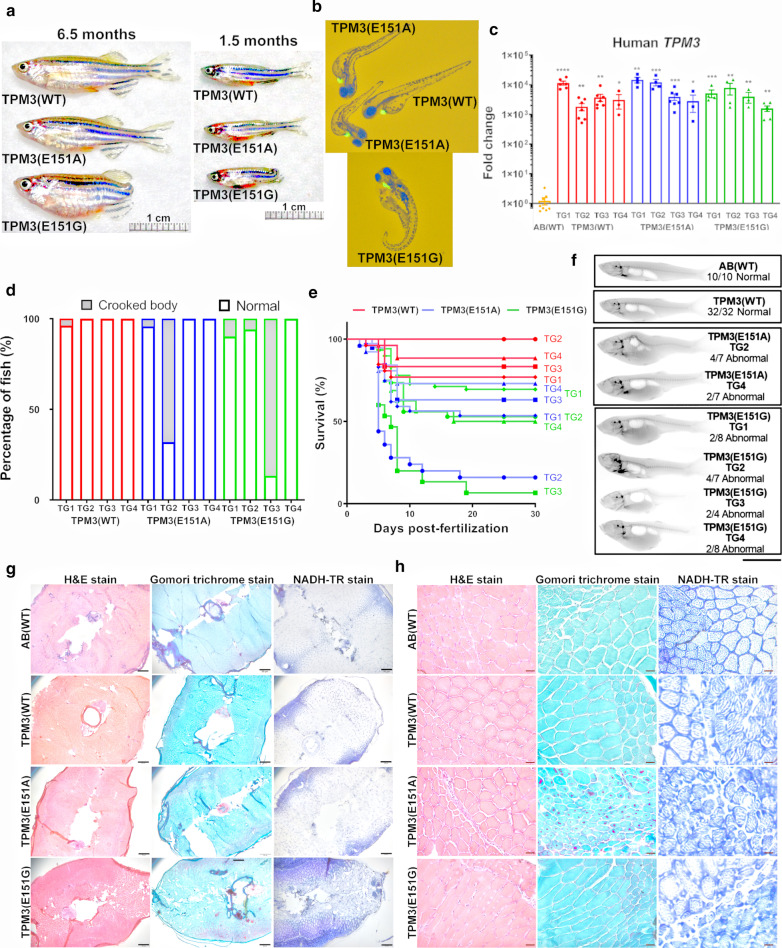
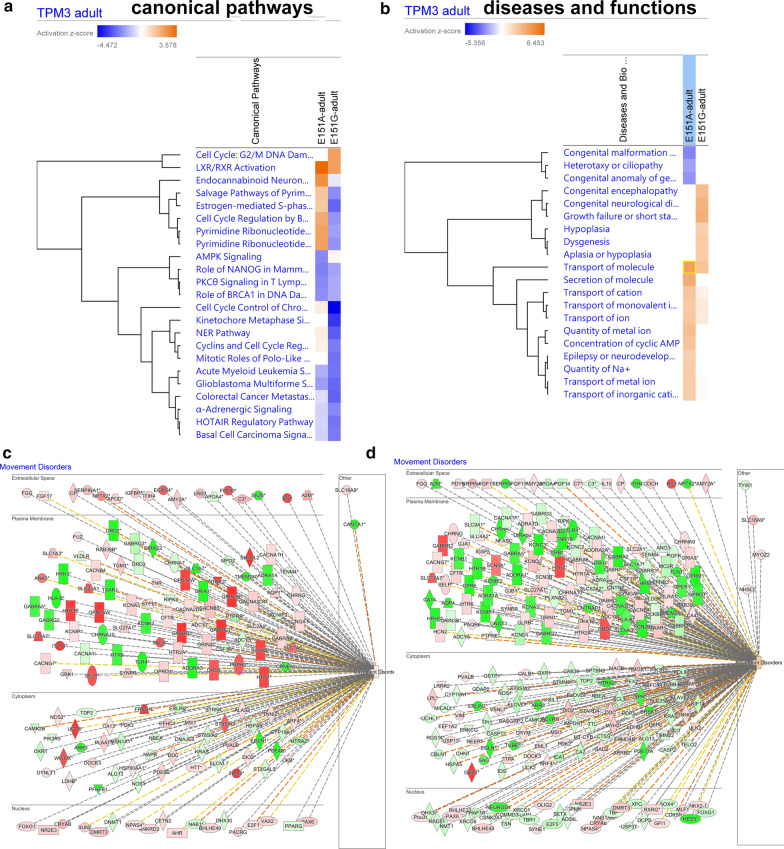
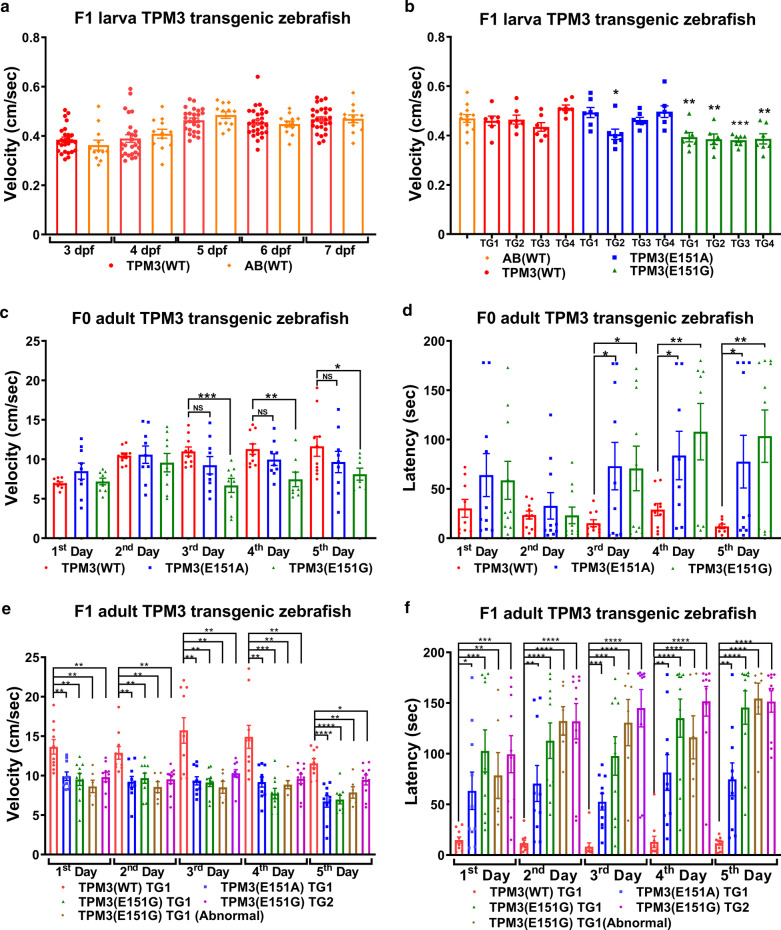
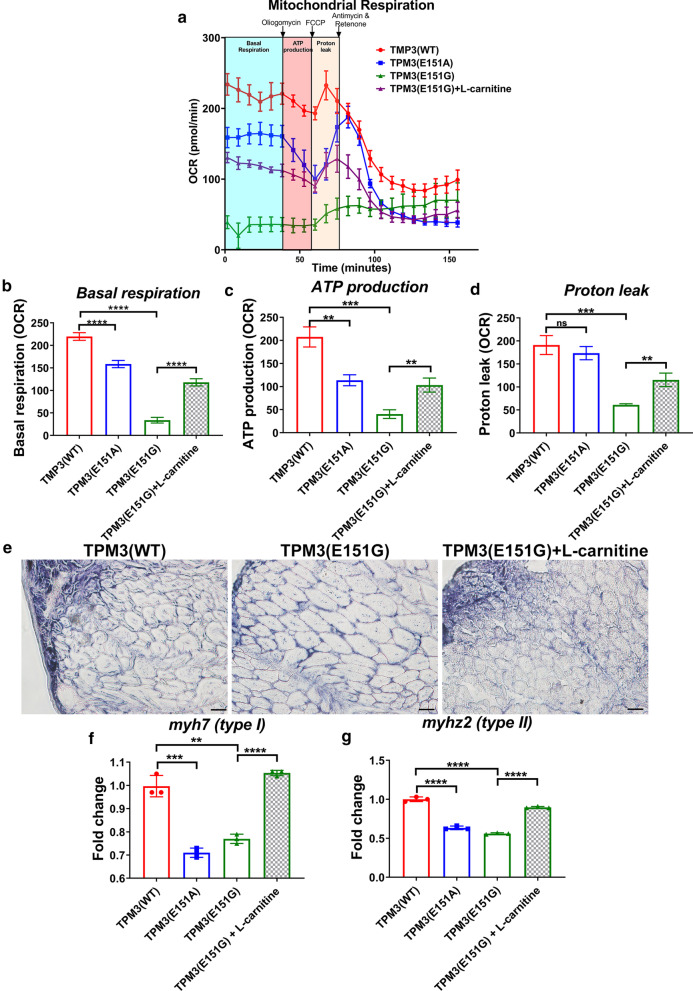
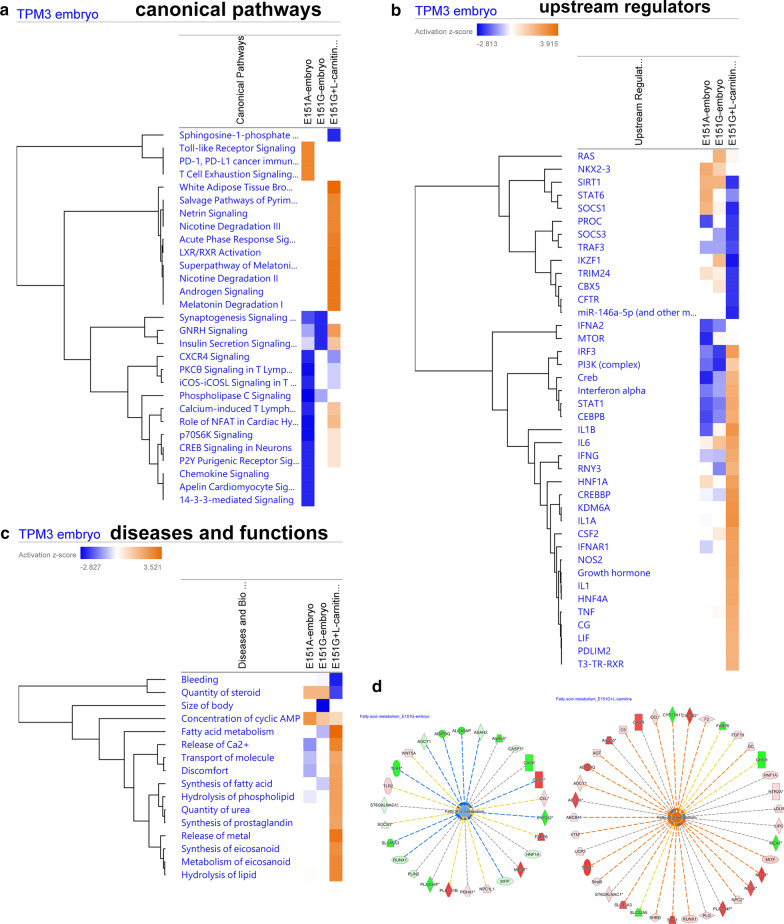
While TPM3(WT) and TPM3(E151A) fish show normal appearance, amazingly a few TPM3(E151G) fish display either no tail, a crooked body in both F0 and F1 adults. Using histochemical staining for the muscle biopsy, we found TPM3(E151G) displays congenital fiber type disproportion and TPM3(E151A) resembles nemaline myopathy. TPM3(E151G) transgenic fish dramatically swimming slower than those in TPM3(WT) and TPM3(E151A) fish measured by DanioVision and T-maze, and exhibit weaker muscle endurance by swimming tunnel instrument. Interestingly, L-carnitine treatment on TPM3(E151G) transgenic larvae significantly improves the muscle endurance by restoring the basal respiration and ATP levels in mitochondria. With RNAseq transcriptomic analysis of the expression profiling from the muscle specimens, it surprisingly discloses large downregulation of genes involved in pathways of sodium, potassium, and calcium channels, which can be rescued by L-carnitine treatment, fatty acid metabolism was differentially dysregulated in TPM3(E151G) fish and rescued by L-carnitine treatment.
These results demonstrate that TPM3(E151G) and TPM3(E151A) exhibit different pathogenicity, also have distinct gene regulatory profiles but the ion channels were downregulated in both mutants, and provides a potential mechanism of action of TPM3 pathophysiology. Our results shed a new light in the future development of potential treatment for TPM3-related CM.
先天性肌病(CM)是一组具有临床和遗传异质性的肌肉疾病,其特征是从出生起肌肉无力和张力减退。目前,CM 尚无明确的治疗方法。从一名被诊断为 CM 的男孩中发现了原肌球蛋白 3(TPM3)的从头突变(E151G),先前曾报道过 TPM3(E151A)突变可导致 CM。然而,TPM3(E151G)在 CM 中的作用尚不清楚。
通过 RNAseq 研究了建模 CM 的 TPM3 野生型和突变转基因鱼的组织病理学、游泳行为和肌肉耐力,并研究了肌肉的基因表达谱,以及线粒体呼吸。
尽管 TPM3(WT)和 TPM3(E151A)鱼表现正常,但令人惊讶的是,一些 TPM3(E151G)鱼在 F0 和 F1 成年鱼中表现为没有尾巴或身体弯曲。通过对肌肉活检进行组织化学染色,我们发现 TPM3(E151G)显示出先天性纤维类型比例失调,而 TPM3(E151A)类似于杆状体肌病。与 TPM3(WT)和 TPM3(E151A)鱼相比,TPM3(E151G)转基因鱼的游泳速度明显较慢,通过 DanioVision 和 T 迷宫测量,以及通过游泳隧道仪器显示出较弱的肌肉耐力。有趣的是,L-肉碱处理 TPM3(E151G)转基因幼虫可通过恢复线粒体的基础呼吸和 ATP 水平显著改善肌肉耐力。通过对肌肉标本的表达谱进行 RNAseq 转录组分析,令人惊讶的是,钠、钾和钙通道途径相关基因的表达水平显著下调,而 L-肉碱处理可使这些基因的表达水平恢复正常,脂肪酸代谢在 TPM3(E151G)鱼中存在差异失调,L-肉碱处理可使其恢复正常。
这些结果表明,TPM3(E151G)和 TPM3(E151A)表现出不同的致病性,也具有不同的基因调控谱,但在两种突变体中离子通道均下调,并提供了 TPM3 病理生理学的潜在作用机制。我们的结果为 TPM3 相关 CM 的潜在治疗方法的未来发展提供了新的思路。