Laboratory of Hepatology and Gastroenterology, Institut de Recherche Expérimentale et Clinique, UCLouvain, Université catholique de Louvain, Brussels, Belgium.
Service d'Hépato-gastroentérologie, Cliniques universitaires Saint-Luc, UCLouvain, Brussels, Belgium.
Sci Rep. 2021 Jan 12;11(1):659. doi: 10.1038/s41598-020-79718-9.
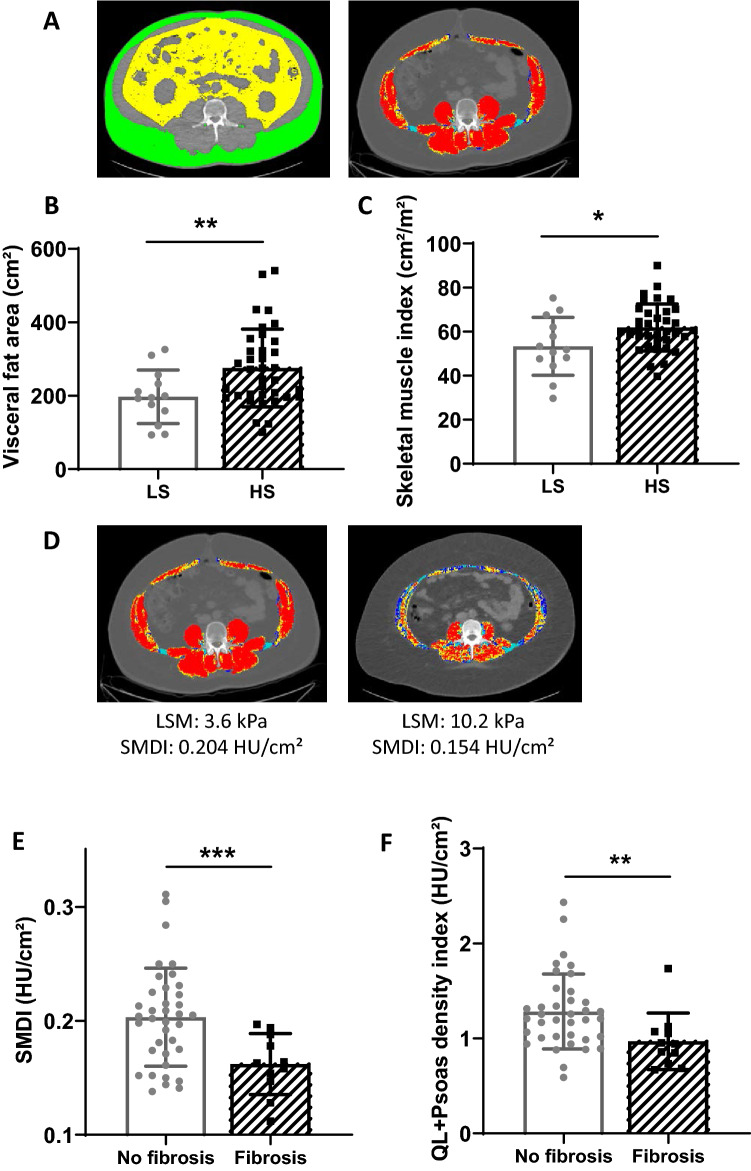
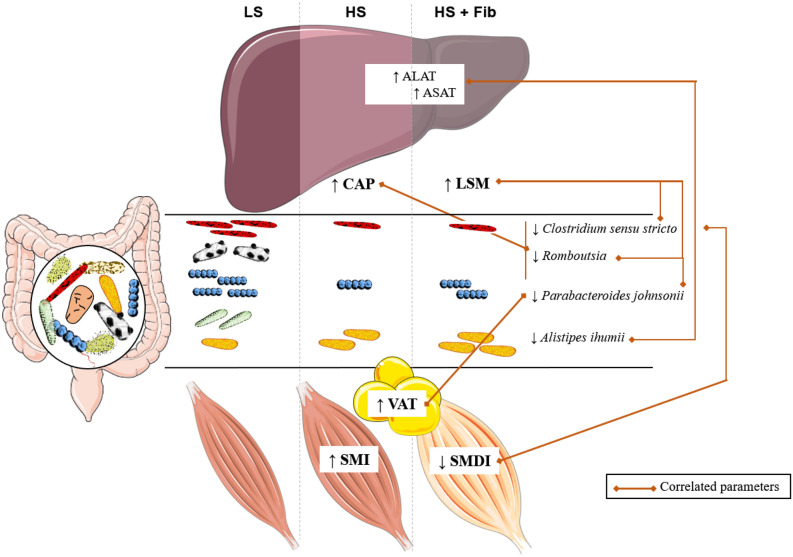
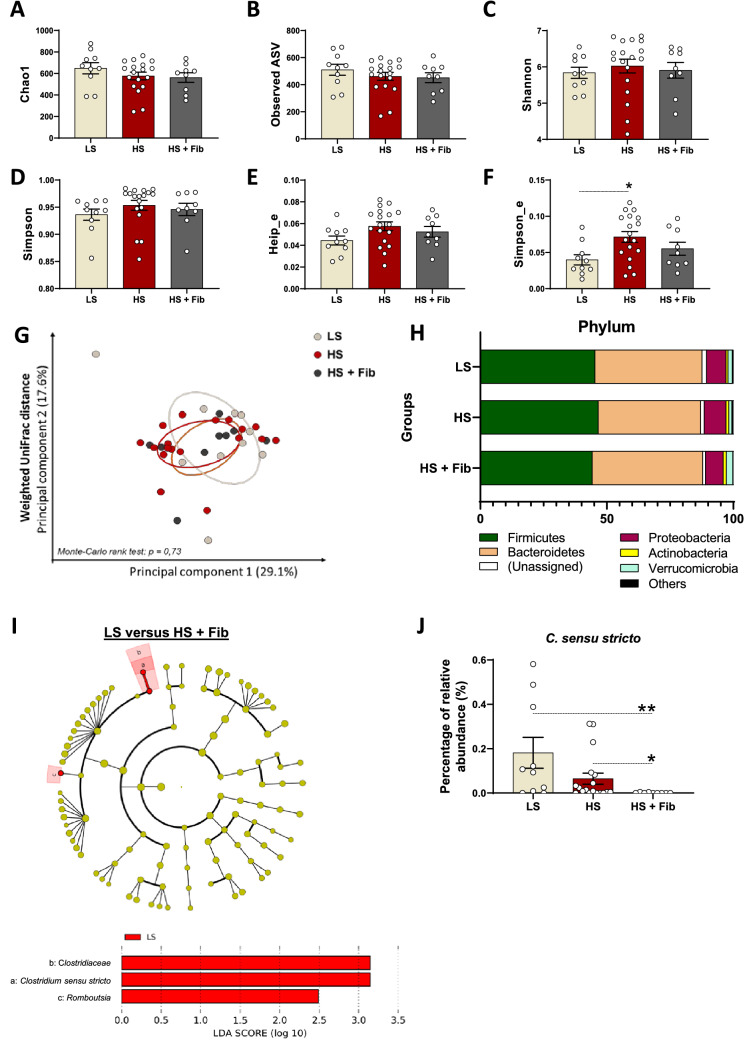
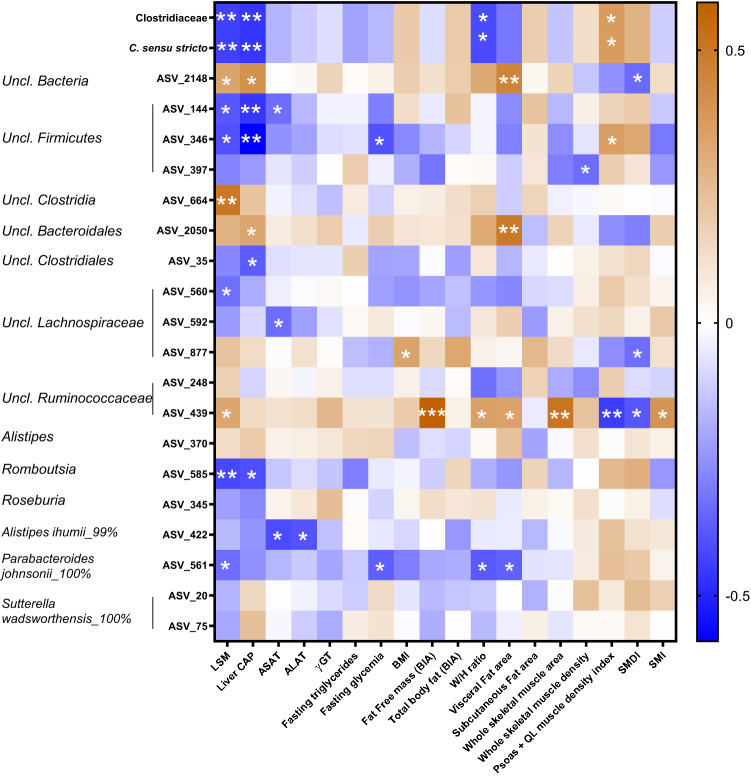
Obesity could lead to metabolic dysfunction-associated fatty liver disease (MAFLD), which severity could be linked to muscle and gut microbiota disturbances. Our prospective study enrolled 52 obese patients whose MAFLD severity was estimated by transient elastography. Patients with severe steatosis (n = 36) had higher ALAT values, fasting blood glucose levels as well as higher visceral adipose tissue area and skeletal muscle index evaluated by computed tomography. Patients with fibrosis (n = 13) had higher ASAT values, increased whole muscle area and lower skeletal muscle density index. In a multivariate logistic regression analysis, myosteatosis was the strongest factor associated with fibrosis. Illumina sequencing of 16S rRNA gene amplicon was performed on fecal samples. The relative abundance of fecal Clostridium sensu stricto was significantly decreased with the presence of liver fibrosis and was negatively associated with liver stiffness measurement and myosteatosis. In addition, 19 amplicon sequence variants were regulated according to the severity of the disease. Linear discriminant analysis effect size (LEfSe) also highlighted discriminant microbes in patients with fibrosis, such as an enrichment of Enterobacteriaceae and Escherichia/Shigella compared to patients with severe steatosis without fibrosis. All those data suggest a gut-liver-muscle axis in the pathogenesis of MAFLD complications.
肥胖可能导致代谢功能障碍相关脂肪性肝病(MAFLD),其严重程度可能与肌肉和肠道微生物群紊乱有关。我们前瞻性地纳入了 52 名肥胖患者,其 MAFLD 严重程度通过瞬时弹性成像来评估。患有严重脂肪变性(n=36)的患者丙氨酸氨基转移酶(ALAT)值较高、空腹血糖水平较高,且计算机断层扫描评估的内脏脂肪组织面积和骨骼肌指数较高。患有纤维化(n=13)的患者天门冬氨酸氨基转移酶(ASAT)值较高,全身肌肉面积增加,骨骼肌密度指数降低。在多变量逻辑回归分析中,肌内脂肪增多是与纤维化最相关的因素。对粪便样本进行 16S rRNA 基因扩增子的 Illumina 测序。粪便中严格梭菌属的相对丰度随着肝纤维化的存在而显著降低,与肝硬度测量和肌内脂肪增多呈负相关。此外,根据疾病的严重程度,有 19 个扩增子序列变异被调控。线性判别分析效应量(LEfSe)也突出了纤维化患者的有区别的微生物,例如与没有纤维化的严重脂肪变性患者相比,肠杆菌科和大肠杆菌/志贺氏菌的丰度增加。所有这些数据表明,MAFLD 并发症的发病机制中存在一个肠道-肝脏-肌肉轴。