Division of Occupational and Environmental Medicine, Department of Laboratory Medicine, Lund University, Lund, Sweden.
Unit of Integrative Toxicology, Institute of Environmental Medicine, Karolinska Institutet, Stockholm, Sweden.
Environ Health Perspect. 2021 Jan;129(1):17002. doi: 10.1289/EHP7310. Epub 2021 Jan 13.
The filaggrin protein is important for skin barrier structure and function. Loss-of-function (null) mutations in the filaggrin gene may increase dermal absorption of chemicals.
The objective of the study was to clarify if dermal absorption of chemicals differs depending on genotype.
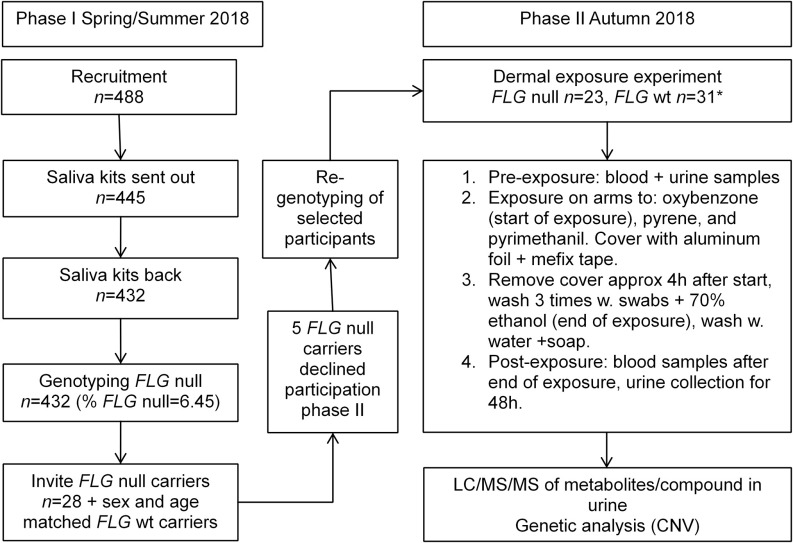
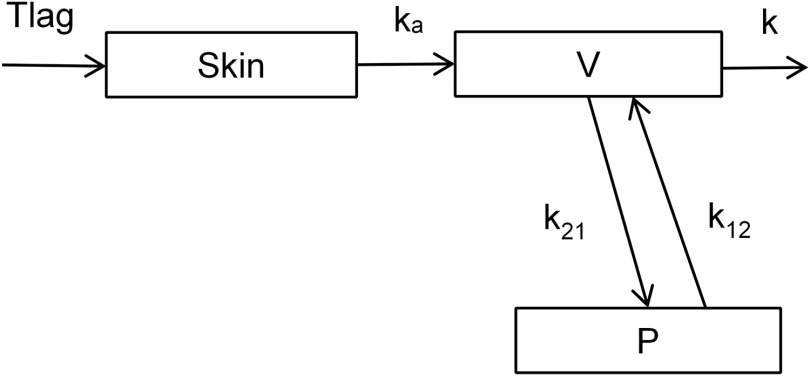
We performed a quantitative real-time polymerase chain reaction (qPCR)-based genetic screen for loss-of-function mutations ( null) in 432 volunteers from the general population in southern Sweden and identified 28 null carriers. In a dermal exposure experiment, we exposed 23 null and 31 wild-type (wt) carriers to three organic compounds common in the environment: the polycyclic aromatic hydrocarbon pyrene, the pesticide pyrimethanil, and the ultraviolet-light absorber oxybenzone. We then used liquid-chromatography mass-spectrometry to measure the concentrations of these chemicals or their metabolites in the subjects' urine over 48 h following exposure. Furthermore, we used long-range PCR to measure repeat copy number variants (CNV), and we performed population toxicokinetic analysis.
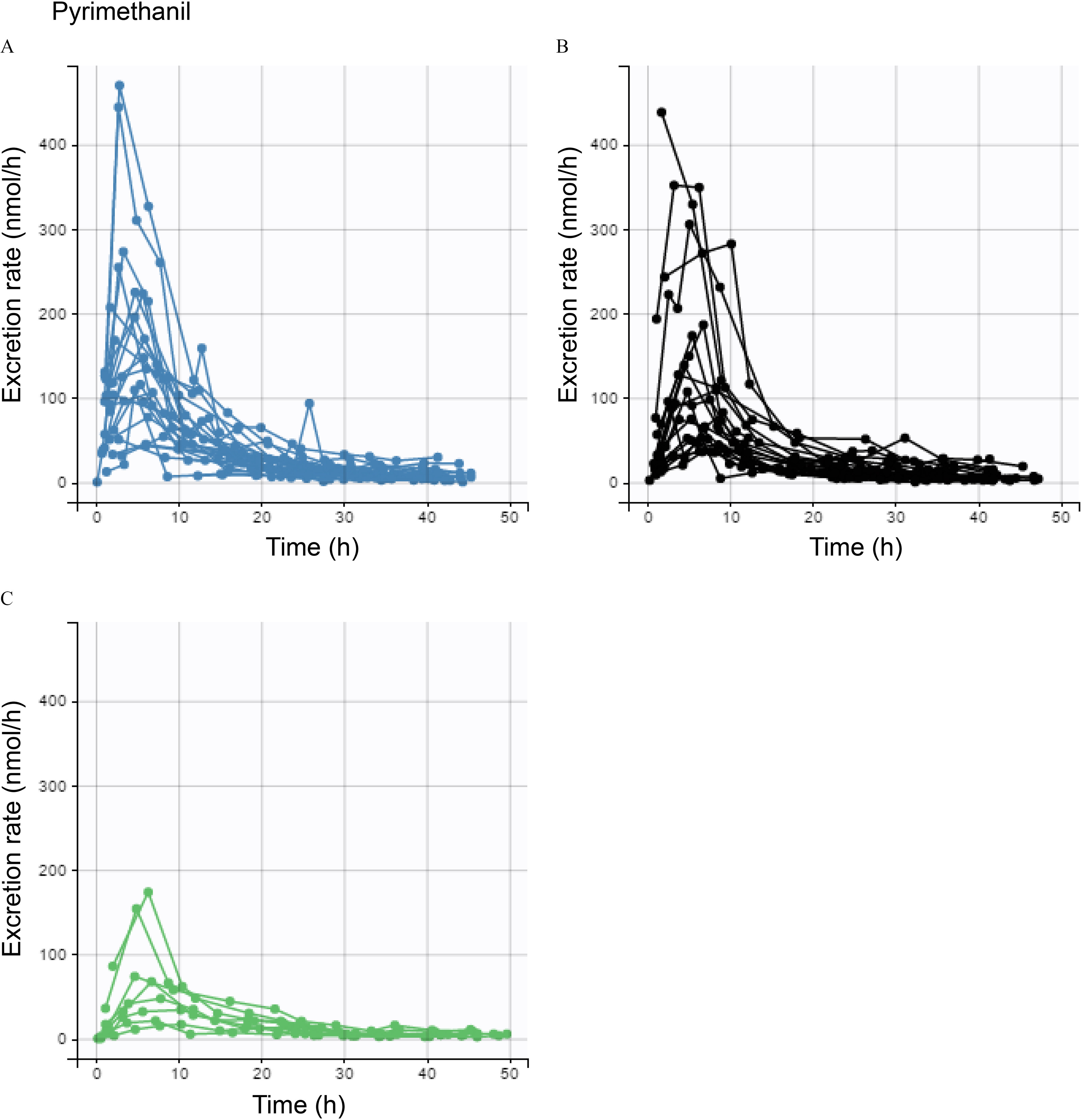
Lag times for the uptake and dermal absorption rate of the chemicals differed significantly between null and wt carriers with low (20-22 repeats) and high CNV (23-24 repeats). We found a dose-dependent effect on chemical absorption with increasing lag times by increasing CNV for both pyrimethanil and pyrene, and decreasing area under the urinary excretion rate curve () with increasing CNV for pyrimethanil. null carriers excreted 18% and 110% more metabolite (estimated by ) for pyrimethanil than wt carriers with low and high CNV, respectively.
We conclude that genotype influences the dermal absorption of some common chemicals. Overall, null carriers were the most susceptible, with the shortest lag time and highest rate constants for skin absorption, and higher fractions of the applied dose excreted. Furthermore, our results indicate that low CNV resulted in increased dermal absorption of chemicals. https://doi.org/10.1289/EHP7310.
丝聚蛋白是皮肤屏障结构和功能的重要组成部分。丝聚蛋白基因的功能丧失(无功能)突变可能会增加皮肤对化学物质的吸收。
本研究旨在阐明皮肤对化学物质的吸收是否因基因型而异。
我们对来自瑞典南部普通人群的 432 名志愿者进行了基于定量实时聚合酶链反应(qPCR)的无功能突变(无功能)基因筛查,并鉴定出 28 名无功能突变携带者。在一项皮肤暴露实验中,我们使 23 名无功能突变携带者和 31 名野生型(wt)携带者接触三种常见的环境化合物:多环芳烃芘、农药嘧啶胺和紫外线吸收剂氧苯酮。然后,我们使用液相色谱-质谱法测量暴露后 48 小时内这些化学物质或其代谢物在受试者尿液中的浓度。此外,我们使用长距离 PCR 测量重复拷贝数变异(CNV),并进行人群毒代动力学分析。
低(20-22 个重复)和高(23-24 个重复)CNV 无功能突变携带者对化学物质的吸收潜伏期和皮肤吸收速率差异显著。我们发现嘧啶胺和芘的吸收与 CNV 呈剂量依赖性,随着 CNV 的增加,吸收潜伏期增加;而嘧啶胺的尿排泄率曲线下面积()随着 CNV 的增加而减少。与低和高 CNV 的 wt 携带者相比,无功能突变携带者分别排泄出嘧啶胺的代谢物(通过估计)多 18%和 110%。
我们得出结论,基因型会影响一些常见化学物质的皮肤吸收。总体而言,无功能突变携带者最易受影响,其皮肤吸收的潜伏期最短,吸收速率常数最高,且吸收的剂量分数最高。此外,我们的结果表明,低 CNV 会增加皮肤对化学物质的吸收。https://doi.org/10.1289/EHP7310.