Gharaibeh Abeer, Smith Richard H, Conway Michael J
Insight Research Institute, Flint, MI 48507, USA.
Department of Research, Insight Surgical Hospital, Warren, MI 48091, USA.
Infect Dis Rep. 2021 Jan 11;13(1):58-71. doi: 10.3390/idr13010008.
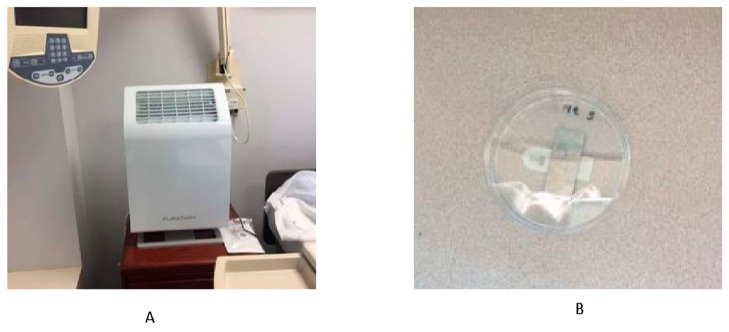
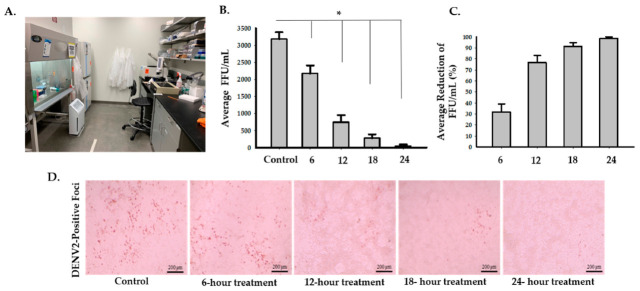
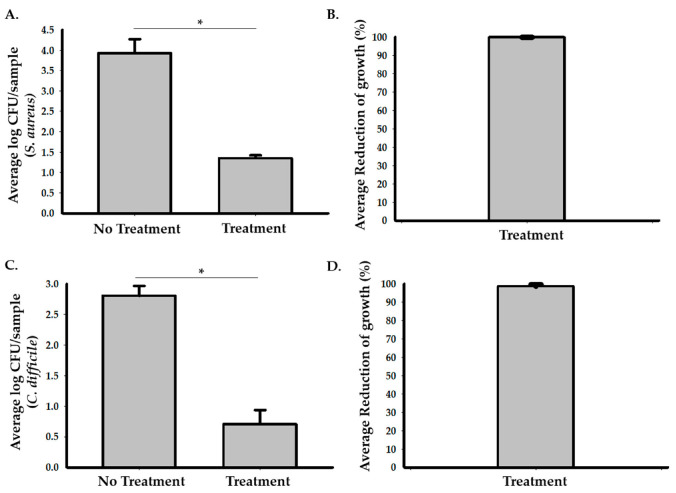
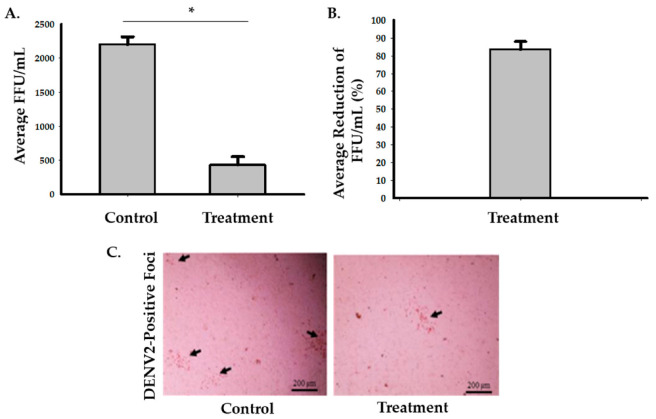
Contaminated surfaces and indoor environments are important sources of infectious spread within hospital and non-hospital facilities. Bacterial infections such as infections with (formerly ) () and () and its antibiotic resistant strains continue to pose a significant risk to healthcare workers and patients. Additionally, the recent emergence of the coronavirus disease 2019 (COVID-19) pandemic, which is caused by the novel coronavirus, severe acute respiratory syndrome coronavirus 2 (SARS-CoV-2), highlights the need for safe and effective methods to decontaminate surfaces to control infection spread in hospitals and the community. To address these critical needs, we tested a photocatalytic reactor decontamination method to disinfect contaminated surfaces in a hospital and a laboratory setting. By placing the reactor in a test hospital room, growth of and were significantly reduced compared with a control room. Additionally, using a model enveloped positive-sense single-stranded RNA virus, dengue virus type 2 (DENV2), we showed that the use of the photocatalytic reactor reduces viral infectivity. Collectively, the results demonstrate the potential utility of photocatalytic reactors in reducing the spread of highly contagious bacterial and viral infections through contaminated surfaces and environments.
受污染的表面和室内环境是医院和非医院设施内感染传播的重要来源。诸如耐甲氧西林金黄色葡萄球菌(以前称为耐甲氧西林金葡菌)、耐万古霉素肠球菌和艰难梭菌及其耐药菌株引起的细菌感染,继续对医护人员和患者构成重大风险。此外,由新型冠状病毒严重急性呼吸综合征冠状病毒2(SARS-CoV-2)引起的2019冠状病毒病(COVID-19)大流行的出现,凸显了需要安全有效的方法对表面进行去污,以控制医院和社区内的感染传播。为满足这些关键需求,我们测试了一种光催化反应器去污方法,以对医院和实验室环境中受污染的表面进行消毒。通过将反应器放置在一家测试医院的病房内,与对照房间相比,耐甲氧西林金黄色葡萄球菌和艰难梭菌的生长显著减少。此外,使用一种包膜正链单链RNA病毒,即2型登革热病毒(DENV2),我们表明使用光催化反应器可降低病毒传染性。总体而言,这些结果证明了光催化反应器在减少通过受污染表面和环境传播的高传染性细菌和病毒感染方面的潜在效用。