Department of Liver Surgery, Renji Hospital, School of Medicine, Shanghai Jiao Tong University, No. 1630 Dongfang Road, Shanghai, 200127, People's Republic of China.
Department of Health Statistics, Second Military Medical University, Shanghai, People's Republic of China.
Sci Rep. 2021 Jan 13;11(1):1138. doi: 10.1038/s41598-020-80845-6.
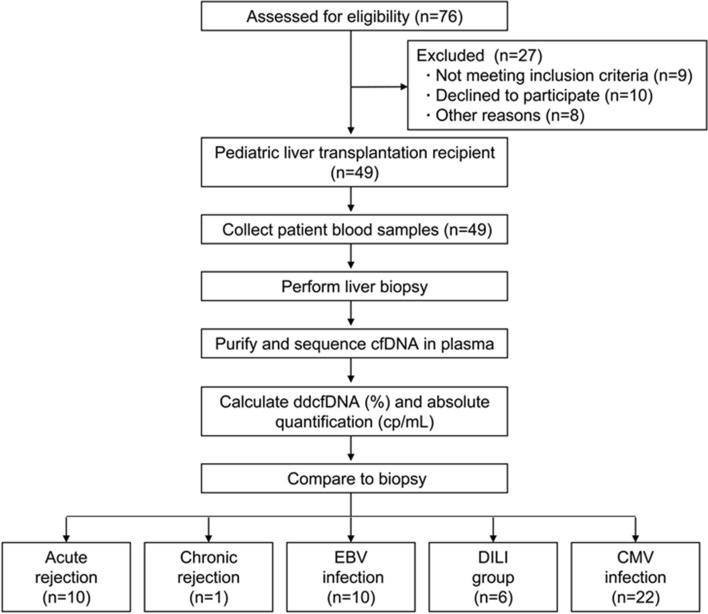
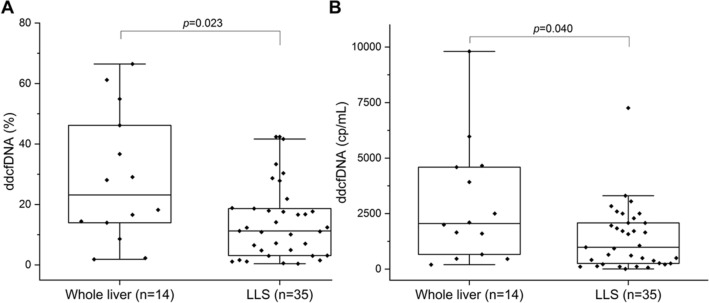
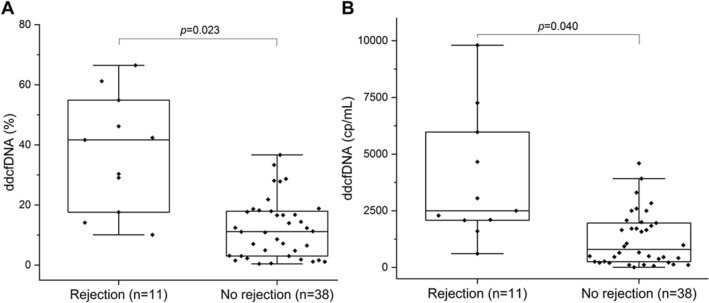
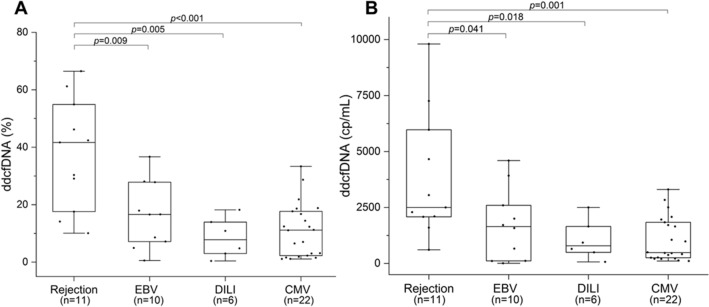
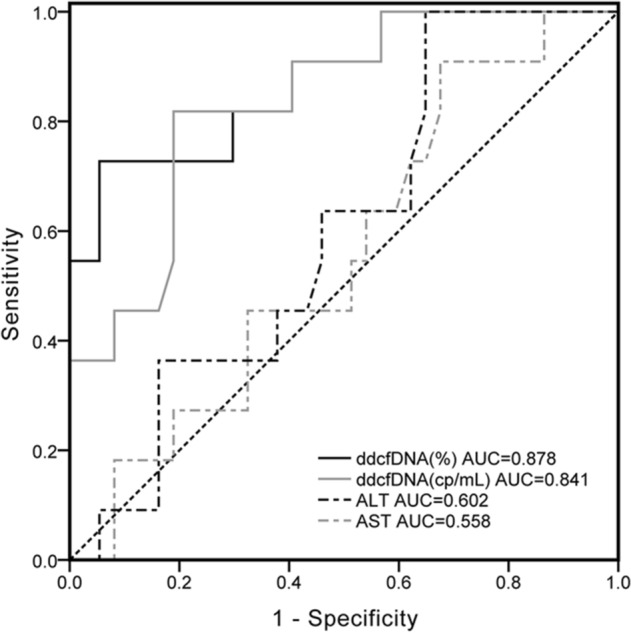
Donor-derived cell-free DNA (dd-cfDNA) has been of major interest recently as a non-invasive marker of graft injury, but has not yet been extensively tested in children. From May to September in 2019, a total of 76 pediatric patients receiving a liver graft were enrolled and there were 27 patients excluded. Ultimately plasma samples and matched liver specimens from 49 patients were successfully collected whenever rejection was suspected clinically. Dd-cfDNA were analyzed and then compared to biopsy. Of these, 11 (22.4%) patients were found to have rejection by biopsy. Dd-cfDNA levels were higher among patients with rejection compared to those with no rejection. In subgroup analysis, dd-cfDNA% among patients with rejection differed from those with EBV/CMV infection and DILI patients. Similarly, observations were available concerning dd-cfDNA (cp/mL). The AUC for dd-cfDNA% and dd-cfDNA (cp/mL) were 0.878, 0.841, respectively, both of which were higher than conventional LFTs. For rejection, dd-cfDNA% ≥ 28.7% yielded a sensitivity of 72.7%, specificity 94.7% and dd-cfDNA (cp/mL) ≥ 2076 cp/mL, yielded a sensitivity of 81.8%, specificity 81.9%. Of note, the dd-cfDNA distribution was significantly different between whole liver and LLS transplantation. In the setting of pediatric LTx, dd-cfDNA appears to be a sensitive biomarker indicating the presence of rejection.International Clinical Trails Registry Platform: ChiCTR1900022406.
供体细胞游离 DNA(dd-cfDNA)作为移植物损伤的非侵入性标志物,最近受到了极大关注,但尚未在儿童中广泛测试。2019 年 5 月至 9 月,共纳入 76 例接受肝移植的儿科患者,排除 27 例。最终,在临床怀疑排斥反应时,成功采集了 49 例患者的血浆样本和匹配的肝组织样本。分析了 dd-cfDNA 并与活检进行了比较。其中,11 例(22.4%)患者经活检发现排斥反应。与无排斥反应的患者相比,有排斥反应的患者 dd-cfDNA 水平更高。在亚组分析中,dd-cfDNA%在有排斥反应的患者与 EBV/CMV 感染和 DILI 患者不同。同样,也可以观察到 dd-cfDNA(cp/mL)。dd-cfDNA%和 dd-cfDNA(cp/mL)的 AUC 分别为 0.878 和 0.841,均高于常规 LFTs。对于排斥反应,dd-cfDNA%≥28.7%的灵敏度为 72.7%,特异性为 94.7%,dd-cfDNA(cp/mL)≥2076 cp/mL 的灵敏度为 81.8%,特异性为 81.9%。值得注意的是,dd-cfDNA 的分布在整个肝脏和 LLS 移植之间存在显著差异。在儿科 LTx 中,dd-cfDNA 似乎是一种敏感的生物标志物,可提示排斥反应的存在。国际临床试验注册平台:ChiCTR1900022406。