MMWR Morb Mortal Wkly Rep. 2021 Jan 15;70(2):36-39. doi: 10.15585/mmwr.mm7002a2.
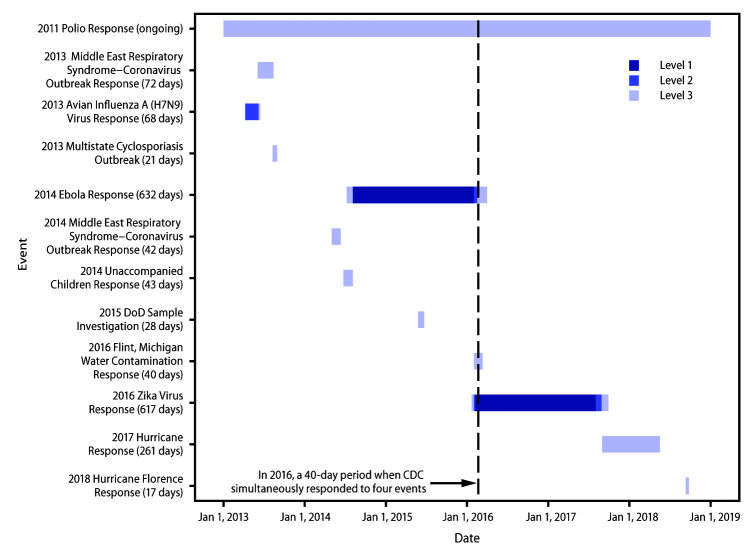
CDC continually evaluates its Emergency Management Program (EMP) activities, including Incident Management System (IMS) activations, use of EMP functions (referred to as EMP utilizations), and exercises, to ensure that the agency is ready to respond to infectious disease outbreaks, disasters (human-made or natural), and security events. Such evaluation not only documents baseline preparedness and response activities during a selected analytical period, but also highlights significant EMP actions that can guide and inform future emergency operations. To characterize EMP activities that occurred during January 1, 2013-December 31, 2018, CDC conducted a retrospective analysis of operational activity logs. The results showed 253 domestic (U.S. states and territories) and international EMP activities, including 12 IMS activations, 147 EMP utilizations, and 94 exercises. Infectious diseases were the most common threat among both IMS activations (58%) and EMP utilizations (52%). CDC responded to the 2014 Ebola epidemic and the 2016 Zika outbreak; each response lasted approximately 2 years and required extended collaboration with domestic and international partners. Understanding the trends in EMP activities, including knowing the most common threats, aids CDC in allocating resources and focusing preparedness efforts. In 2013, CDC became the first federal agency to receive full agency-wide accreditation by the Emergency Management Accreditation Program (EMAP) in recognition of CDC's commitment to preparedness and its ability to respond to domestic and global public health threats. CDC received EMAP reaccreditation in December 2018 (1,2).
疾病预防控制中心(CDC)持续评估其紧急管理计划(EMP)活动,包括事件管理系统(IMS)的启动、EMP 功能的使用(简称 EMP 利用率)以及演习,以确保该机构已准备好应对传染病爆发、灾害(人为或自然)以及安全事件。这种评估不仅记录了在选定的分析期内的基线准备和应对活动,还突出了重要的 EMP 行动,这些行动可以为未来的紧急行动提供指导和信息。为了描述 2013 年 1 月 1 日至 2018 年 12 月 31 日期间发生的 EMP 活动,CDC 对运营活动日志进行了回顾性分析。结果显示,有 253 项国内(美国各州和领土)和国际 EMP 活动,包括 12 次 IMS 启动、147 次 EMP 利用率和 94 次演习。传染病是 IMS 启动(58%)和 EMP 利用率(52%)中最常见的威胁。CDC 应对了 2014 年的埃博拉疫情和 2016 年的寨卡疫情;每次应对行动大约持续了 2 年,需要与国内外合作伙伴进行长期合作。了解 EMP 活动的趋势,包括了解最常见的威胁,有助于 CDC 分配资源并集中做好准备工作。2013 年,CDC 成为第一个通过紧急管理认证计划(EMAP)获得全机构范围认证的联邦机构,以表彰其对准备工作的承诺及其应对国内和全球公共卫生威胁的能力。CDC 于 2018 年 12 月获得了 EMAP 的再认证(1,2)。