Moore Eli K
Department of Environmental Science, School of Earth and the Environment, Rowan University, Glassboro, NJ 08028, USA.
Metabolites. 2021 Jan 12;11(1):49. doi: 10.3390/metabo11010049.
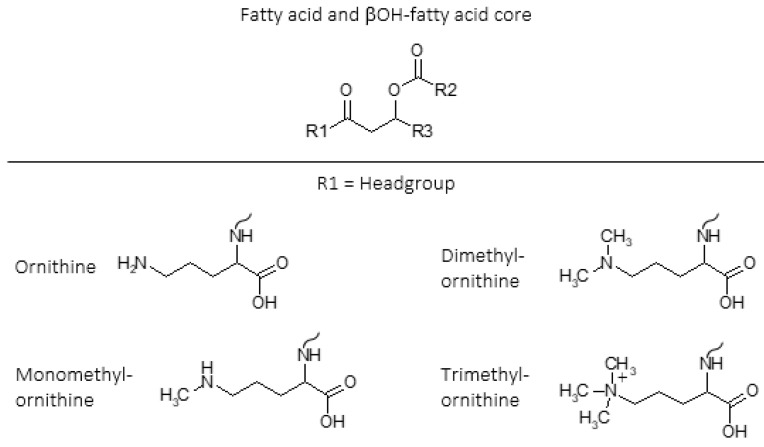
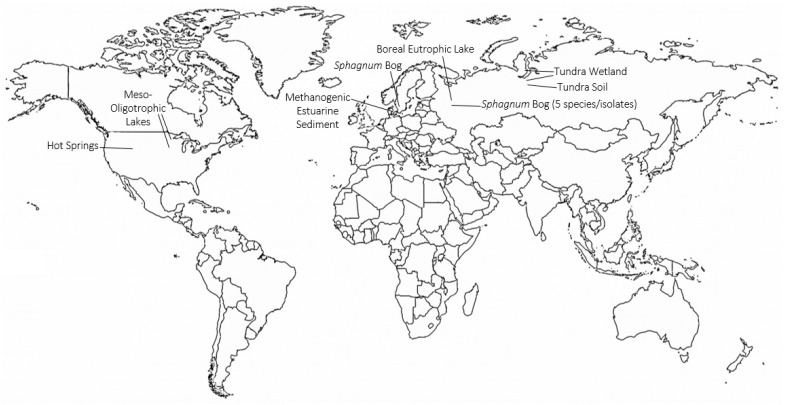
Intact polar membrane lipids (IPLs) are the building blocks of all cell membranes. There is a wide range of phosphorus-free IPL structures, including amino acid containing IPLs, that can be taxonomically specific. Trimethylornithine membrane lipids (TMOs) were discovered in northern wetland species that were isolated and described in the last decade. The trimethylated terminal nitrogen moiety of the ornithine amino acid in the TMO structure gives the lipid a charged polar head group, similar to certain phospholipids. Since their discovery, TMOs have been identified in various other recently described northern latitude species, and in diverse environments including tundra soil, a boreal eutrophic lake, meso-oligotrophic lakes, and hot springs. The majority of environments or enrichment cultures in which TMOs have been observed include predominately heterotrophic microbial communities involved in the degradation of recalcitrant material and/or low oxygen methanogenic conditions at primarily northern latitudes. Other ecosystems occupied with microbial communities that possess similar metabolic pathways, such as tropical peatlands or coastal salt marshes, may include TMO producing as well, further allowing these lipids to potentially be used to understand microbial community responses to environmental change in a wide range of systems. The occurrence of TMOs in hot springs indicates that these unique lipids could have broad environmental distribution with different specialized functions. Opportunities also exist to investigate the application of TMOs in microbiome studies, including forensic necrobiomes. Further environmental and microbiome lipidomics research involving TMOs will help reveal the evolution, functions, and applications of these unique membrane lipids.
完整的极性膜脂(IPLs)是所有细胞膜的组成部分。存在多种无磷的IPL结构,包括含氨基酸的IPL,它们可能具有分类学特异性。三甲基鸟氨酸膜脂(TMOs)是在过去十年中分离并描述的北方湿地物种中发现的。TMO结构中鸟氨酸氨基酸的三甲基化末端氮部分赋予脂质一个带电荷的极性头部基团,类似于某些磷脂。自发现以来,TMOs已在其他各种最近描述的北纬物种中以及在包括冻原土壤、北方富营养湖泊、中寡营养湖泊和温泉在内的不同环境中被鉴定出来。观察到TMOs的大多数环境或富集培养物主要包括参与难降解物质降解的异养微生物群落和/或主要在北纬地区的低氧产甲烷条件。其他由具有相似代谢途径的微生物群落占据的生态系统,如热带泥炭地或沿海盐沼,也可能包括产生TMOs的群落,这进一步使得这些脂质有可能被用于了解广泛系统中微生物群落对环境变化的反应。TMOs在温泉中的出现表明这些独特的脂质可能具有广泛的环境分布和不同的特殊功能。在微生物组研究中,包括法医坏死微生物组研究中,也存在研究TMOs应用的机会。涉及TMOs的进一步环境和微生物组脂质组学研究将有助于揭示这些独特膜脂的进化、功能和应用。