School of Mathematics and Statistics, The University of Sydney, Sydney, NSW, Australia.
The Westmead Institute for Medical Research, The University of Sydney, Sydney, NSW, Australia.
Transl Psychiatry. 2021 Jan 14;11(1):50. doi: 10.1038/s41398-020-01175-9.
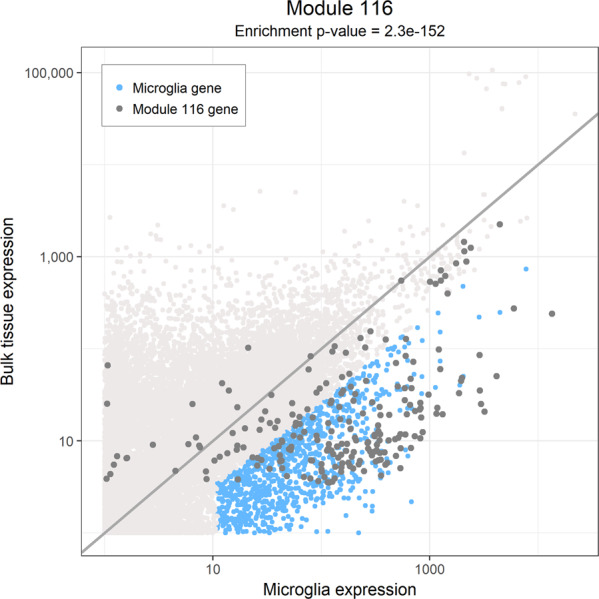
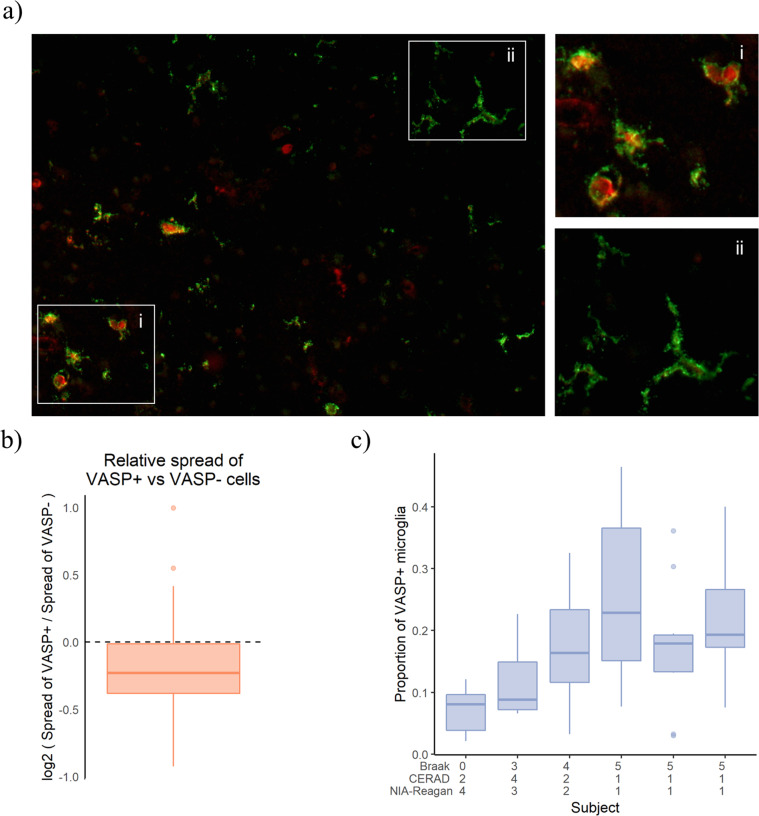
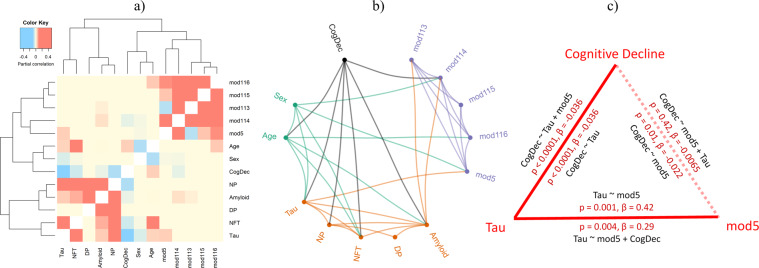
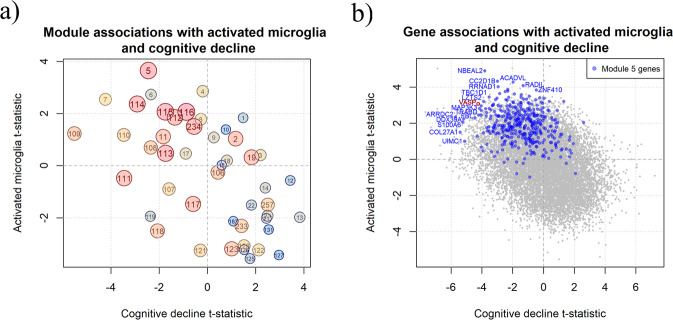
Microglial dysfunction has been proposed as one of the many cellular mechanisms that can contribute to the development of Alzheimer's disease (AD). Here, using a transcriptional network map of the human frontal cortex, we identify five modules of co-expressed genes related to microglia and assess their role in the neuropathologic features of AD in 540 subjects from two cohort studies of brain aging. Two of these transcriptional programs-modules 113 and 114-relate to the accumulation of β-amyloid, while module 5 relates to tau pathology. We replicate these associations in brain epigenomic data and in two independent datasets. In terms of tau, we propose that module 5, a marker of activated microglia, may lead to tau accumulation and subsequent cognitive decline. We validate our model further by showing that three representative module 5 genes (ACADVL, TRABD, and VASP) encode proteins that are upregulated in activated microglia in AD.
小胶质细胞功能障碍被认为是导致阿尔茨海默病(AD)发生的众多细胞机制之一。在这里,我们利用人类前额叶皮质的转录组网络图谱,鉴定出与小胶质细胞相关的五个共表达基因模块,并在两个大脑老化队列研究的 540 名受试者中评估其在 AD 神经病理学特征中的作用。这两个转录程序模块——模块 113 和 114——与β-淀粉样蛋白的积累有关,而模块 5 与 tau 病理学有关。我们在脑表观基因组数据和两个独立的数据集上复制了这些关联。就 tau 而言,我们提出模块 5(激活小胶质细胞的标志物)可能导致 tau 积累和随后的认知能力下降。我们通过进一步展示三个代表性模块 5 基因(ACADVL、TRABD 和 VASP)编码的蛋白在 AD 中激活的小胶质细胞中上调,进一步验证了我们的模型。