Department of Nephrology and Hypertension, Fukushima Medical University, 1, Hikarigaoka, Fukushima, Japan.
Department of Chronic Kidney Disease Initiatives, Fukushima Medical University, Fukushima, Japan.
Sci Rep. 2021 Jan 14;11(1):1380. doi: 10.1038/s41598-020-80835-8.
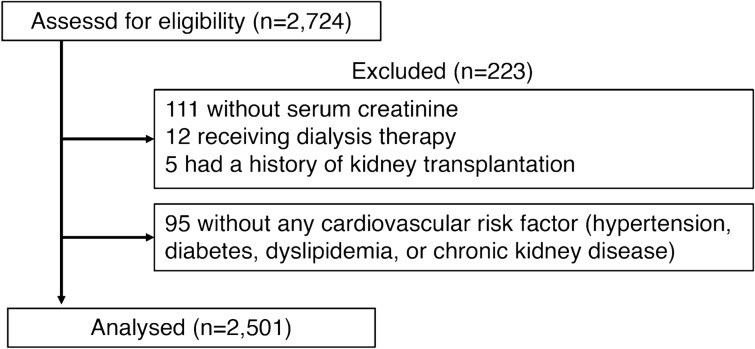
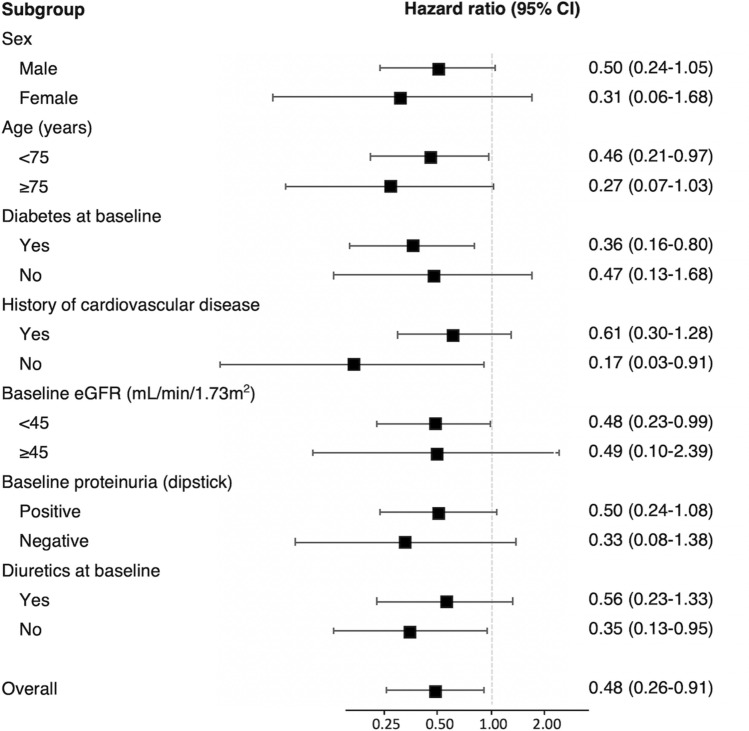
As previous studies have reported finding an association between hyperuricemia and the development of cardiovascular and chronic kidney disease, hyperuricemia is thought to be an independent risk factor for hypertension and diabetic mellitus. However, we have not been able to determine whether the use of xanthine oxidase inhibitors can reduce cardiovascular disease. The present study used the longitudinal data of the Fukushima Cohort Study to investigate the relationship between the use of xanthine oxidase inhibitors and cardiovascular events in patients with cardiovascular risks. During the 3-year period between 2012 and 2014, a total of 2724 subjects were enrolled in the study and followed. A total of 2501 subjects had hypertension, diabetic mellitus, dyslipidemia, or chronic kidney disease, and were identified as having cardiovascular risks. The effects of xanthine oxidase inhibitor use on the development of cardiovascular events was evaluated in these patients using a time to event analysis. During the observational periods (median 2.7 years), the incidence of cardiovascular events was 20.7 in subjects with xanthine oxidase inhibitor and 11.2 (/1000 person-years, respectively) in those without. Although a univariate Cox regression analysis showed that the risk of cardiovascular events was significantly higher in subjects administered xanthine oxidase inhibitors (HR = 1.87, 95% CI 1.19-2.94, p = 0.007), the risk was significantly lower in subjects administered a xanthine oxidase inhibitor after adjustment for covariates (HR = 0.48, 95% CI 0.26-0.91; p = 0.024) compared to those without. Xanthine oxidase inhibitor use was associated with reduced risk of cardiovascular disease in patients with cardiovascular risk factors.
如先前的研究报告指出,高尿酸血症与心血管和慢性肾脏病的发展之间存在关联,因此高尿酸血症被认为是高血压和糖尿病的独立危险因素。然而,我们还无法确定黄嘌呤氧化酶抑制剂的使用是否可以降低心血管疾病的风险。本研究使用福岛队列研究的纵向数据,调查了心血管风险患者使用黄嘌呤氧化酶抑制剂与心血管事件之间的关系。在 2012 年至 2014 年的 3 年期间,共有 2724 名受试者入组并进行了随访。共有 2501 名受试者患有高血压、糖尿病、血脂异常或慢性肾脏病,被认为存在心血管风险。在这些患者中,使用时间事件分析评估了黄嘌呤氧化酶抑制剂的使用对心血管事件发展的影响。在观察期(中位数 2.7 年)内,使用黄嘌呤氧化酶抑制剂的患者中心血管事件的发生率为 20.7/1000 人年,而未使用黄嘌呤氧化酶抑制剂的患者中心血管事件的发生率为 11.2/1000 人年。虽然单变量 Cox 回归分析显示,接受黄嘌呤氧化酶抑制剂治疗的患者发生心血管事件的风险显著更高(HR=1.87,95%CI 1.19-2.94,p=0.007),但在调整了协变量后,接受黄嘌呤氧化酶抑制剂治疗的患者的风险显著更低(HR=0.48,95%CI 0.26-0.91;p=0.024)。与未使用黄嘌呤氧化酶抑制剂的患者相比,黄嘌呤氧化酶抑制剂的使用与心血管风险患者的心血管疾病风险降低相关。