Choudhury Ashok, Reddy Golamari Srinivasa, Venishetty Shantan, Pamecha Viniyendra, Shasthry Saggere Muralikrishna, Tomar Arvind, Mitra Lalita Gauri, Prasad Venkata Siva Tez, Mathur Rajendra Prasad, Bhattacharya Debajyoti, Sarin Shiv Kumar
Department of Hepatology and Liver Transplant, Institute of Liver and Biliary Sciences, New Delhi, India.
Department of HPB Surgery and Liver Transplant, Institute of Liver and Biliary Sciences, New Delhi, India.
J Clin Transl Hepatol. 2020 Dec 28;8(4):467-473. doi: 10.14218/JCTH.2020.00061. Epub 2020 Oct 10.
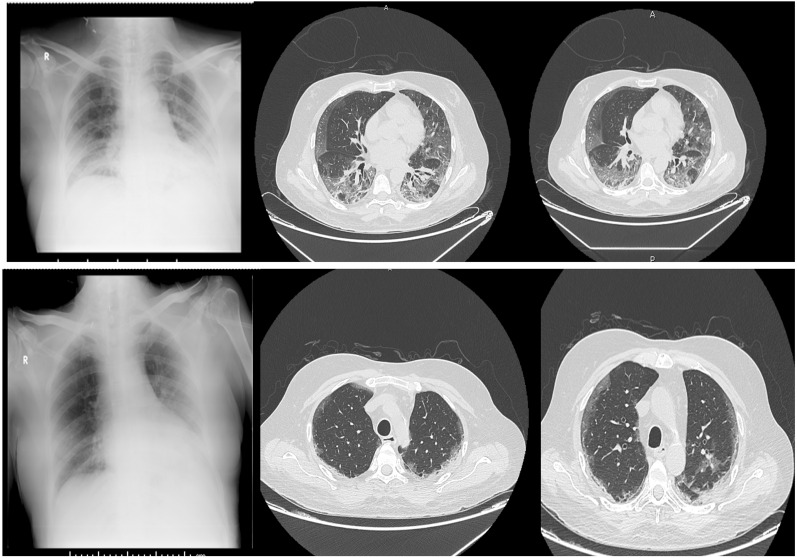
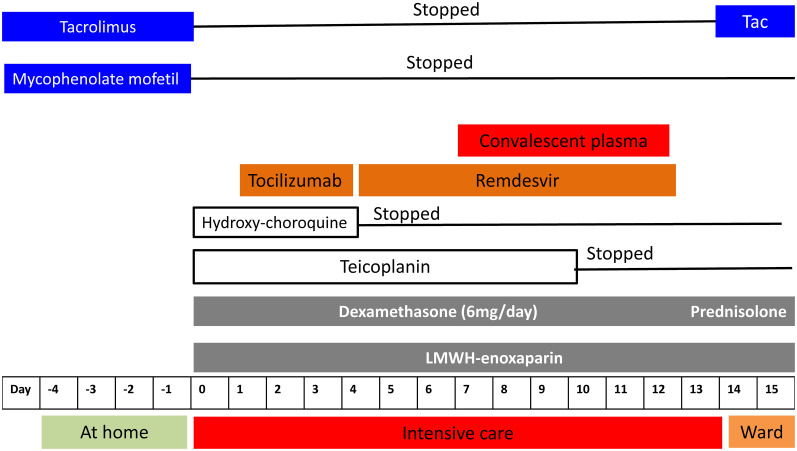
The severe acute respiratory syndrome corona virus-2 (referred to as SARS CoV2) pandemic had a great impact on public life in general as well as on populations with pre-existing disease and co-morbidities. Liver transplant and immunosuppressant medication predisposes to more severe disease and is often associated with poor outcome. The clinical features, disease course, treatment and process of modulating the immunosuppression is challenging. Here, we describe the clinical presentation, treatment and outcomes in six liver transplant recipients. Out of those six patients, three had mild, one had moderate and one had severe COVID-19, and one was asymptomatic. The immunosuppression minimization or withdrawal was done based upon the clinical severity. Consideration of tocilizumab and/o convalescent plasma as well as antivirals i.e. remdesvir done in severe cases. The routine practice of prophylactic anticoagulation, consideration of repurposed drugs (i.e. teicoplanin and doxycycline), and watchful monitoring of asymptomatic recipients helped to achieve an uneventful recovery.
严重急性呼吸综合征冠状病毒2(简称SARS-CoV-2)大流行对公众生活以及患有基础疾病和合并症的人群产生了巨大影响。肝移植和免疫抑制药物会使人更容易患上更严重的疾病,并且往往与不良预后相关。免疫抑制调节的临床特征、病程、治疗和过程具有挑战性。在此,我们描述了6例肝移植受者的临床表现、治疗及预后情况。在这6例患者中,3例为轻症,1例为中症,1例为重症COVID-19,1例无症状。根据临床严重程度对免疫抑制进行最小化或停用。对于重症病例,考虑使用托珠单抗和/或康复期血浆以及抗病毒药物即瑞德西韦。预防性抗凝的常规做法、对重新利用药物(即替考拉宁和多西环素)的考虑以及对无症状受者的密切监测有助于实现平稳康复。