Department of Radiology, The Affiliated Hospital of Southwest Medical University, Luzhou, Sichuan 646000, P.R. China.
Department of Gastroenterology, Xinqiao Hospital of Army Medical University, Chongqing 400037, P.R. China.
Int J Mol Med. 2021 Mar;47(3). doi: 10.3892/ijmm.2021.4853. Epub 2021 Jan 15.
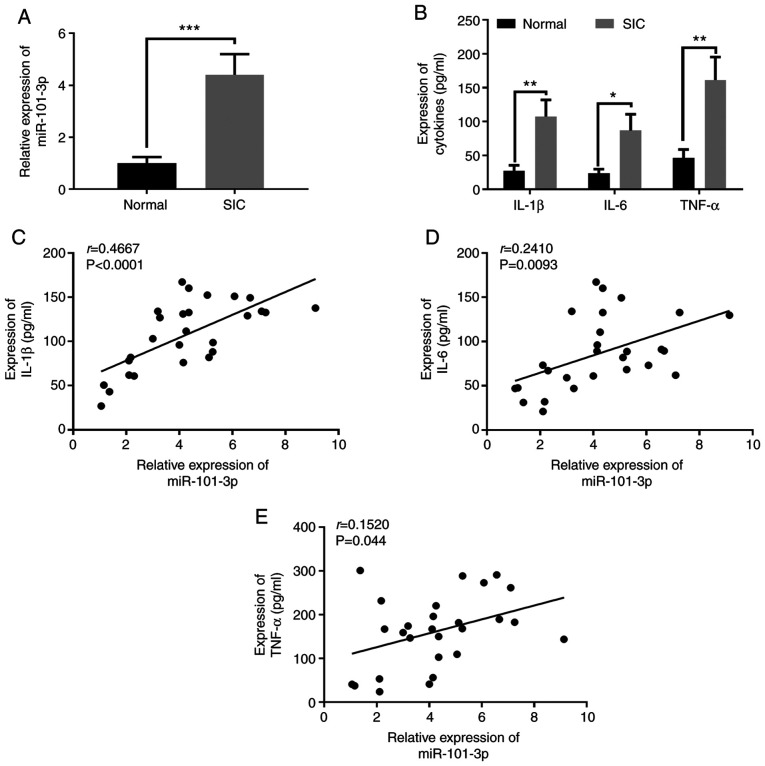
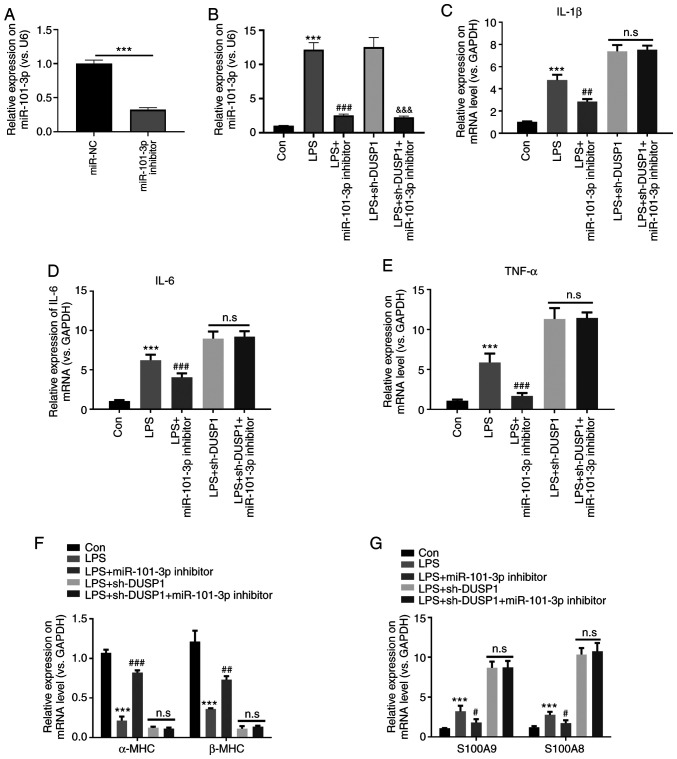
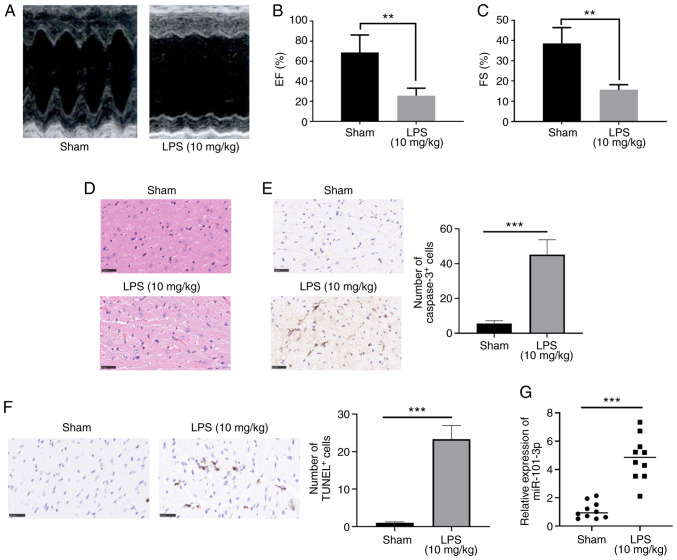
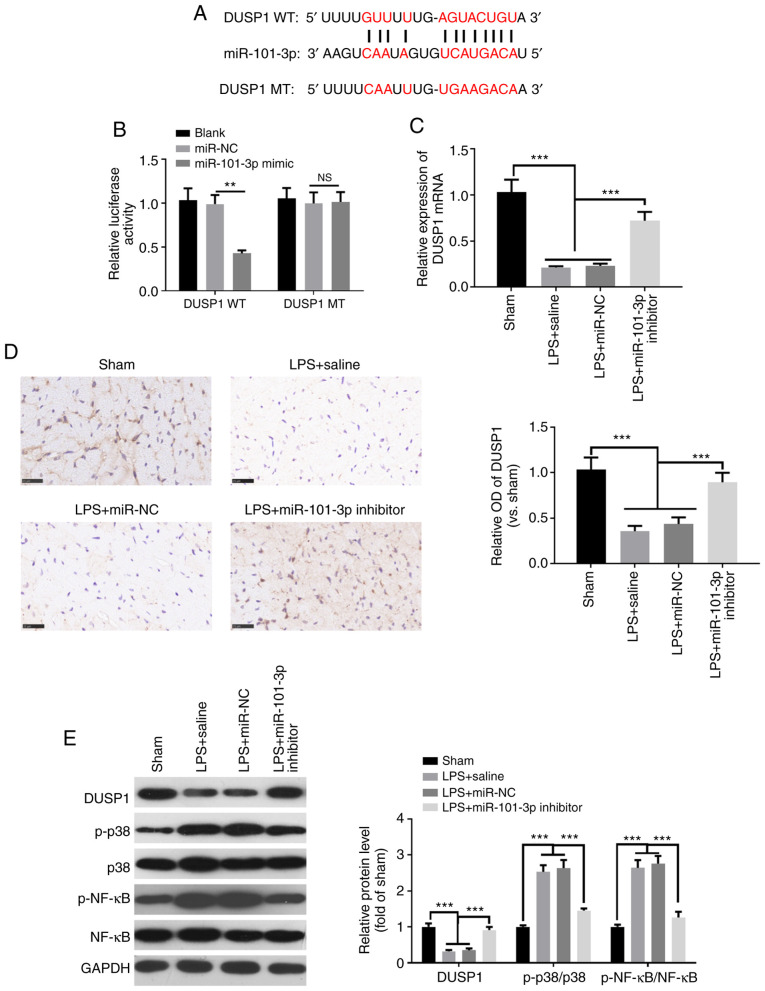
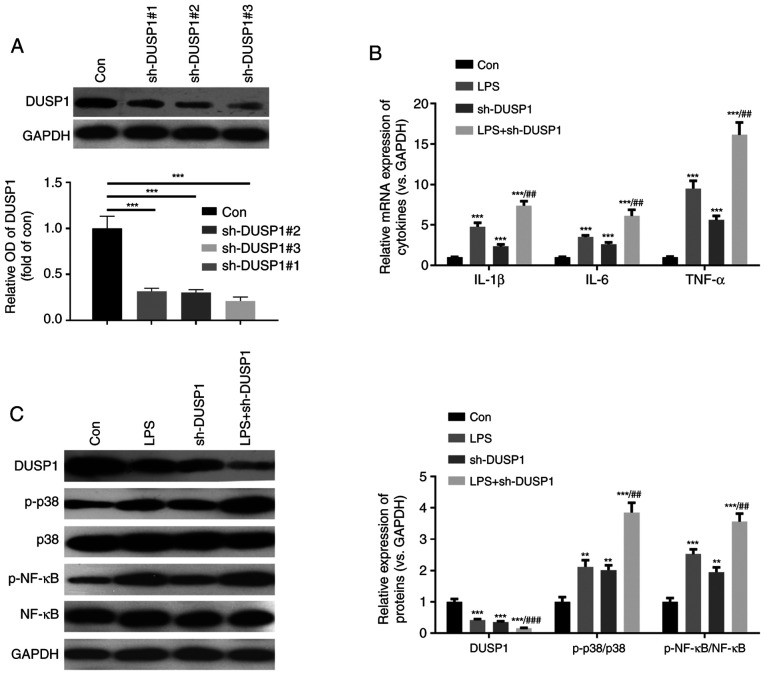
Numerous studies have found that microRNAs (miRNAs or miRs) are aberrantly expressed when sepsis occurs. The present study aimed to investigate the role of miR‑101‑3p in sepsis‑induced myocardial injury and to elucidate the underlying mechanisms. Models of myocardial injury were established both and . The results revealed that miR‑101‑3p was upregulated in the serum of patients with sepsis‑induced cardiomyopathy (SIC) and positively correlated with the levels of pro‑inflammatory cytokines (including IL‑1β, IL‑6 and TNF‑α). Subsequently, rats were treated with miR‑101‑3p inhibitor to suppress miR‑101‑3p and were then exposed to lipopolysaccharide (LPS). The results revealed that LPS induced marked cardiac dysfunction, apoptosis and inflammation. The inhibition of miR‑101‑3p markedly attenuated sepsis‑induced myocardial injury by attenuating apoptosis and the expression of pro‑inflammatory cytokines. Mechanistically, dual specificity phosphatase‑1 (DUSP1) was found to be a functional target of miR‑101‑3p. The downregulation of miR‑101‑3p led to the overexpression of DUSP1, and the inactivation of the MAPK p38 and NF‑κB pathways. Moreover, blocking DUSP1 by short hairpin RNA against DUSP1 (sh‑DUSP1) significantly reduced the myocardial protective effects mediated by the inhibition of miR‑101‑3p. Collectively, the findings of the present study demonstrate that the inhibition of miR‑101‑3p exerts cardioprotective effects by suppressing MAPK p38 and NF‑κB pathway activation, and thus attenuating inflammation and apoptosis dependently by enhancing DUSP1 expression.
大量研究发现,脓毒症发生时 microRNAs(miRNAs 或 miRs)表达异常。本研究旨在探讨 miR-101-3p 在脓毒症诱导性心肌损伤中的作用,并阐明其潜在机制。通过 和 分别建立心肌损伤模型。结果表明,脓毒症诱导性心肌病(SIC)患者血清中 miR-101-3p 上调,且与促炎细胞因子(包括 IL-1β、IL-6 和 TNF-α)水平呈正相关。随后,用 miR-101-3p 抑制剂处理大鼠以抑制 miR-101-3p,然后用脂多糖(LPS)处理。结果表明,LPS 诱导明显的心脏功能障碍、细胞凋亡和炎症。抑制 miR-101-3p 可通过减轻细胞凋亡和促炎细胞因子的表达显著减轻脓毒症诱导的心肌损伤。机制上,双特异性磷酸酶-1(DUSP1)被发现是 miR-101-3p 的功能靶标。miR-101-3p 的下调导致 DUSP1 的过表达,以及 MAPK p38 和 NF-κB 通路的失活。此外,用短发夹 RNA 针对 DUSP1(sh-DUSP1)阻断 DUSP1 可显著降低 miR-101-3p 抑制介导的心肌保护作用。综上所述,本研究结果表明,抑制 miR-101-3p 通过抑制 MAPK p38 和 NF-κB 通路的激活发挥心脏保护作用,从而通过增强 DUSP1 表达依赖性地减轻炎症和细胞凋亡。