Cardiology Unit, University Hospital Policlinico Riuniti, Viale Pinto1, 71100, Foggia, Italy.
Department of Medical and Surgical Sciences, University of Foggia, Foggia, Italy.
Aging Clin Exp Res. 2021 Feb;33(2):273-278. doi: 10.1007/s40520-020-01775-x. Epub 2021 Jan 15.
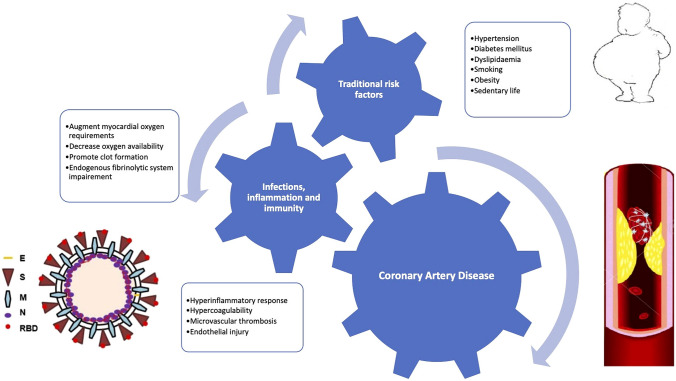
The recent Sars-Cov-2 pandemic (COVID-19) has led to growing research on the relationship between thromboembolism and Sars-Cov-2 infection. Nowadays, endothelial dysfunction, platelet activation, coagulation, and inflammatory host immune response are the subject of extensive researches in patients with COVID-19 disease. However, studies on the link between microorganisms or infections and thrombotic or thromboembolic events met fluctuating interest in the past. We, therefore, aimed to briefly summarize previous evidence on this topic, highlighting common points between previous data and what experienced today with SARS-COV2 infections.
最近的严重急性呼吸系统综合征冠状病毒 2 型(SARS-CoV-2)大流行(COVID-19)引发了人们对血栓栓塞与 SARS-CoV-2 感染之间关系的研究热潮。目前,内皮功能障碍、血小板激活、凝血和宿主炎症免疫反应是 COVID-19 患者的广泛研究课题。然而,过去对微生物或感染与血栓形成或血栓栓塞事件之间的联系的研究兴趣时高时低。因此,我们旨在简要总结这一主题的先前证据,突出先前数据与当前 SARS-CoV-2 感染经验之间的共同点。