From the Departments of Anesthesiology, Perioperative, and Pain Medicine.
Emergency Medicine, Stanford University School of Medicine, Stanford, California.
A A Pract. 2020 Dec 17;14(14):e01360. doi: 10.1213/XAA.0000000000001360.
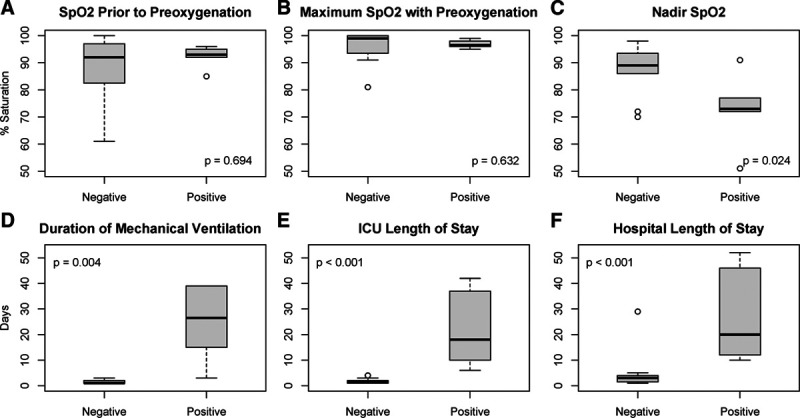
This single-center retrospective study evaluated a protocol for the intubation of patients with confirmed or suspected coronavirus disease 2019 (COVID-19). Twenty-one patients were intubated, 9 of whom were found to have COVID-19. Adherence to the airway management protocol was high. COVID-19 patients had lower peripheral capillary oxygen saturation by pulse oximetry (Spo2) nadirs during intubation (Spo2, 73% [72%-77%] vs 89% [86%-94%], P = .024), and a greater percentage experienced severe hypoxemia defined as Spo2 ≤80% (89% vs 25%, P = .008). The incidence of severe hypoxemia in COVID-19 patients should be considered in the development of guidelines that incorporate high-flow nasal cannula and noninvasive positive pressure ventilation.
本单中心回顾性研究评估了一种用于对确诊或疑似 2019 年冠状病毒病(COVID-19)患者进行插管的方案。共对 21 名患者进行了插管,其中 9 名患者被确诊为 COVID-19。气道管理方案的遵循度很高。在插管过程中,COVID-19 患者的脉搏血氧饱和度(SpO2)最低值更低(SpO2,73%[72%-77%] vs 89%[86%-94%],P=.024),并且更大量的患者经历了严重低氧血症(定义为 SpO2≤80%)(89% vs 25%,P=.008)。在制定包含高流量鼻导管和无创正压通气的指南时,应考虑 COVID-19 患者中严重低氧血症的发生率。