Rosen Ran, Lebedev Galina, Kontsedalov Svetlana, Ben-Yakir David, Ghanim Murad
Department of Entomology, Volcani Center, Rishon LeZion 7505101, Israel.
Insects. 2021 Jan 13;12(1):67. doi: 10.3390/insects12010067.
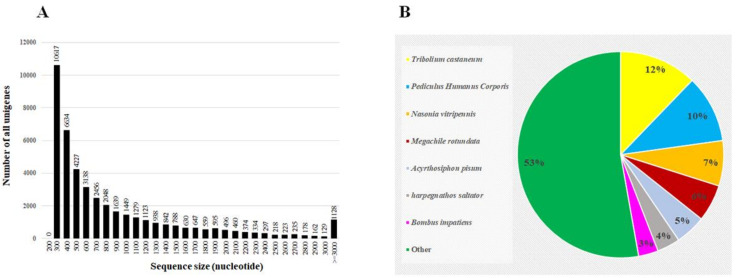
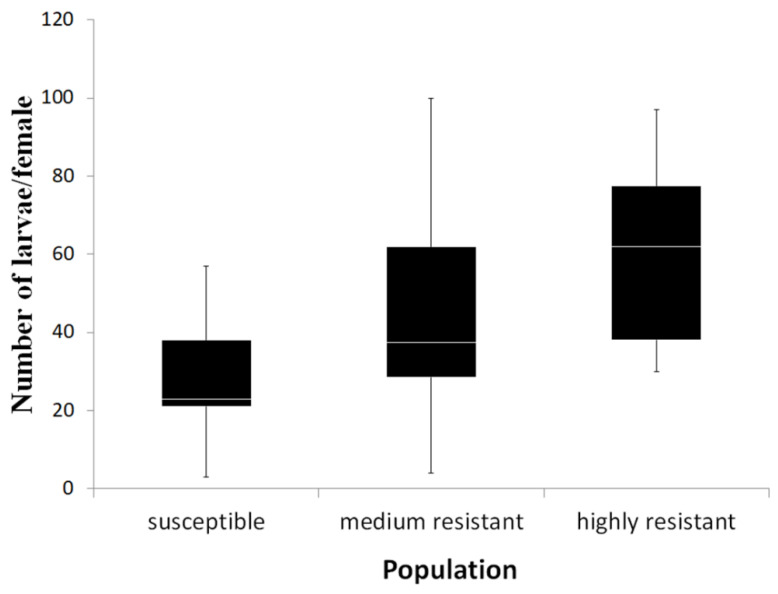
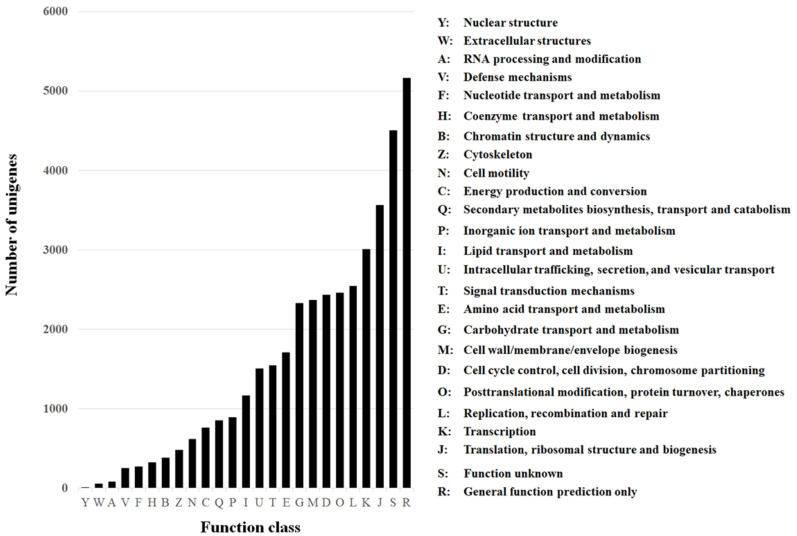
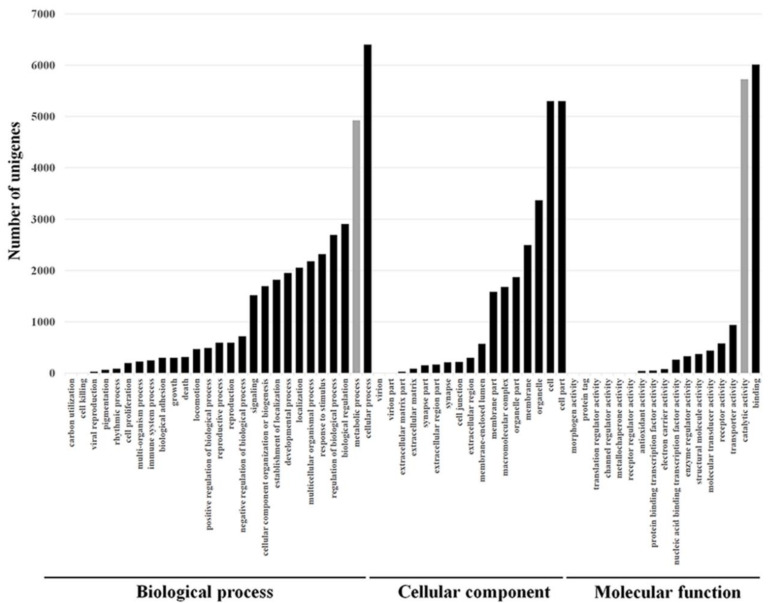
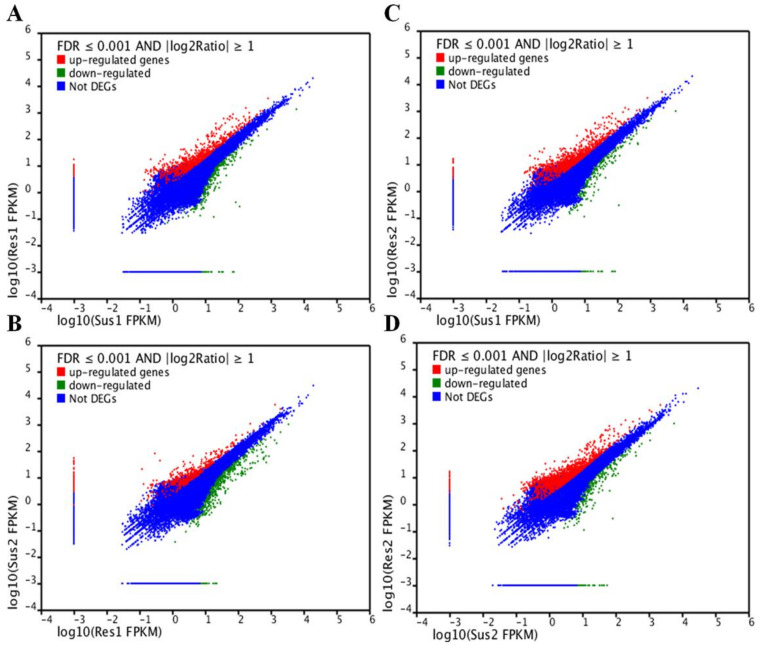
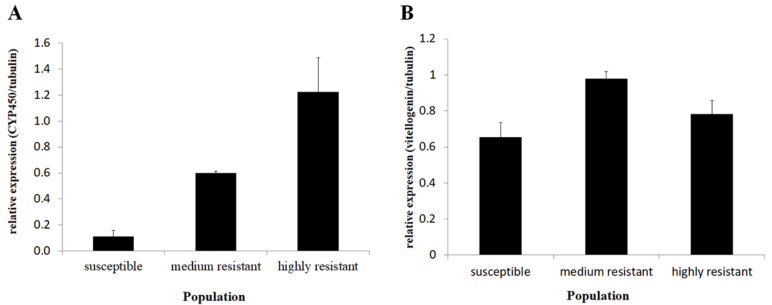
The onion thrip, (Thysanoptera: Thripidae) is a major polyphagous pest that attacks a wide range of economically important crops, especially Allium species. The thrip's damage can result in yield loss of up to 60% in onions (). In the past few decades, thrip resistance to insecticides with various modes of actions have been documented. These include resistance to spinosad, a major active compound used against thrips, which was reported from Israel. Little is known about the molecular mechanisms underlying spinosad resistance in . We attempted to characterize the mechanisms involved in resistance to spinosad using quantitative transcriptomics. Susceptible (LC50 = 0.6 ppm) and resistant (LC50 = 23,258 ppm) thrip populations were collected from Israel. An additional resistant population (LC50 = 117 ppm) was selected in the laboratory from the susceptible population. De novo transcriptome analysis on the resistant and susceptible population was conducted to identify differently expressed genes (DGEs) that might be involved in the resistance against spinosad. In this analysis, 25,552 unigenes were sequenced, assembled, and functionally annotated, and more than 1500 DGEs were identified. The expression levels of candidate genes, which included cytochrome P450 and vittelogenin, were validated using quantitative RT-PCR. The cytochrome P450 expression gradually increased with the increase of the resistance. Higher expression levels of vitellogenin in the resistant populations were correlated with higher fecundity, suggesting a positive effect of the resistance on resistant populations. This research provides a novel genetic resource for onion thrips and a comprehensive molecular examination of resistant populations to spinosad. Those resources are important for future studies concerning thrips and resistance in insect pests regarding agriculture.
葱蓟马(缨翅目:蓟马科)是一种主要的多食性害虫,会攻击多种具有重要经济价值的作物,尤其是葱属植物。蓟马造成的损害会导致洋葱减产高达60%()。在过去几十年中,已记录到蓟马对多种作用方式的杀虫剂产生抗性。这些抗性包括对多杀菌素的抗性,多杀菌素是一种用于防治蓟马的主要活性化合物,以色列曾报道过这种抗性。关于葱蓟马对多杀菌素抗性的分子机制知之甚少。我们试图利用定量转录组学来表征对多杀菌素抗性的相关机制。从以色列收集了敏感(LC50 = 0.6 ppm)和抗性(LC50 = 23,258 ppm)的蓟马种群。另外还从敏感种群中在实验室筛选出一个抗性种群(LC50 = 117 ppm)。对抗性和敏感种群进行了从头转录组分析,以鉴定可能参与对多杀菌素抗性的差异表达基因(DGE)。在该分析中,对25,552个单基因进行了测序、组装和功能注释,并鉴定出1500多个DGE。使用定量RT-PCR验证了包括细胞色素P450和卵黄蛋白原在内的候选基因的表达水平。细胞色素P450的表达随着抗性的增加而逐渐升高。抗性种群中较高的卵黄蛋白原表达水平与较高的繁殖力相关,表明抗性对抗性种群有积极影响。本研究为葱蓟马提供了一种新的遗传资源,并对抗性种群对多杀菌素进行了全面的分子检测。这些资源对于未来有关蓟马以及农业害虫抗性的研究很重要。