Neonatology and Pulmonary Rare Disease Unit, Pharmacology & Toxicology, Dept. Corporate Preclinical R&D, CHIESI, Parma, Italy.
Neonatal Intensive Care Unit, "V. Buzzi" Children's Hospital, ASST-FBF-Sacco, Milan, Italy.
Pediatr Res. 2021 Sep;90(3):576-583. doi: 10.1038/s41390-020-01324-2. Epub 2021 Jan 15.
In preterm infants, InSurE (Intubation-Surfactant-Extubation) and LISA (less invasive surfactant administration) techniques allow for exogenous surfactant administration while reducing lung injury associated with mechanical ventilation. We compared the acute pulmonary response and lung deposition of surfactant by LISA and InSurE in surfactant-depleted adult rabbits.
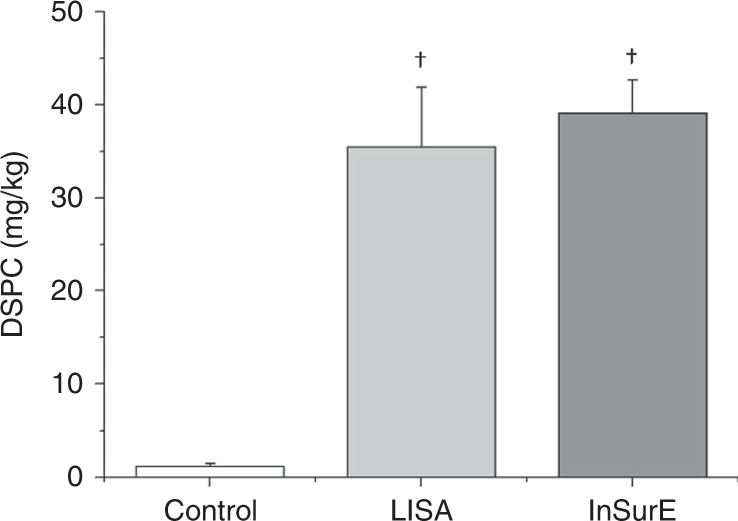
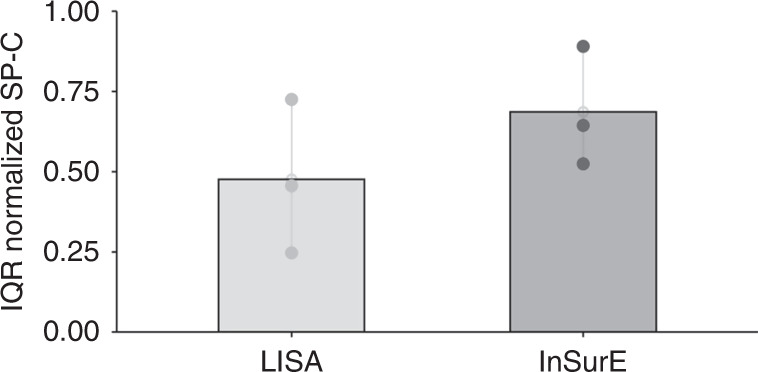
Twenty-six spontaneously breathing surfactant-depleted adult rabbits (6-7 weeks old) with moderate RDS and managed with nasal continuous positive airway pressure were randomized to 3 groups: (1) 200 mg/kg of surfactant by InSurE; (2) 200 mg/kg of surfactant by LISA; (3) no surfactant treatment (Control). Gas exchange and lung mechanics were monitored for 180 min. After that, surfactant lung deposition and distribution were evaluated monitoring disaturated-phosphatidylcholine (DSPC) and surfactant protein C (SP-C), respectively.
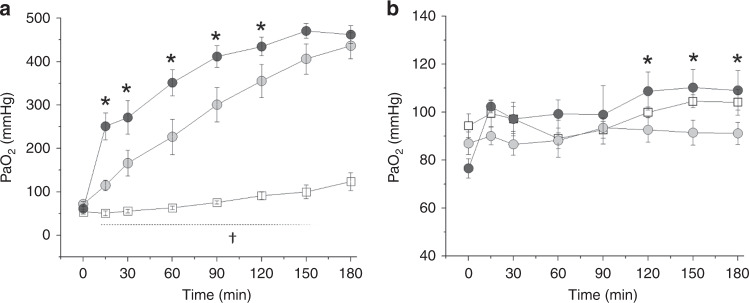
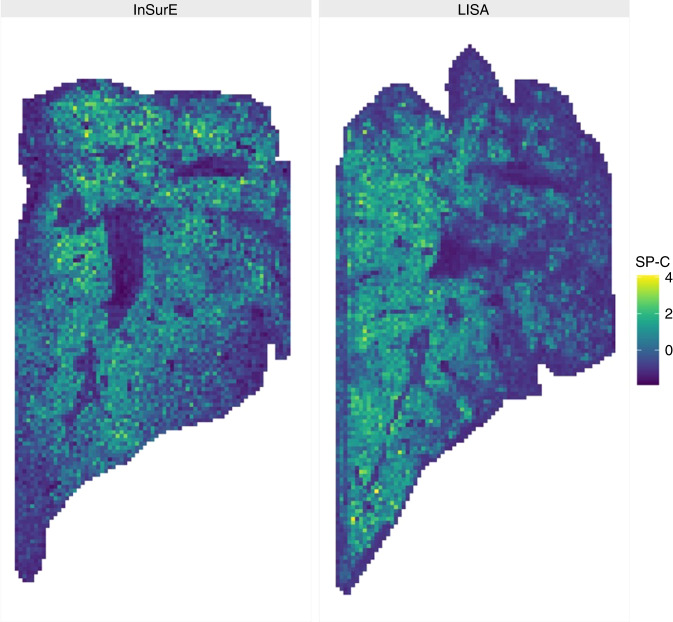
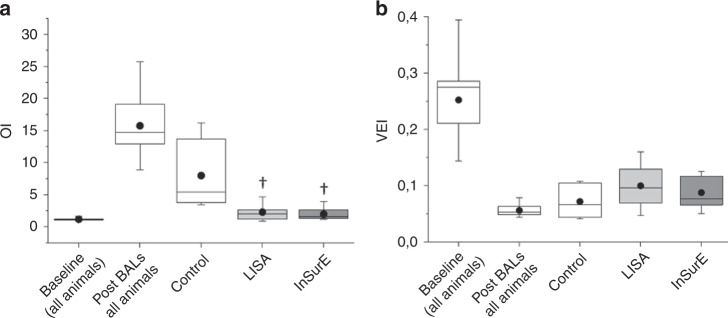
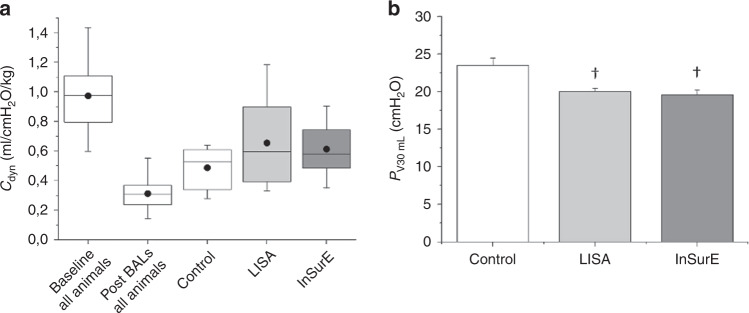
No signs of recovery were found in the untreated animals. After InSurE, oxygenation improved more rapidly compared to LISA. However, at 180' LISA and InSurE showed comparable outcomes in terms of gas exchange, ventilation parameters, and lung mechanics. Neither DSPC in the alveolar pool nor SP-C signal distributions in a frontal lung section were significantly different between InSurE and LISA groups.
In an acute setting, LISA demonstrated efficacy and surfactant lung delivery similar to that of InSurE in surfactant-depleted adult rabbits.
Although LISA technique is gaining popularity, there are still several questions to address. This is the first study comparing LISA and InSurE in terms of gas exchange, ventilation parameters, and lung mechanics as well as surfactant deposition and distribution. In our animal study, three hours post-treatment, LISA method seems to be as effective as InSurE and showed similar surfactant lung delivery. Our findings provide some clarifications on a fair comparison between LISA and InSurE techniques, particularly in terms of surfactant delivery. They should reassure some of the concerns raised by the clinical community on LISA adoption in neonatal units.
在早产儿中,InSurE(气管插管-表面活性剂-拔管)和 LISA(经鼻持续气道正压通气给予表面活性剂)技术允许外源性表面活性剂给药,同时减少与机械通气相关的肺损伤。我们比较了 LISA 和 InSurE 在表面活性剂耗竭的成年兔中对外源性表面活性剂的急性肺反应和肺沉积。
26 只自然呼吸的表面活性剂耗竭的成年兔(6-7 周龄)患有中度 RDS 并接受鼻持续气道正压通气治疗,随机分为 3 组:(1)InSurE 给予 200mg/kg 表面活性剂;(2)LISA 给予 200mg/kg 表面活性剂;(3)无表面活性剂治疗(对照组)。监测 180min 的气体交换和肺力学。之后,分别监测二棕榈酰磷脂酰胆碱(DSPC)和表面活性蛋白 C(SP-C)来评估表面活性剂的肺沉积和分布。
未治疗动物未发现有恢复迹象。与 LISA 相比,InSurE 后氧合改善更快。然而,在 180'时,LISA 和 InSurE 在气体交换、通气参数和肺力学方面表现出相似的结果。肺泡池中的 DSPC 或前肺段中的 SP-C 信号分布在 InSurE 和 LISA 组之间均无显著差异。
在急性情况下,LISA 显示出在表面活性剂耗竭的成年兔中的有效性和表面活性剂的肺输送与 InSurE 相似。
尽管 LISA 技术越来越受欢迎,但仍有几个问题需要解决。这是首次比较 LISA 和 InSurE 在气体交换、通气参数和肺力学以及表面活性剂沉积和分布方面的研究。在我们的动物研究中,治疗后 3 小时,LISA 方法似乎与 InSurE 一样有效,并且显示出相似的表面活性剂肺输送。我们的研究结果在公平比较 LISA 和 InSurE 技术方面提供了一些澄清,特别是在表面活性剂输送方面。它们应该消除临床界对新生儿病房采用 LISA 技术的一些担忧。