Department of Thoracic Surgery, The First Affiliated Hospital of Nanjing Medical University, Nanjing 210029, China.
Department of Cardiovascular Surgery, Renji Hospital, School of Medicine, Shanghai Jiao Tong University, 160 Pu-Jian Road, Shanghai 200127, China.
Mediators Inflamm. 2020 Dec 29;2020:1724206. doi: 10.1155/2020/1724206. eCollection 2020.
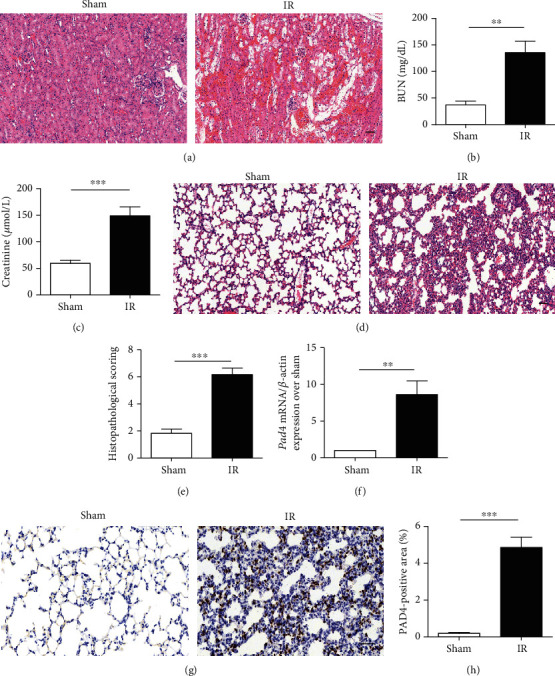
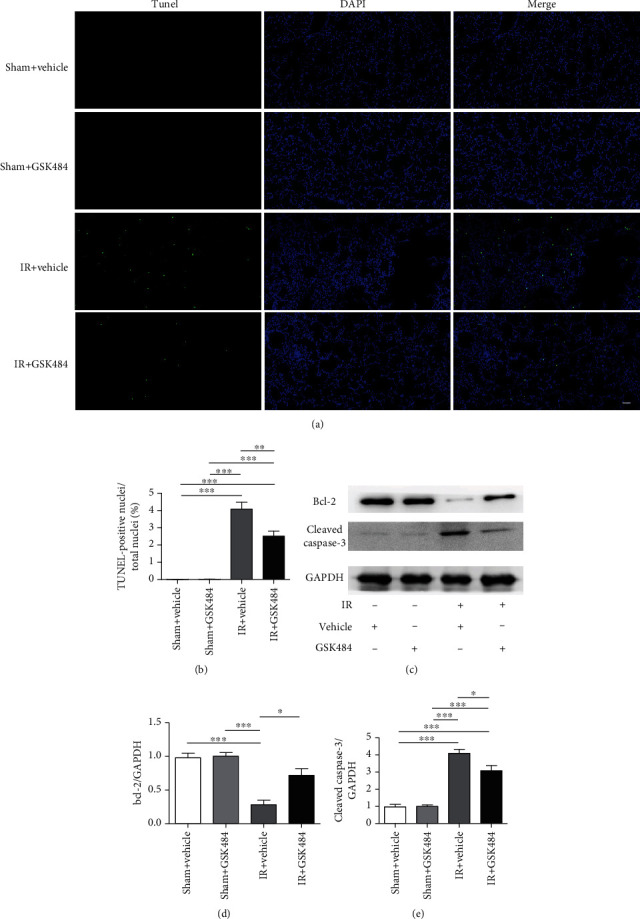
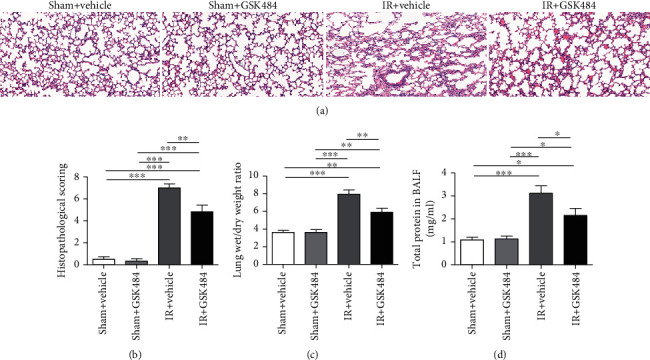
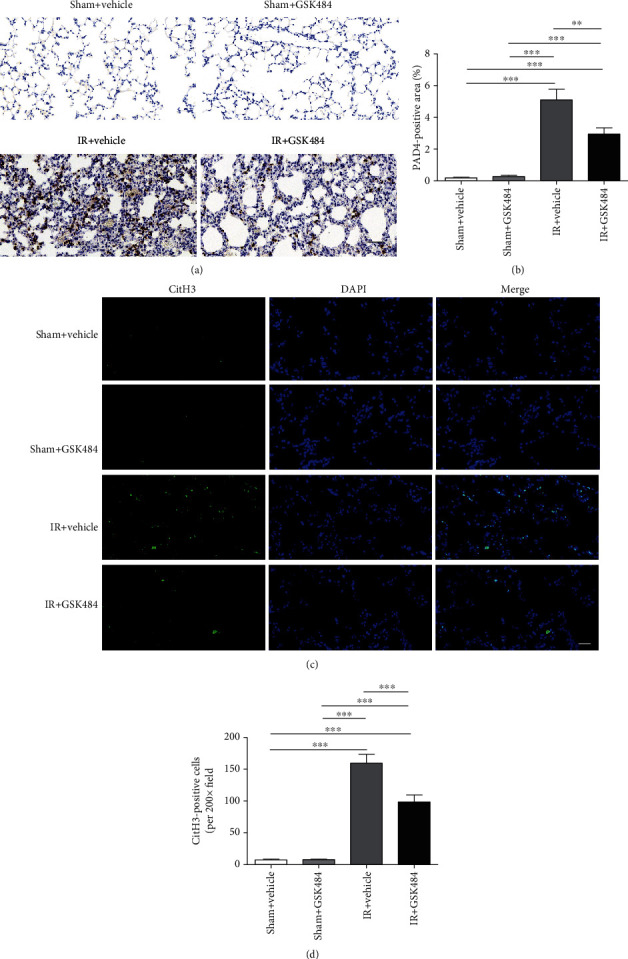
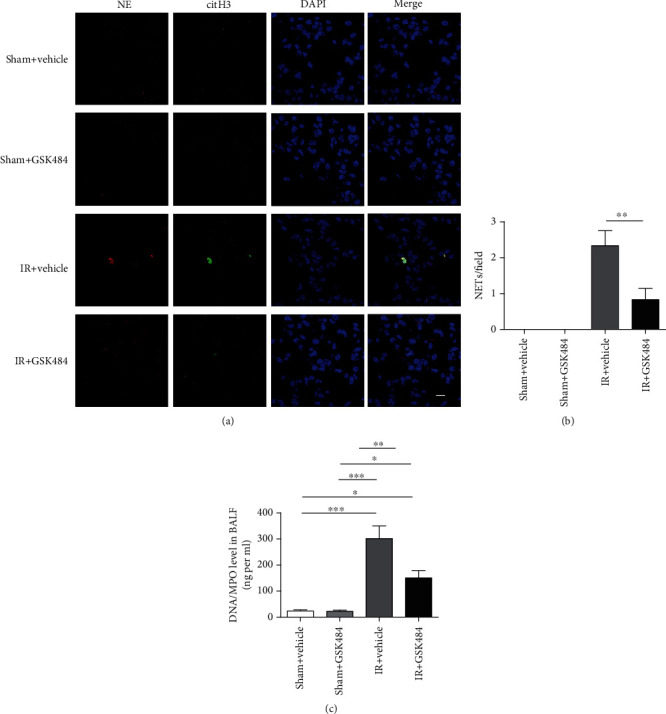
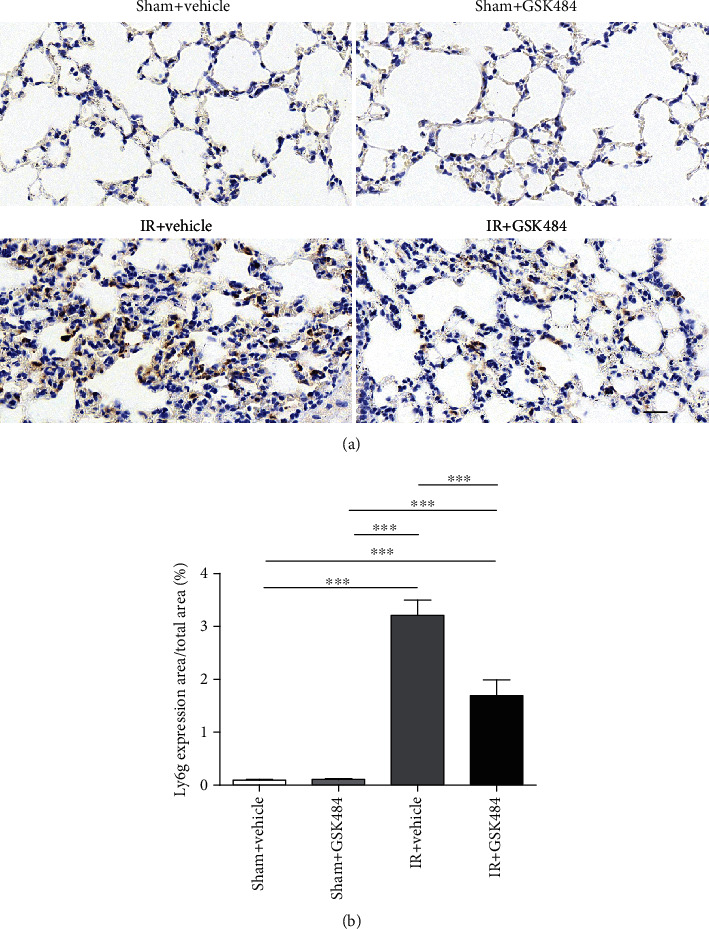
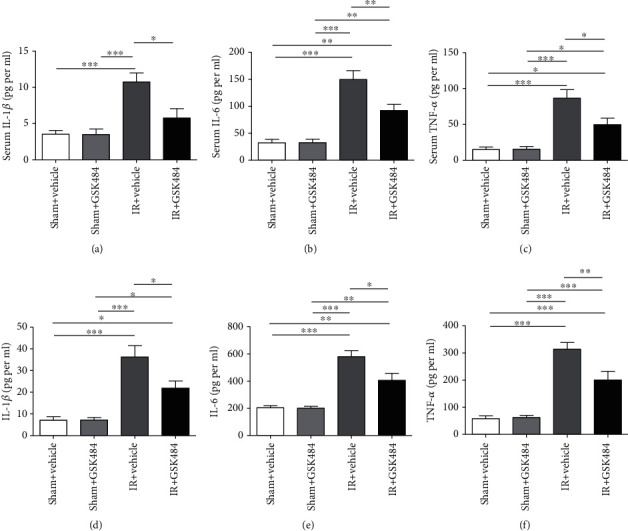
Ischemia reperfusion (IR) can lead to acute kidney injury and can be complicated by acute lung injury, which is one of the leading causes of acute kidney injury-related death. Peptidyl arginine deiminase-4 (PAD4) is a member of the PAD enzyme family and plays a critical role in inflammatory reactions and neutrophil extracellular trap formation in a variety of pathological conditions. It has been reported that PAD4 inhibition can protect certain organs from ischemic injury. In this study, we aimed to understand the mode of action of PAD4 in renal ischemia-reperfusion-mediated acute lung injury. Bilateral renal pedicle occlusion was induced for 30 min followed by reperfusion for 24 h. A specific inhibitor of PAD4, GSK484, was delivered via intraperitoneal injection to alter the PAD4 activity. The pulmonary PAD4 expression, pulmonary impairment, neutrophil infiltration, Cit-H3 expression, neutrophil extracellular trap formation, inflammatory cytokine secretion, and pulmonary apoptosis were analyzed. We found that renal ischemia reperfusion was associated with pulmonary pathological changes and increases in neutrophil infiltration, neutrophil extracellular trap formation, and inflammatory cytokine secretion in the lungs of the recipient animals. Suppression of PAD4 by GSK484 reduced remote lung injury by mitigating neutrophil infiltration, neutrophil extracellular trap formation, apoptosis, and inflammatory factor secretion. Our findings demonstrate that specific PAD4 inhibition by GSK484 may be an effective strategy to attenuate distant lung injury complicating renal ischemia-reperfusion injury.
缺血再灌注(IR)可导致急性肾损伤,并可并发急性肺损伤,这是急性肾损伤相关死亡的主要原因之一。肽基精氨酸脱亚氨酶-4(PAD4)是 PAD 酶家族的成员,在多种病理条件下的炎症反应和中性粒细胞胞外陷阱形成中起关键作用。据报道,PAD4 抑制可以保护某些器官免受缺血性损伤。在这项研究中,我们旨在了解 PAD4 在肾缺血再灌注介导的急性肺损伤中的作用机制。双侧肾蒂夹闭 30 分钟,然后再灌注 24 小时。通过腹腔注射特定的 PAD4 抑制剂 GSK484 来改变 PAD4 活性。分析肺 PAD4 表达、肺损伤、中性粒细胞浸润、Cit-H3 表达、中性粒细胞胞外陷阱形成、炎症细胞因子分泌和肺细胞凋亡。我们发现,肾缺血再灌注与受者动物肺部的肺病理变化以及中性粒细胞浸润、中性粒细胞胞外陷阱形成和炎症细胞因子分泌增加有关。GSK484 抑制 PAD4 可通过减轻中性粒细胞浸润、中性粒细胞胞外陷阱形成、凋亡和炎症因子分泌来减轻远程肺损伤。我们的研究结果表明,GSK484 对 PAD4 的特异性抑制可能是减轻肾缺血再灌注损伤引起的远处肺损伤的有效策略。