Cancer Research Center, Shantou University Medical College, Shantou, Guangdong, China.
Department of Surgery, Laboratory for Translational Surgical Oncology, University of Groningen, University Medical Center Groningen, Groningen, Netherlands.
J Immunol Res. 2020 Dec 29;2020:8884683. doi: 10.1155/2020/8884683. eCollection 2020.
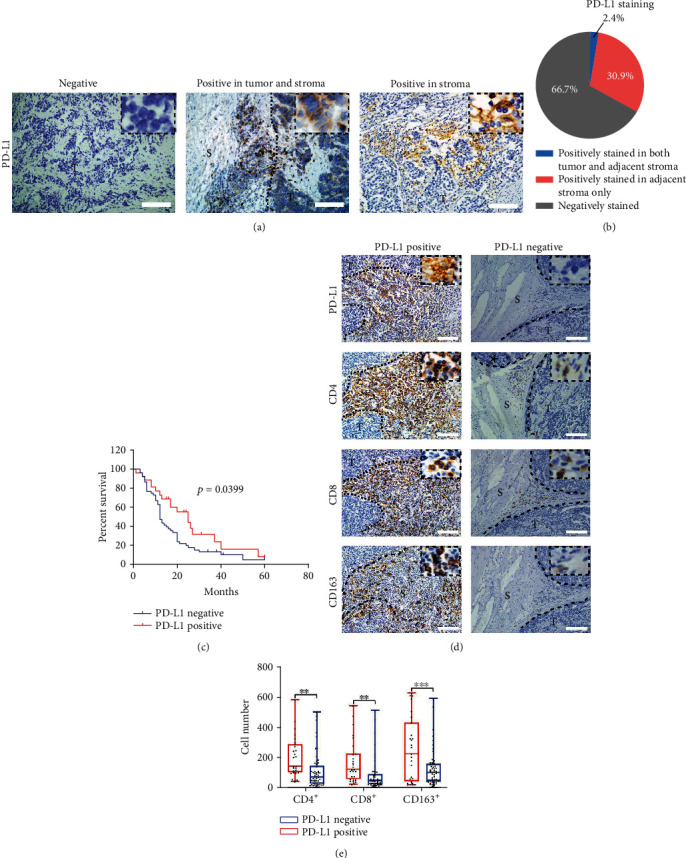
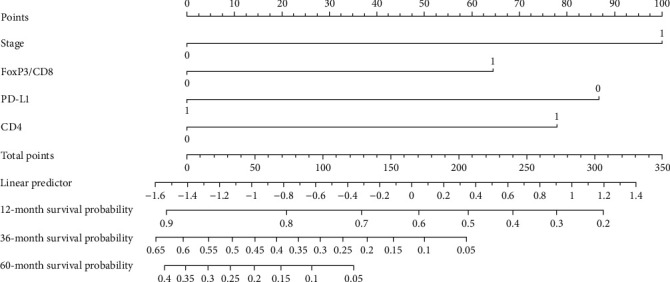
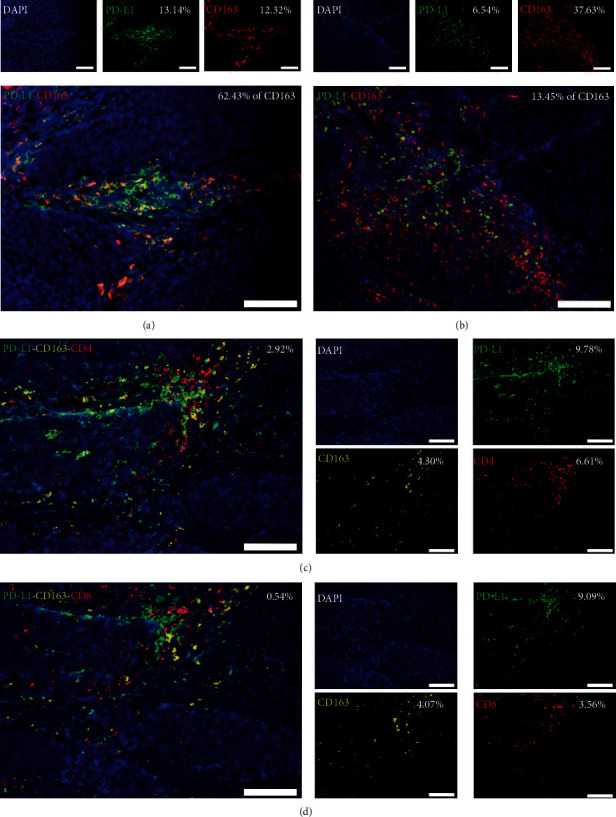
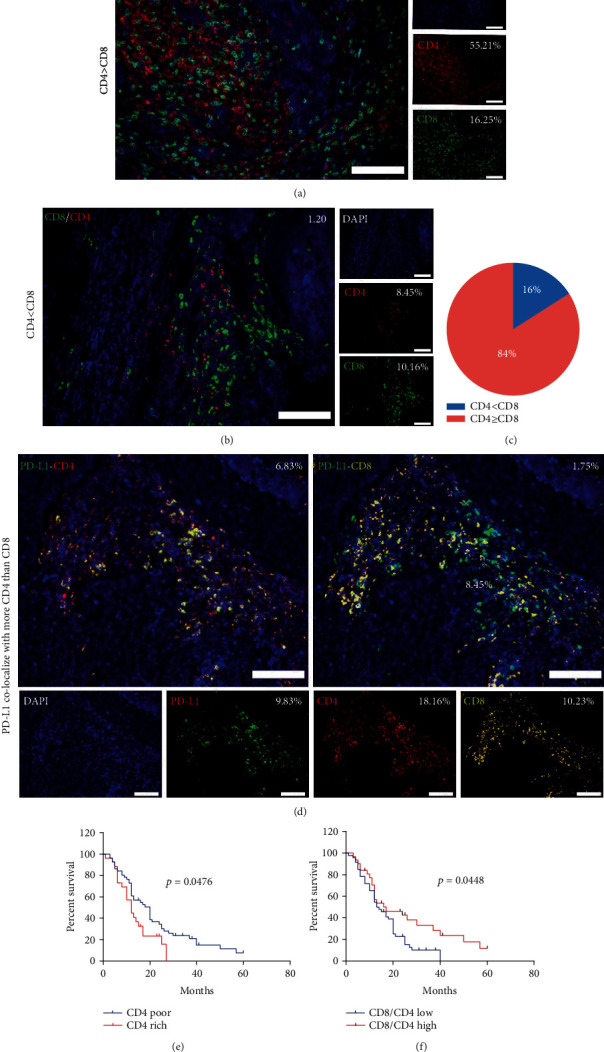
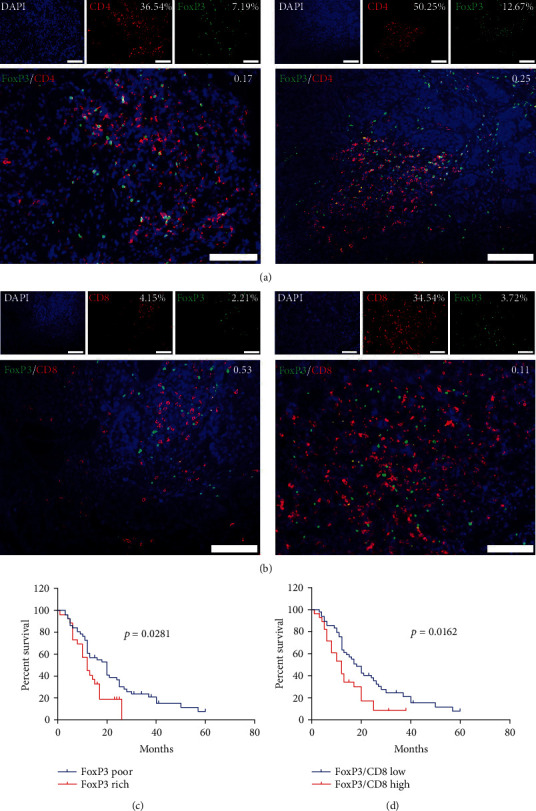
Primary esophageal small cell carcinoma (PESCC) is a weakly prevalent but lethal malignancy with early metastasis and a poor prognosis. Currently, neither effective prognostic indicators nor curative therapies are available for PESCC. Immunotherapy has now evolved into one of the most promising therapies for cancer patients. Tumor-infiltrating immune cells which are integral to the tumor immune microenvironment (TIME) are recognized as highly important for prognosis prediction, while the responsiveness to immune checkpoint blockade may be subject to the features of TIME. In this study, we aim to identify the TIME and provide indication for the applicability of immune checkpoint therapy in PESCC. We found that PD-L1 expression was detected in 33.33% (27/81) of all the patients, mostly exhibiting a stroma-only pattern and that it was positively associated with tumor-infiltrating immune cells (CD4, CD8, and CD163). In 74.07% of PD-L1-positive specimens, PD-L1CD163 cells were colocalized more with CD4 than CD8 T cells. 83.95% (68/81) of all the specimens were infiltrated with more CD4 than CD8 T cells. Further analysis showed FoxP3 Tregs constituted 13-27% of the total CD4 T cell population. The Kaplan--Meier analysis indicated several factors that contribute to poor survival, including negative PD-L1 expression, rich CD4 expression, rich FoxP3 expression, a low CD8/CD4 ratio, and a high FoxP3/CD8 ratio. A nomogram model was constructed and showed good performance for survival prediction. These results highlight that a suppressive TIME contributes to poor survival of patients with PESCC. TIME analyses might be a promising approach to evaluate the possibility and effect of immune checkpoint-based immunotherapeutics in PESCC patients.
原发性食管小细胞癌(PESCC)是一种罕见但致命的恶性肿瘤,具有早期转移和预后不良的特点。目前,PESCC 既没有有效的预后指标,也没有有效的治疗方法。免疫疗法现已成为癌症患者最有前途的治疗方法之一。肿瘤浸润免疫细胞是肿瘤免疫微环境(TIME)的重要组成部分,被认为对预后预测具有重要意义,而对免疫检查点阻断的反应性可能取决于 TIME 的特征。在本研究中,我们旨在鉴定 TIME,并为 PESCC 患者免疫检查点治疗的适用性提供指示。我们发现,所有患者中有 33.33%(27/81)检测到 PD-L1 表达,主要表现为基质样模式,并且与肿瘤浸润免疫细胞(CD4、CD8 和 CD163)呈正相关。在 74.07%的 PD-L1 阳性标本中,PD-L1CD163 细胞与 CD4 T 细胞的共定位多于 CD8 T 细胞。所有标本中有 83.95%(68/81)浸润的 CD4 T 细胞多于 CD8 T 细胞。进一步分析表明,FoxP3 Treg 占总 CD4 T 细胞群的 13-27%。Kaplan-Meier 分析表明,几个因素与不良生存相关,包括 PD-L1 表达阴性、CD4 表达丰富、FoxP3 表达丰富、CD8/CD4 比值低和 FoxP3/CD8 比值高。构建了列线图模型,显示出良好的生存预测性能。这些结果强调了抑制性 TIME 有助于 PESCC 患者的不良生存。TIME 分析可能是评估 PESCC 患者免疫检查点为基础的免疫治疗的可能性和效果的一种很有前途的方法。