Liu Xu-Sheng, Liu Jia-Min, Chen Yi-Jia, Li Fu-Yan, Wu Rui-Min, Tan Fan, Zeng Dao-Bing, Li Wei, Zhou Hong, Gao Yan, Pei Zhi-Jun
Department of Nuclear Medicine and Institute of Anesthesiology and Pain, Taihe Hospital, Hubei University of Medicine, Shiyan, China.
Hubei Clinical Research Center for Precise Diagnosis and Treatment of Liver Cancer, Taihe Hospital, Hubei University of Medicine, Shiyan, China.
Front Cell Dev Biol. 2021 Oct 7;9:715883. doi: 10.3389/fcell.2021.715883. eCollection 2021.
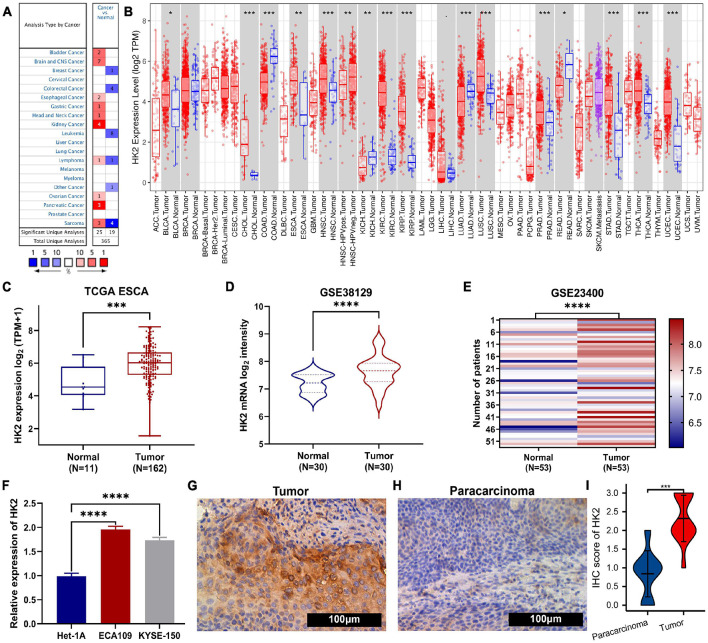
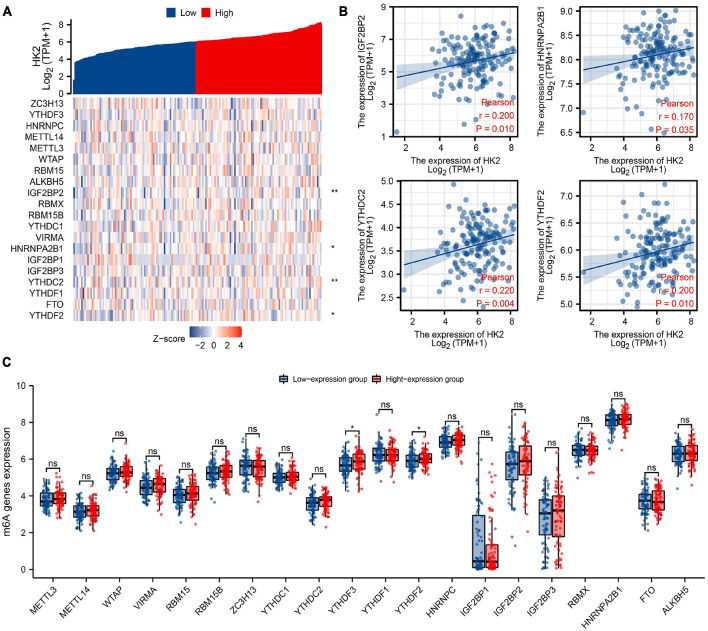
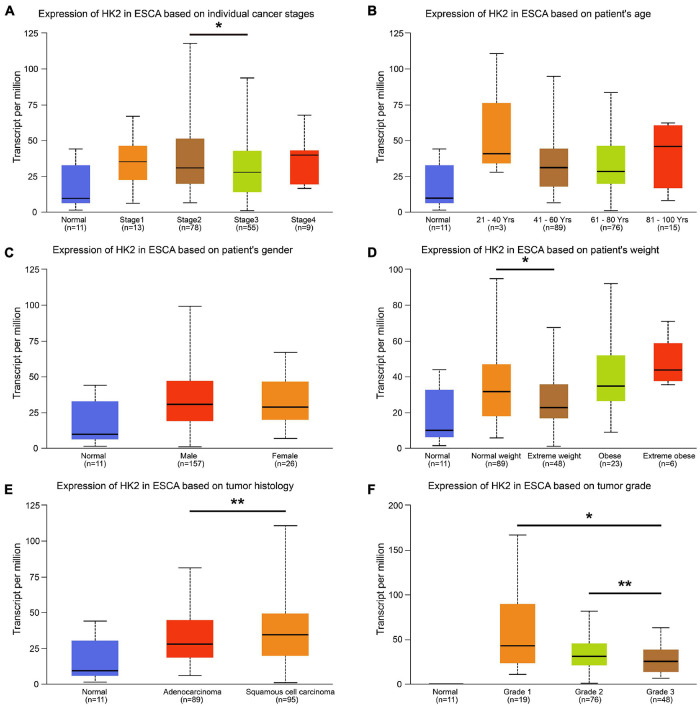
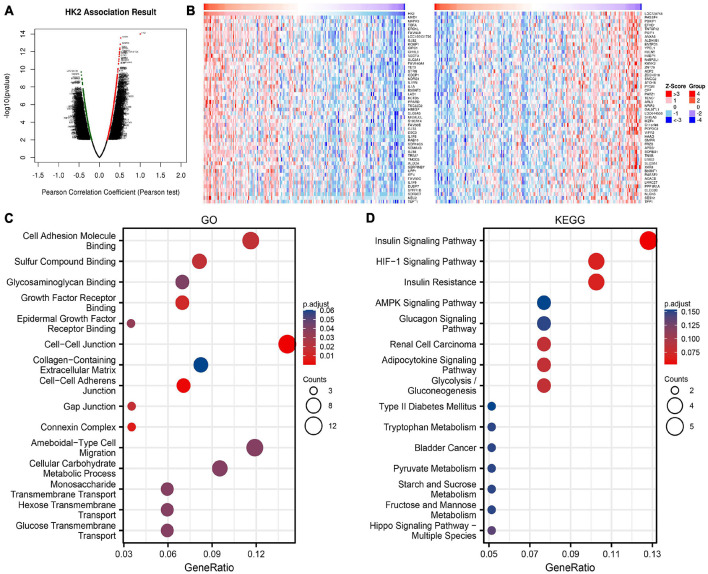
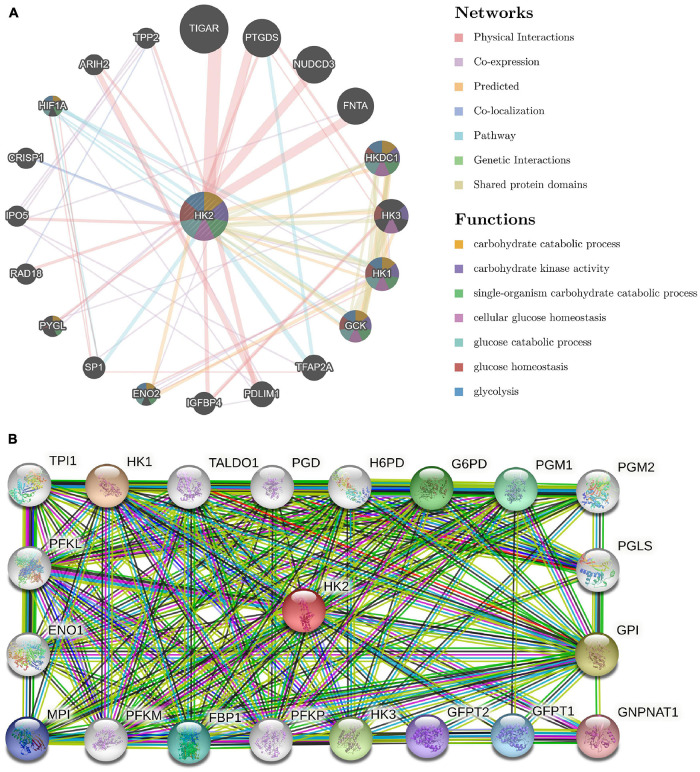
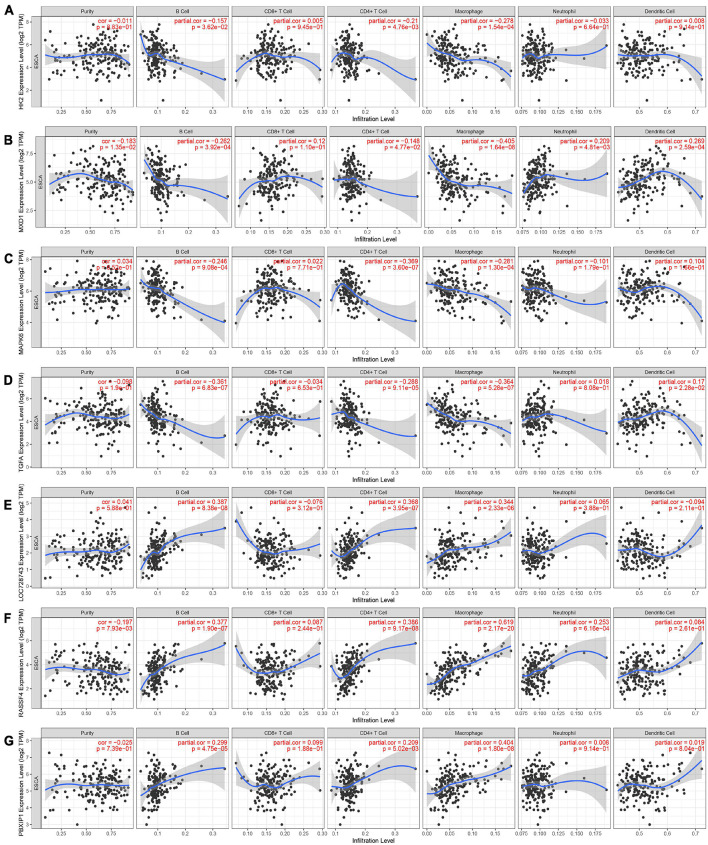
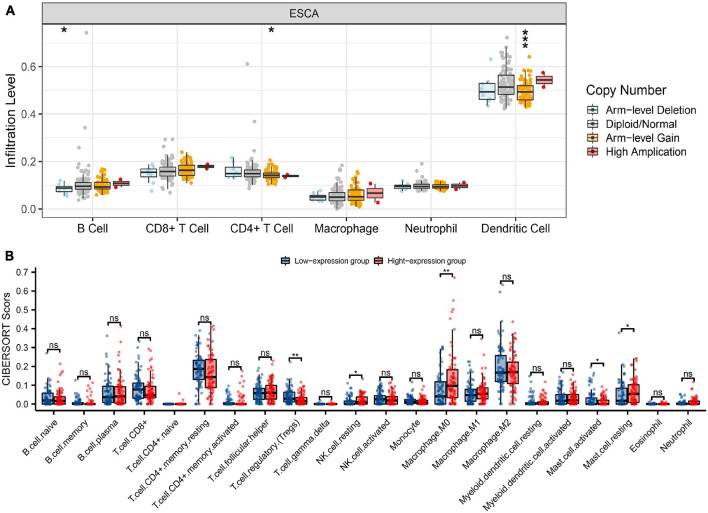
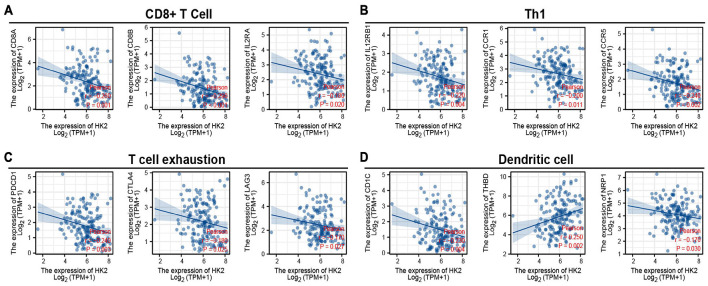
Hexokinase 2 not only plays a role in physiological function of human normal tissues and organs, but also plays a vital role in the process of glycolysis of tumor cells. However, there are few comprehensive studies on HK2 in esophageal carcinoma (ESCA) needs further study. Oncomine, Tumor Immune Estimation Resource (TIMER), The Cancer Genome Atlas (TCGA) and Gene Expression Omnibus (GEO) database were used to analyze the expression differences of HK2 in Pan-cancer and ESCA cohort, and to analyze the correlation between HK2 expression level and clinicopathological features of TCGA ESCA samples. GO/KEGG, GGI, and PPI analysis of HK2 was performed using R software, LinkedOmics, GeneMANIA and STRING online tools. The correlation between HK2 and ESCA immune infiltration was analyzed TIMER and TCGA ESCA cohort. The correlation between HK2 expression level and m6A modification of ESCA was analyzed by utilizing TCGA ESCA cohort. HK2 is highly expressed in a variety of tumors, and its high expression level in ESCA is closely related to the weight, cancer stages, tumor histology and tumor grade of ESCA. The analysis results of GO/KEGG showed that HK2 was closely related to cell adhesion molecule binding, cell-cell junction, ameboidal-type cell migration, insulin signaling pathway, hif-1 signaling pathway, and insulin resistance. GGI showed that HK2 associated genes were mainly involved in the glycolytic pathway. PPI showed that HK2 was closely related to HK1, GPI, and HK3, all of which played an important role in tumor proliferation. The analysis results of TIMER and TCGA ESCA cohort indicated that the HK2 expression level was related to the infiltration of various immune cells. TCGA ESCA cohort analyze indicated that the HK2 expression level was correlated with m6A modification genes. HK2 is associated with tumor immune infiltration and m6A modification of ESCA, and can be used as a potential biological target for diagnosis and therapy of ESCA.
己糖激酶2不仅在人体正常组织和器官的生理功能中发挥作用,而且在肿瘤细胞的糖酵解过程中也起着至关重要的作用。然而,目前关于己糖激酶2在食管癌(ESCA)中的综合研究较少,仍需进一步研究。利用Oncomine、肿瘤免疫评估资源(TIMER)、癌症基因组图谱(TCGA)和基因表达综合数据库(GEO)分析己糖激酶2在泛癌和ESCA队列中的表达差异,并分析己糖激酶2表达水平与TCGA ESCA样本临床病理特征之间的相关性。使用R软件、LinkedOmics、GeneMANIA和STRING在线工具对己糖激酶2进行GO/KEGG、GGI和PPI分析。利用TIMER和TCGA ESCA队列分析己糖激酶2与ESCA免疫浸润之间的相关性。利用TCGA ESCA队列分析己糖激酶2表达水平与ESCA的m6A修饰之间的相关性。己糖激酶2在多种肿瘤中高表达,其在ESCA中的高表达水平与ESCA的体重、癌症分期、肿瘤组织学和肿瘤分级密切相关。GO/KEGG分析结果表明,己糖激酶2与细胞粘附分子结合、细胞间连接、阿米巴样细胞迁移、胰岛素信号通路、缺氧诱导因子-1信号通路和胰岛素抵抗密切相关。GGI表明,与己糖激酶2相关的基因主要参与糖酵解途径。PPI表明,己糖激酶2与己糖激酶1、葡萄糖磷酸异构酶(GPI)和己糖激酶3密切相关,它们在肿瘤增殖中均起重要作用。TIMER和TCGA ESCA队列的分析结果表明,己糖激酶2表达水平与各种免疫细胞的浸润有关。TCGA ESCA队列分析表明,己糖激酶2表达水平与m6A修饰基因相关。己糖激酶2与ESCA的肿瘤免疫浸润和m6A修饰相关,可作为ESCA诊断和治疗的潜在生物学靶点。