, Haulikova 6, HR 10 000, Zagreb, Croatia.
Department of Biochemistry, Vanderbilt University School of Medicine, Nashville, TN, 37232- 0146, USA.
Arch Toxicol. 2021 Feb;95(2):395-472. doi: 10.1007/s00204-020-02971-4. Epub 2021 Jan 18.
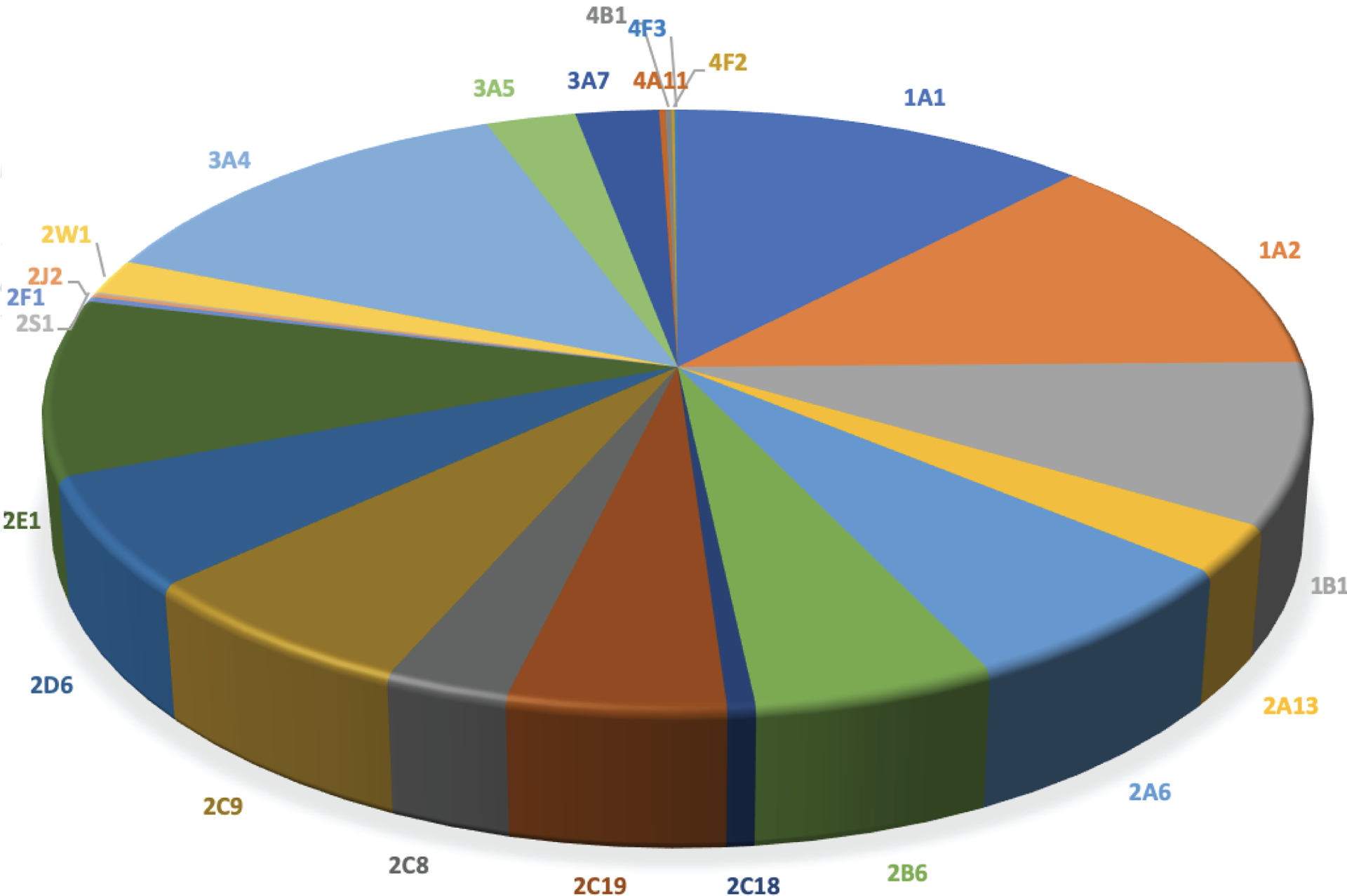
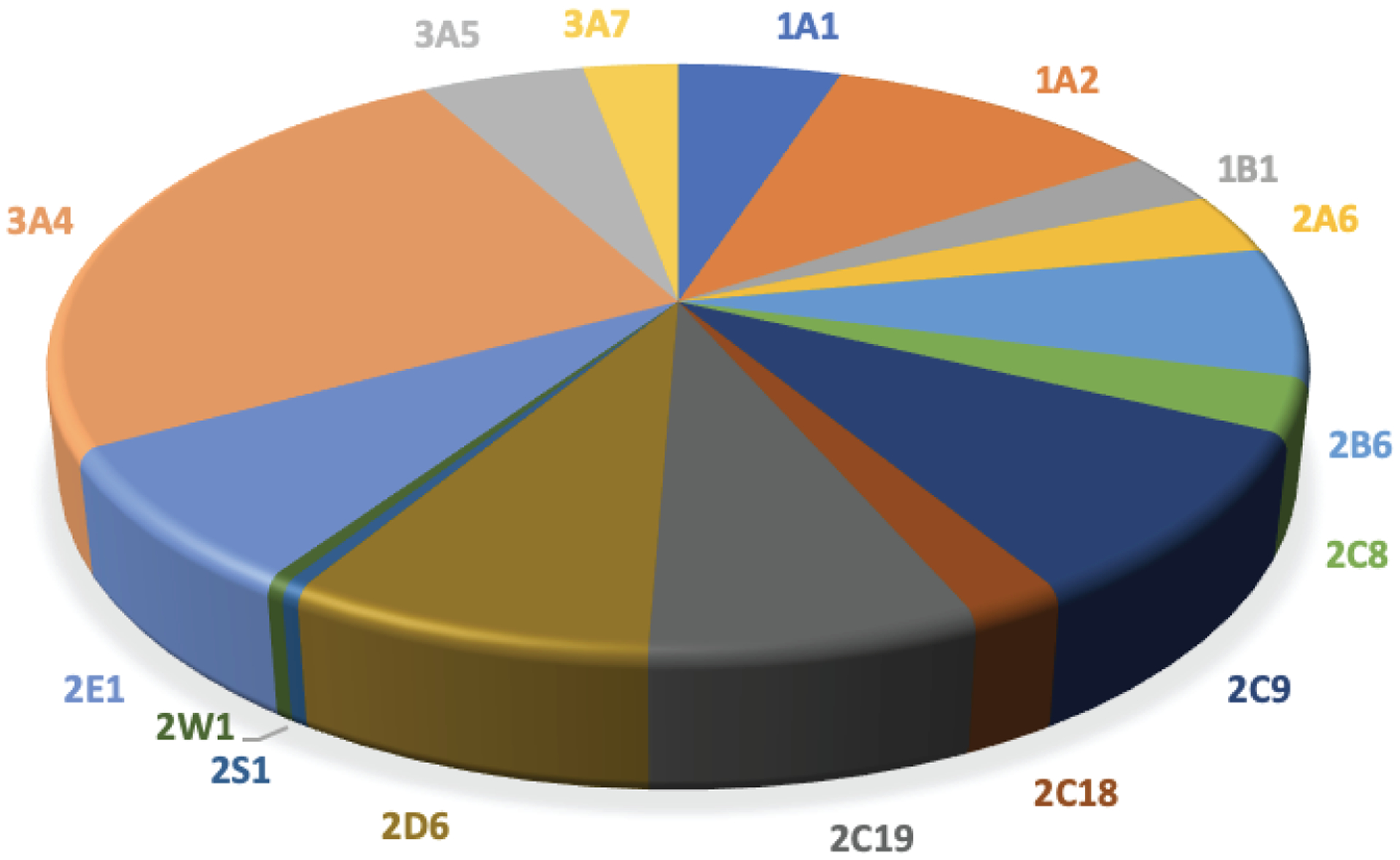
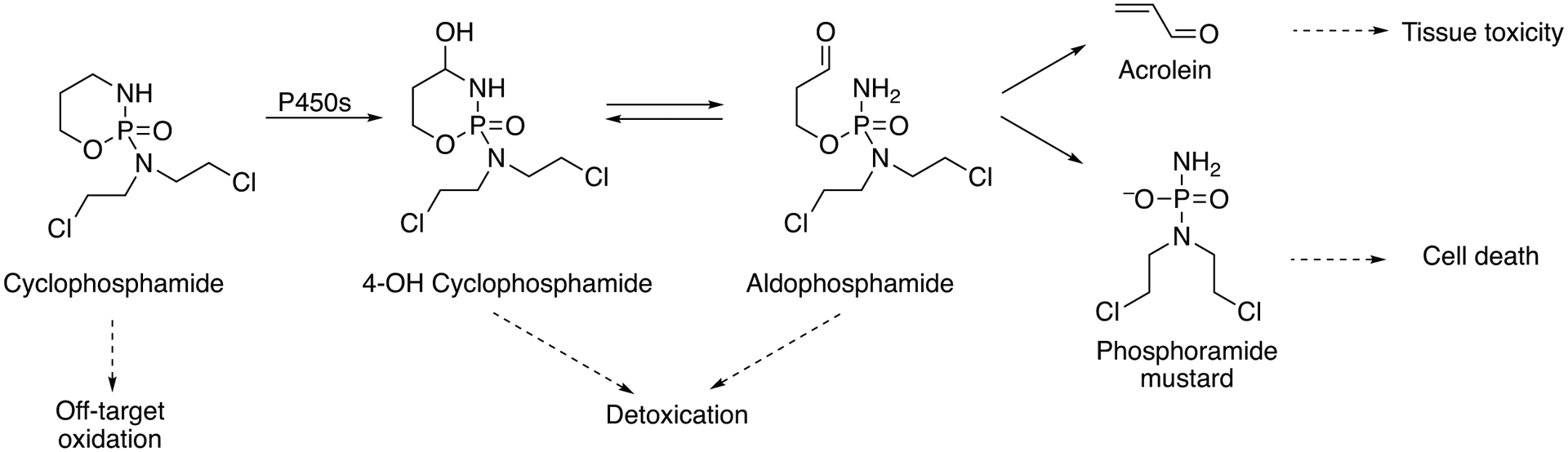
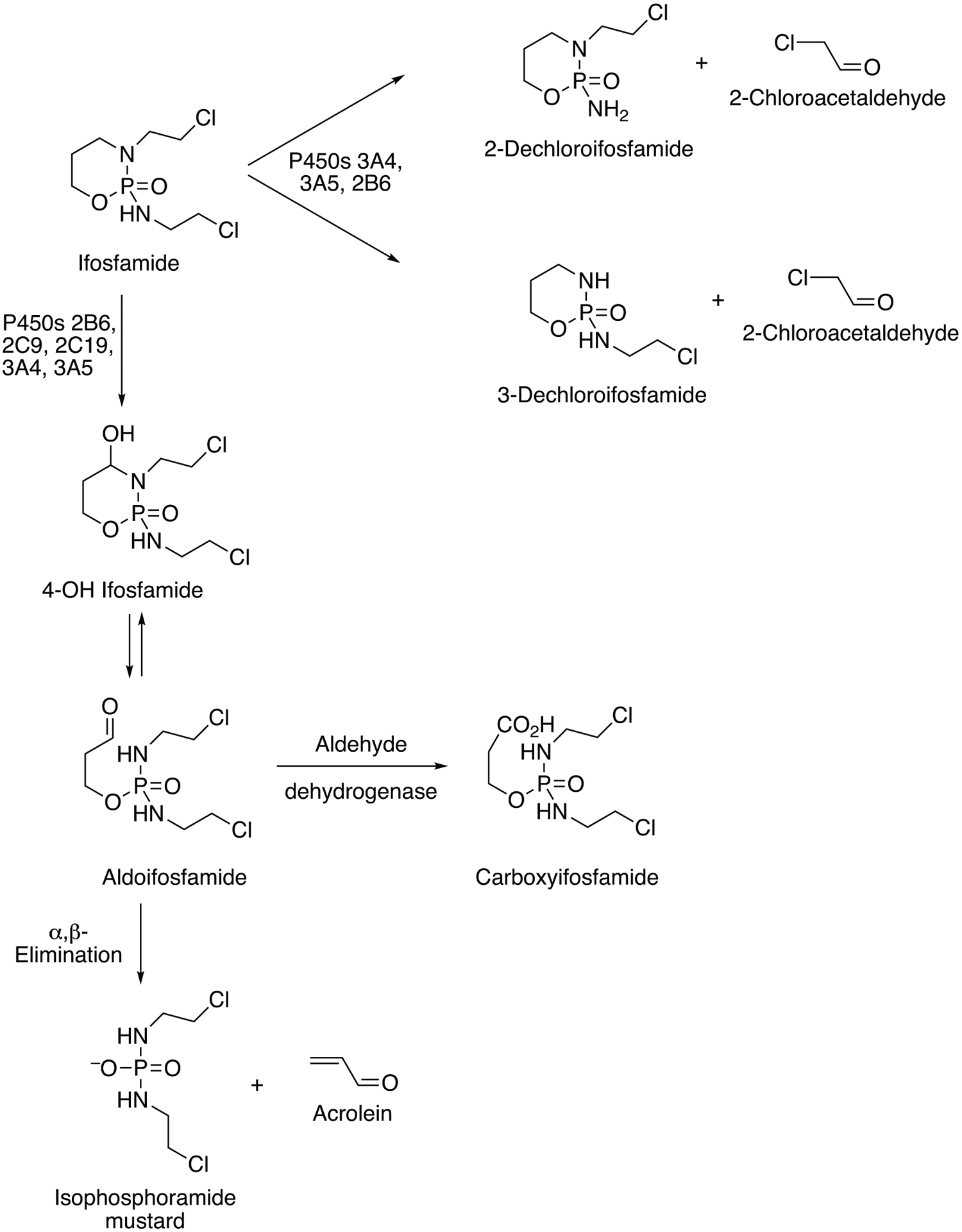
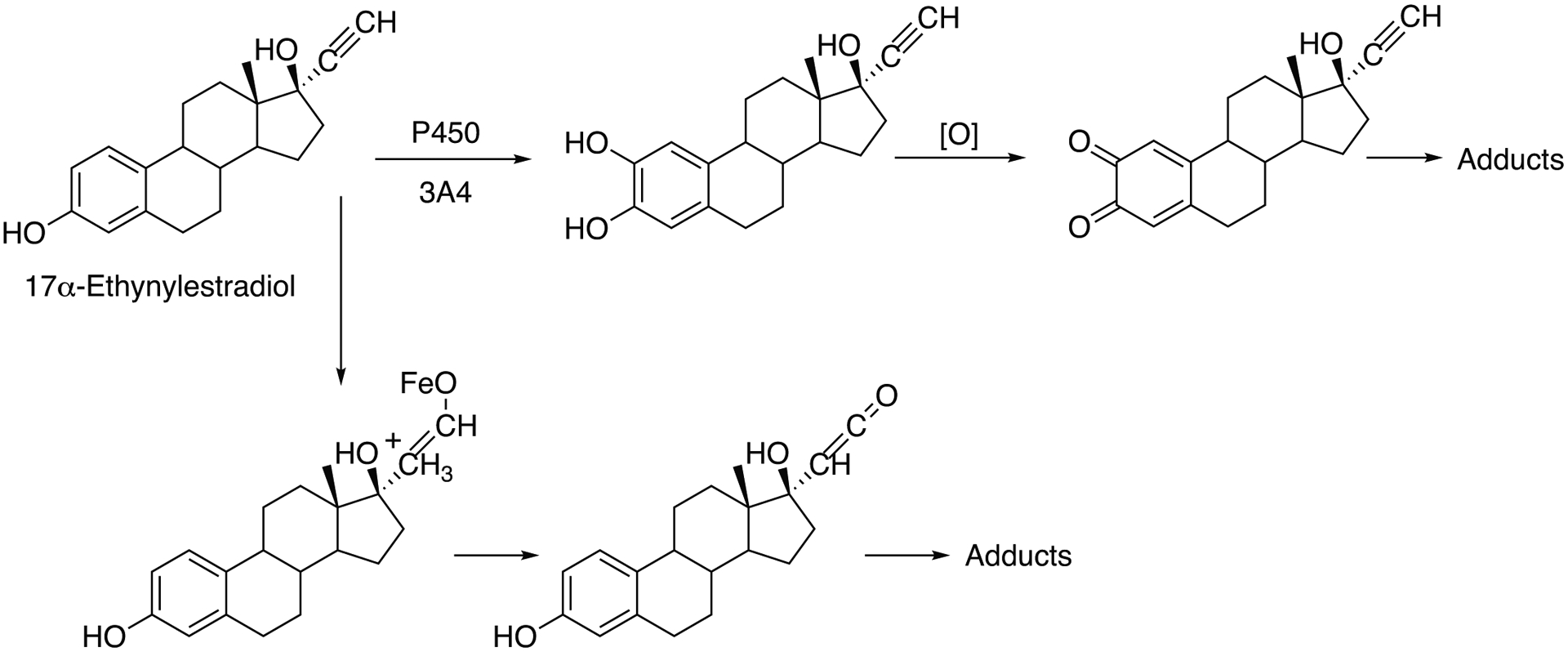
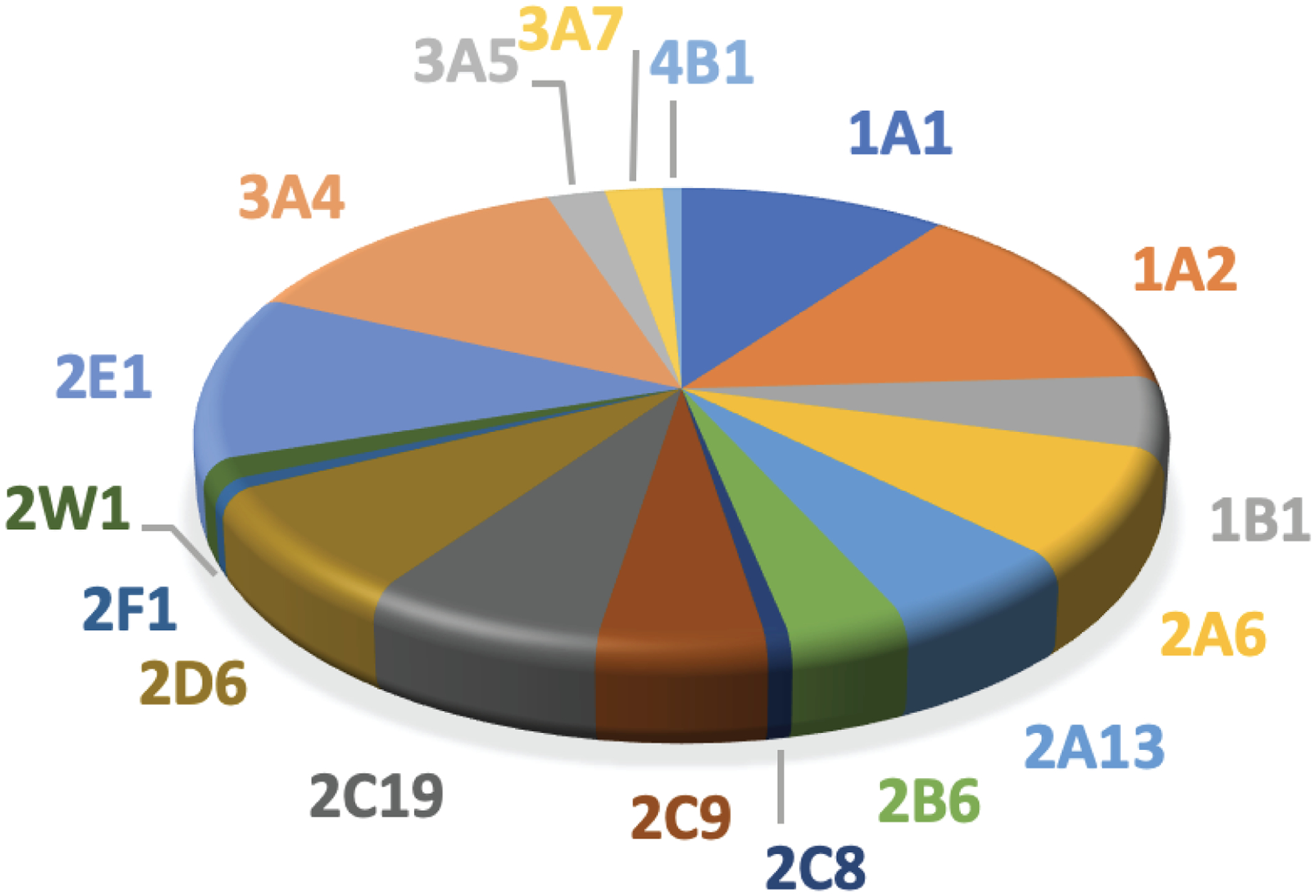
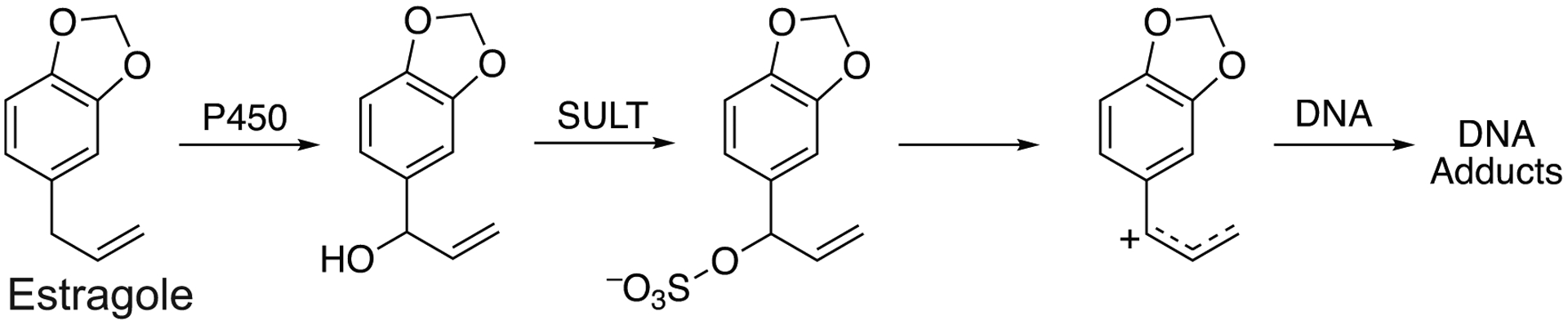
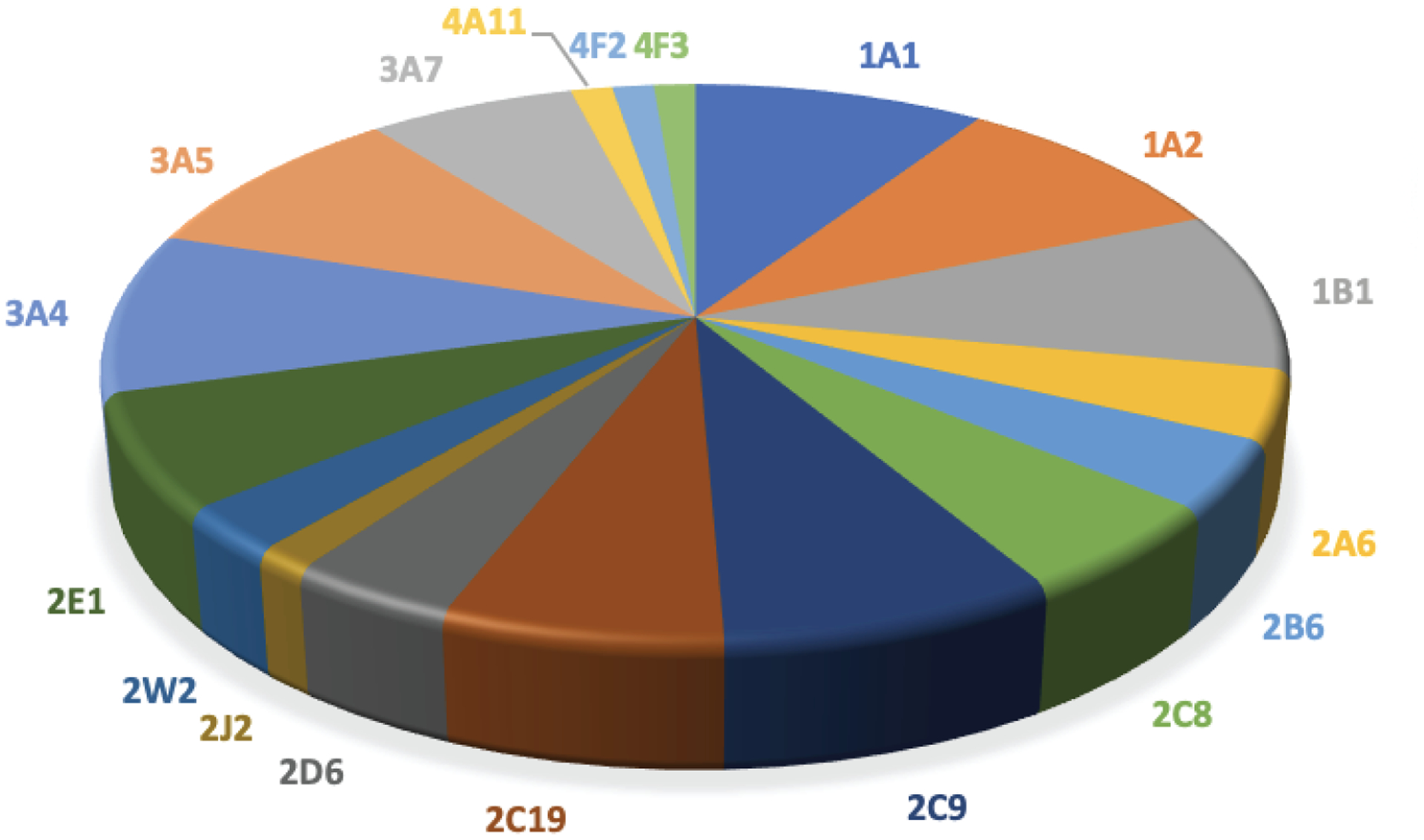
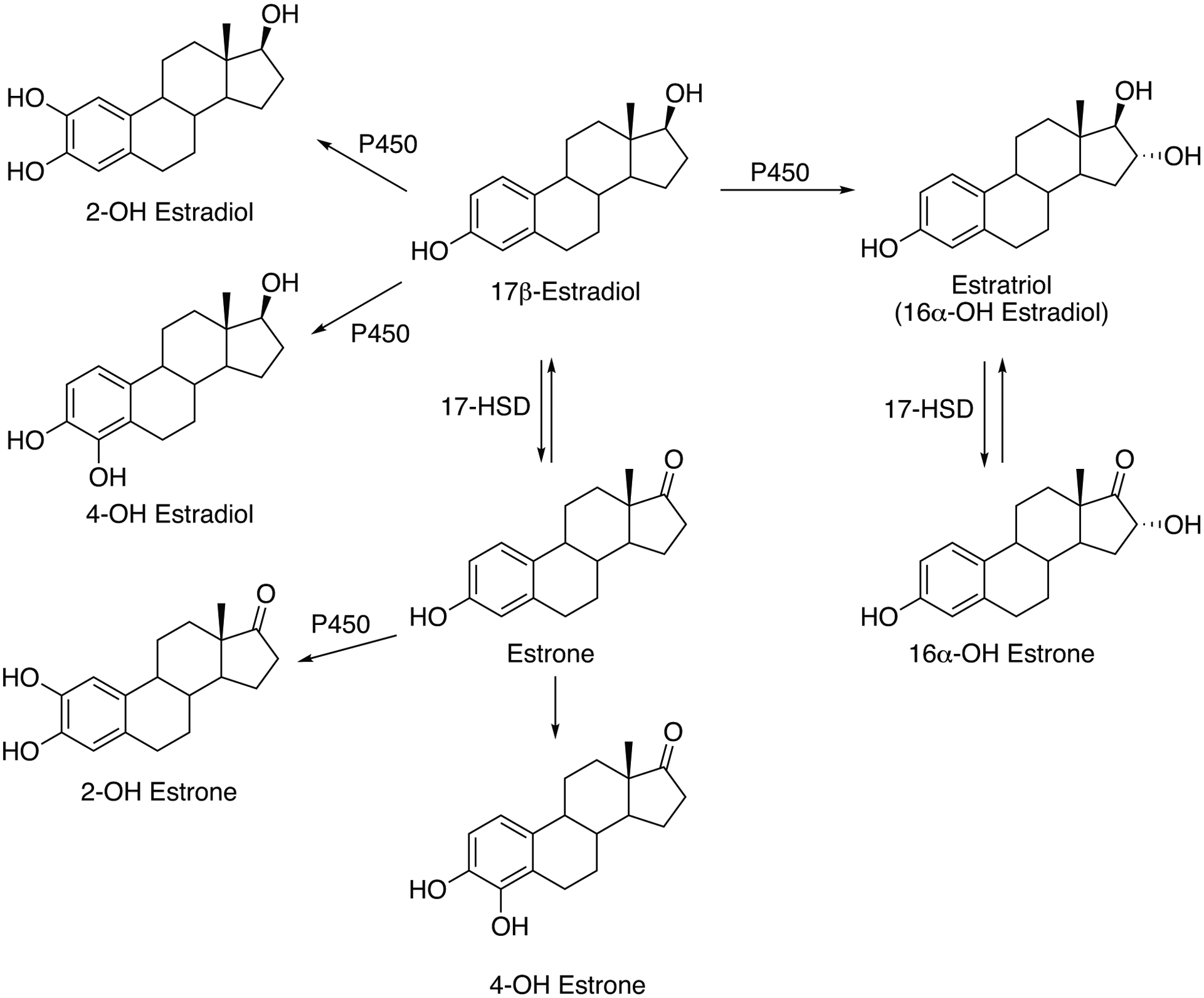
This is an overview of the metabolic activation of drugs, natural products, physiological compounds, and general chemicals by the catalytic activity of cytochrome P450 enzymes belonging to Families 1-4. The data were collected from > 5152 references. The total number of data entries of reactions catalyzed by P450s Families 1-4 was 7696 of which 1121 (~ 15%) were defined as bioactivation reactions of different degrees. The data were divided into groups of General Chemicals, Drugs, Natural Products, and Physiological Compounds, presented in tabular form. The metabolism and bioactivation of selected examples of each group are discussed. In most of the cases, the metabolites are directly toxic chemicals reacting with cell macromolecules, but in some cases the metabolites formed are not direct toxicants but participate as substrates in succeeding metabolic reactions (e.g., conjugation reactions), the products of which are final toxicants. We identified a high level of activation for three groups of compounds (General Chemicals, Drugs, and Natural Products) yielding activated metabolites and the generally low participation of Physiological Compounds in bioactivation reactions. In the group of General Chemicals, P450 enzymes 1A1, 1A2, and 1B1 dominate in the formation of activated metabolites. Drugs are mostly activated by the enzyme P450 3A4, and Natural Products by P450s 1A2, 2E1, and 3A4. Physiological Compounds showed no clearly dominant enzyme, but the highest numbers of activations are attributed to P450 1A, 1B1, and 3A enzymes. The results thus show, perhaps not surprisingly, that Physiological Compounds are infrequent substrates in bioactivation reactions catalyzed by P450 enzyme Families 1-4, with the exception of estrogens and arachidonic acid. The results thus provide information on the enzymes that activate specific groups of chemicals to toxic metabolites.
这是对细胞色素 P450 酶家族 1-4 的催化活性对药物、天然产物、生理化合物和一般化学物质的代谢激活作用的概述。这些数据来自于 5152 篇以上的参考文献。P450 酶家族 1-4 催化的反应数据条目总数为 7696 个,其中 1121 个(约 15%)被定义为不同程度的生物活化反应。这些数据分为一般化学物质、药物、天然产物和生理化合物组,以表格形式呈现。讨论了每个组的选定示例的代谢和生物活化。在大多数情况下,代谢物是直接与细胞大分子反应的有毒化学物质,但在某些情况下,形成的代谢物不是直接的毒物,而是作为后续代谢反应(例如,结合反应)的底物参与,其产物是最终的毒物。我们确定了三组化合物(一般化学物质、药物和天然产物)具有高水平的激活作用,产生了激活的代谢物,而生理化合物一般很少参与生物激活反应。在一般化学物质组中,P450 酶 1A1、1A2 和 1B1 主导激活代谢物的形成。药物主要由 P450 3A4 激活,天然产物主要由 P450 1A2、2E1 和 3A4 激活。生理化合物没有明显的优势酶,但激活数量最多的是 P450 1A、1B1 和 3A 酶。因此,结果表明,生理化合物在 P450 酶家族 1-4 催化的生物激活反应中很少作为底物,除了雌激素和花生四烯酸。因此,这些结果提供了关于激活特定化学物质组产生有毒代谢物的酶的信息。