Department of Orthopedic Surgery, Inje University Haeundae Paik Hospital, Gimhae, South Korea.
Department of Occupational and Environmental Medicine, Inje University Haeundae Paik Hospital, Busan, South Korea.
BMC Musculoskelet Disord. 2021 Jan 18;22(1):89. doi: 10.1186/s12891-021-03951-0.
Medial open-wedge high tibial osteotomy (HTO) is an effective and safe treatment method for medial osteoarthritis of the knee. However, unintended changes in the posterior tibial slope (PTS) may occur. Several factors cause PTS alterations after medial open-wedge HTO; however, research on sagittal-plane osteotomy inclination (SPOI) in relation to the PTS is sparse. The purpose of this study was to evaluate whether the SPOI affects changes in the PTS after medial open-wedge HTO. The hypothesis was that an SPOI parallel to the PTS causes no change in the PTS after medial open-wedge HTO.
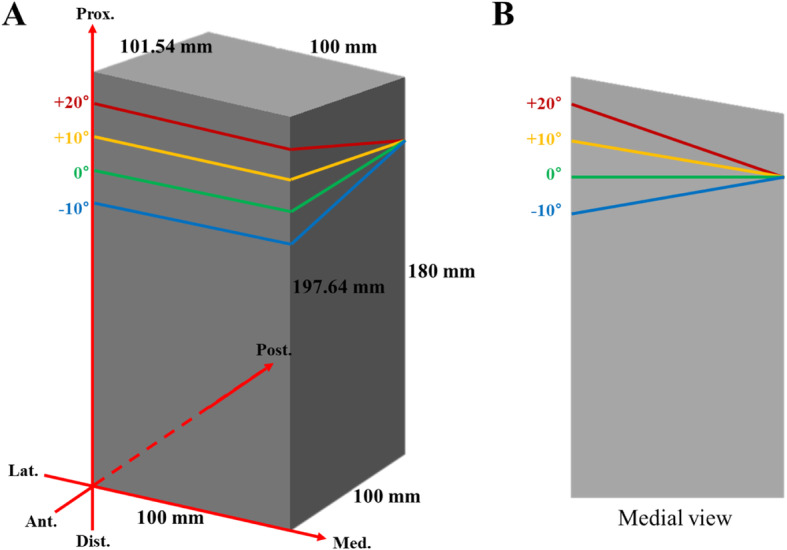
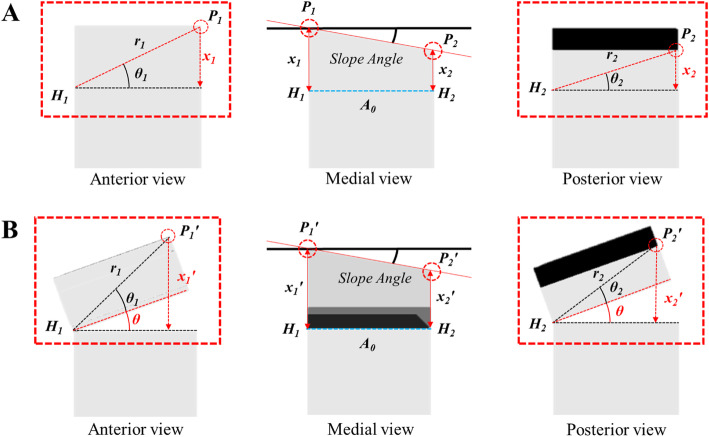
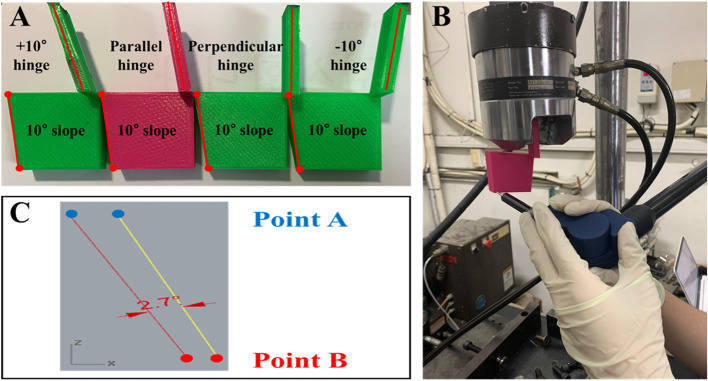
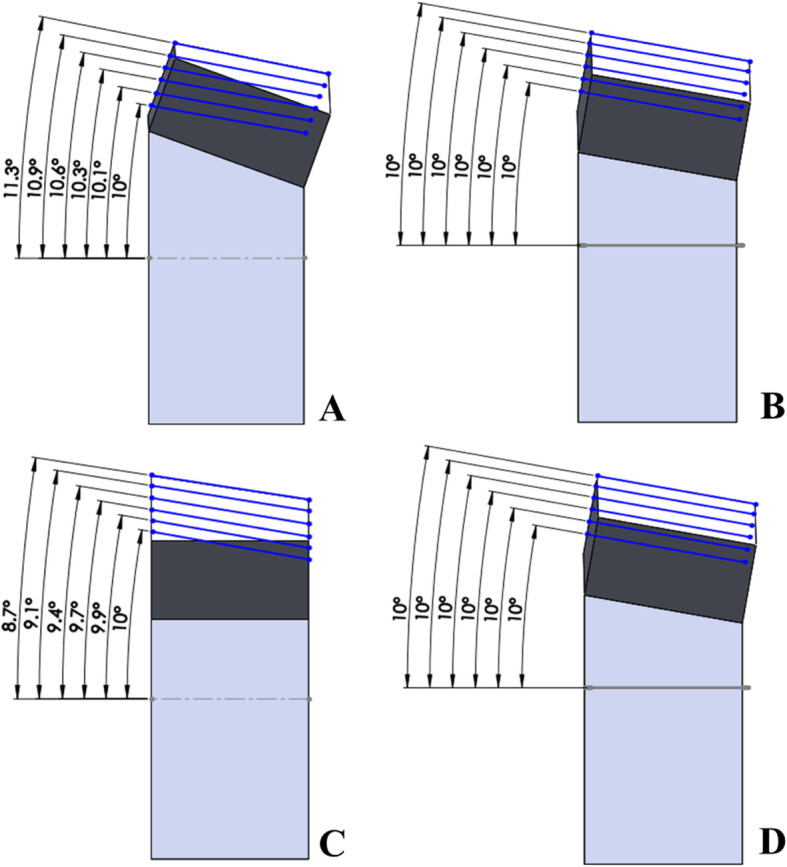
A square column model with a 10° posterior slope was produced using two three-dimensional (3D) programs and a 3D printer. Then, a series of medial open-wedge HTO procedures was performed on the square column model through virtual simulation using the two 3D programs, and an actual simulation was conducted using a 3D printer, a testing machine and a measurement system. The SPOI was divided into four types: ① SPOI 20° (posterior-inclined 10° osteotomy), ② SPOI 10° (osteotomy parallel to posterior slope), ③ SPOI 0° (anterior-inclined 10° osteotomy), and ④ SPOI - 10° (anterior-inclined 20° osteotomy). The correction angle was increased at intervals of 5° from 0° to 30°. The change in posterior slope was measured in the sagittal plane.
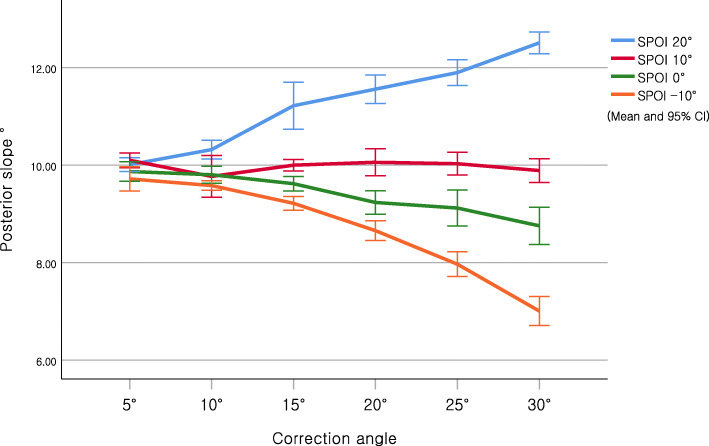
The posterior slope was increased in SPOI 20° (posterior-inclined 10° osteotomy), maintained in SPOI 10° (osteotomy parallel to posterior slope), and decreased in SPOI 0° (anterior-inclined 10° osteotomy) and SPOI - 10° (anterior-inclined 20° osteotomy) based on the correction angle.
In this study using a square column model, the SPOI affected the change in the PTS, and an SPOI parallel to the PTS caused no change in the PTS after medial open-wedge HTO.
内侧开放楔形胫骨高位截骨术(HTO)是治疗膝关节内侧骨关节炎的一种有效且安全的治疗方法。然而,术后可能会出现胫骨后倾角(PTS)的意外变化。几种因素可导致内侧开放楔形 HTO 后 PTS 改变;然而,关于矢状面截骨倾斜度(SPOI)与 PTS 的关系的研究较少。本研究旨在评估 SPOI 是否会影响内侧开放楔形 HTO 后 PTS 的变化。假设 PTS 平行的 SPOI 不会导致内侧开放楔形 HTO 后 PTS 发生变化。
使用两个三维(3D)程序和 3D 打印机制作一个具有 10°后斜率的方形柱模型。然后,通过两个 3D 程序对方形柱模型进行了一系列内侧开放楔形 HTO 手术的虚拟模拟,并且使用 3D 打印机、试验机和测量系统进行了实际模拟。将 SPOI 分为四型:①SPOI 20°(后倾 10°截骨),②SPOI 10°(与后斜率平行的截骨),③SPOI 0°(前倾 10°截骨),和④SPOI-10°(前倾 20°截骨)。矫正角度从 0°每隔 5°增加到 30°。在矢状面测量后斜率的变化。
SPOI 20°(后倾 10°截骨)的后斜率增加,SPOI 10°(与后斜率平行的截骨)的后斜率保持不变,SPOI 0°(前倾 10°截骨)和 SPOI-10°(前倾 20°截骨)的后斜率减小。
在这项使用方形柱模型的研究中,SPOI 影响 PTS 的变化,与 PTS 平行的 SPOI 不会导致内侧开放楔形 HTO 后 PTS 的变化。