Inter-university Laboratory of Human Motor Performance (LIBM - EA 7424), Université de Lyon, Université Claude Bernard, Lyon 1, 27 & 29 Boulevard du 11 Novembre 1918, F-69622, Villeurbanne Cedex, France.
ISPEF, Laboratory of Education Cultures and Politics, University Lumière Lyon 2, Lyon, Cedex 07, 69365, France.
BMC Med Educ. 2021 Jan 18;21(1):59. doi: 10.1186/s12909-020-02424-7.
The peripheral venous catheter is the most frequently used medical device in hospital care to administer intravenous treatment or to take blood samples by introducing a catheter into a vein. The aim of this study was to examine the effect of motor imagery associated with actual training on the learning of peripheral venous catheter insertion into a simulated venous system.
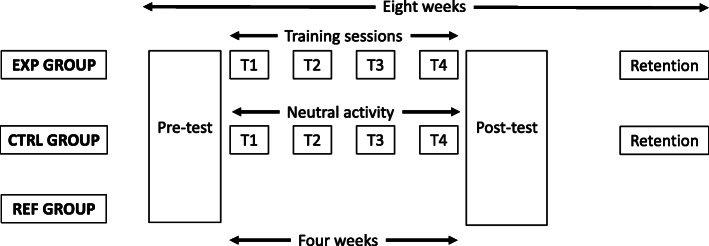
This was a prospective monocentre study in 3rd year medical students. Forty medical students were assigned to the experimental group (n = 20) performing both real practice and motor imagery of peripheral venous catheter insertion or to the control group (n = 20) trained through real practice only. We also recruited a reference group of 20 professional nurses defining the benchmark for a target performance.
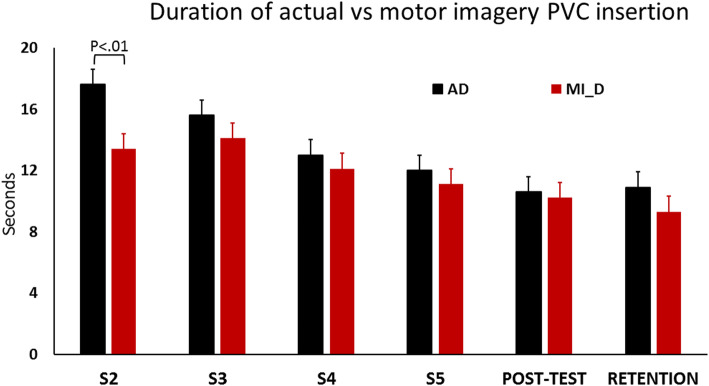
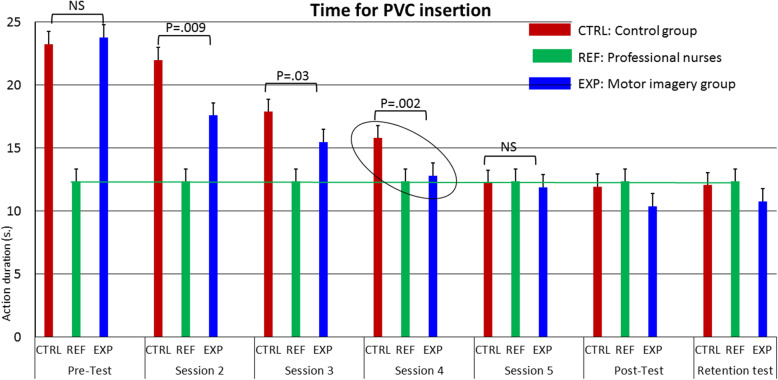
The experimental group learned the peripheral venous catheter insertion faster than the control group in the beginning of learning phase (p < 0.001), reaching the expected level after 4 sessions (p = .87) whereas the control group needed 5 sessions to reach the same level (p = .88). Both groups were at the same level at the end of the scheduled training.
Therefore, motor imagery improved professional motor skills learning, and limited the time needed to reach the expected level. Motor imagery may strengthen technical medical skill learning.
外周静脉导管是医院护理中最常使用的医疗器械,通过将导管插入静脉来进行静脉内治疗或采集血样。本研究旨在探讨与实际训练相结合的运动想象对模拟静脉系统中外周静脉导管插入学习的影响。
这是一项针对三年级医学生的前瞻性单中心研究。40 名医学生被分配到实验组(n=20),进行实际练习和外周静脉导管插入的运动想象,或分配到对照组(n=20),仅通过实际练习进行训练。我们还招募了 20 名专业护士作为参考组,为目标表现设定基准。
实验组在学习阶段的开始时比对照组更快地学习外周静脉导管插入(p<0.001),在 4 个会话后达到预期水平(p=0.87),而对照组需要 5 个会话才能达到相同水平(p=0.88)。两组在预定培训结束时处于相同水平。
因此,运动想象提高了专业运动技能的学习速度,并缩短了达到预期水平所需的时间。运动想象可能会加强技术医疗技能的学习。