• 文献检索
  • 文档翻译
  • 深度研究
  • 学术资讯
  • Suppr Zotero 插件Zotero 插件
  • 邀请有礼
  • 套餐&价格
  • 历史记录
应用&插件
Suppr Zotero 插件Zotero 插件浏览器插件Mac 客户端Windows 客户端微信小程序
定价
高级版会员购买积分包购买API积分包
服务
文献检索文档翻译深度研究API 文档MCP 服务
关于我们
关于 Suppr公司介绍联系我们用户协议隐私条款
关注我们

Suppr 超能文献

核心技术专利:CN118964589B侵权必究
粤ICP备2023148730 号-1Suppr @ 2026

文献检索

告别复杂PubMed语法,用中文像聊天一样搜索,搜遍4000万医学文献。AI智能推荐,让科研检索更轻松。

立即免费搜索

文件翻译

保留排版,准确专业,支持PDF/Word/PPT等文件格式,支持 12+语言互译。

免费翻译文档

深度研究

AI帮你快速写综述,25分钟生成高质量综述,智能提取关键信息,辅助科研写作。

立即免费体验

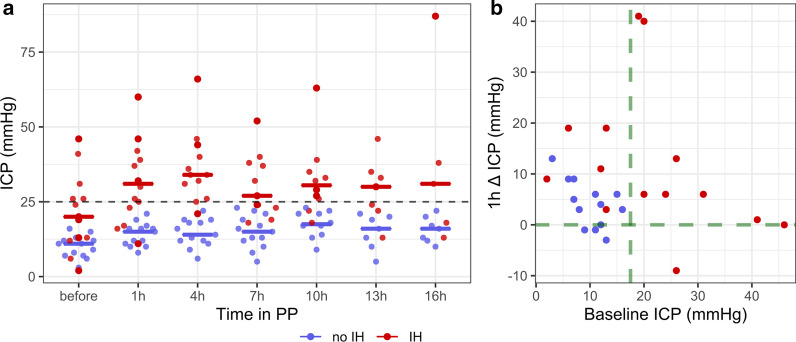
Can prone positioning be a safe procedure in patients with acute brain injury and moderate-to-severe acute respiratory distress syndrome?

作者信息

Bernon Pauline, Mrozek Ségolène, Dupont Guillaume, Dailler Frédéric, Lukaszewicz Anne-Claire, Balança Baptiste

机构信息

Hospices Civils de Lyon, Hôpital Pierre Wertheimer, Département d'anesthésie réanimation, Hôpital Neurologique Pierre Wertheimer, 59 Boulevard Pinel, 69500, Bron, Lyon, France.

Département d'anesthésie Réanimation, Centre Hospitalier Universitaire de Toulouse, Université Toulouse 3-Paul Sabatier, Toulouse, France.

出版信息

Crit Care. 2021 Jan 18;25(1):30. doi: 10.1186/s13054-020-03454-9.
DOI:10.1186/s13054-020-03454-9
PMID:33461575
原文链接:https://pmc.ncbi.nlm.nih.gov/articles/PMC7812714/
Abstract
摘要
https://cdn.ncbi.nlm.nih.gov/pmc/blobs/5ecf/7814743/61353b0c76f3/13054_2020_3454_Fig1_HTML.jpg

相似文献

1
Can prone positioning be a safe procedure in patients with acute brain injury and moderate-to-severe acute respiratory distress syndrome?对于急性脑损伤合并中重度急性呼吸窘迫综合征的患者,俯卧位通气是否为一种安全的操作?
Crit Care. 2021 Jan 18;25(1):30. doi: 10.1186/s13054-020-03454-9.
2
To prone or not to prone ARDS patients on ECMO.ARDS 患者在体外膜肺氧合(ECMO)治疗时是否采用俯卧位。
Crit Care. 2021 Aug 31;25(1):315. doi: 10.1186/s13054-021-03675-6.
3
Prone-Positioning for Severe Acute Respiratory Distress Syndrome Requiring Extracorporeal Membrane Oxygenation.需要体外膜肺氧合的重症急性呼吸窘迫综合征的俯卧位通气
Crit Care Med. 2022 Feb 1;50(2):264-274. doi: 10.1097/CCM.0000000000005145.
4
Lung ultrasound can predict response to the prone position in awake non-intubated patients with COVID‑19 associated acute respiratory distress syndrome.肺部超声可预测清醒、未插管的新型冠状病毒肺炎相关急性呼吸窘迫综合征患者俯卧位通气的反应。
Crit Care. 2021 Jan 25;25(1):35. doi: 10.1186/s13054-021-03472-1.
5
Feasibility of Prone Positioning for Brain-injured Patients with Severe Acute Respiratory Distress Syndrome: A Systematic Review and Pilot Study (ProBrain).严重急性呼吸窘迫综合征合并脑损伤患者俯卧位通气的可行性:系统评价和初步研究(ProBrain)。
Anesthesiology. 2024 Mar 1;140(3):495-512. doi: 10.1097/ALN.0000000000004875.
6
Does proning on NIV improve oxygenation?俯卧位通气是否能改善氧合?
BMJ Case Rep. 2020 Oct 29;13(10):e235243. doi: 10.1136/bcr-2020-235243.
7
Prone positioning before extracorporeal membrane oxygenation for severe acute respiratory distress syndrome: A retrospective multicenter study.体外膜肺氧合治疗严重急性呼吸窘迫综合征前俯卧位通气:一项回顾性多中心研究
Med Intensiva (Engl Ed). 2019 Oct;43(7):402-409. doi: 10.1016/j.medin.2018.04.013. Epub 2018 Jul 6.
8
Efficacy and safety of early prone positioning combined with HFNC or NIV in moderate to severe ARDS: a multi-center prospective cohort study.早期俯卧位联合 HFNC 或 NIV 治疗中重度 ARDS 的疗效和安全性:一项多中心前瞻性队列研究。
Crit Care. 2020 Jan 30;24(1):28. doi: 10.1186/s13054-020-2738-5.
9
Beneficial hemodynamic effects of prone positioning in patients with acute respiratory distress syndrome.俯卧位对急性呼吸窘迫综合征患者血流动力学有益的影响。
Am J Respir Crit Care Med. 2013 Dec 15;188(12):1428-33. doi: 10.1164/rccm.201303-0593OC.
10
Prone positioning in severe ARDS requiring extracorporeal membrane oxygenation.俯卧位通气在严重急性呼吸窘迫综合征合并体外膜肺氧合治疗中的应用。
Crit Care. 2020 Jul 8;24(1):397. doi: 10.1186/s13054-020-03110-2.

引用本文的文献

1
Head up, face down-a practical framework for proning brain-injured patients with ARDS.头高、面朝下——为患有急性呼吸窘迫综合征的脑损伤患者实施俯卧位通气的实用框架。
Intensive Care Med. 2025 Sep 11. doi: 10.1007/s00134-025-08097-4.
2
Effects of 'Head Up' Prone Position on Transcranial Color Doppler-Based Estimators of Intracranial Pressure in Moderate to Severe Acute Respiratory Distress Syndrome Without Brain Injury: A Cross-Over, Longitudinal, Physiological Study.“头高位”俯卧位对无脑损伤的中重度急性呼吸窘迫综合征患者基于经颅彩色多普勒的颅内压估计值的影响:一项交叉、纵向、生理学研究。
Neurocrit Care. 2025 Mar 25. doi: 10.1007/s12028-025-02240-1.
3

本文引用的文献

1
Mechanical ventilation in patients with acute brain injury: recommendations of the European Society of Intensive Care Medicine consensus.急性脑损伤患者的机械通气:欧洲重症监护医学学会共识推荐。
Intensive Care Med. 2020 Dec;46(12):2397-2410. doi: 10.1007/s00134-020-06283-0. Epub 2020 Nov 11.
2
Trial of Decompressive Craniectomy for Traumatic Intracranial Hypertension.创伤性颅内高压减压性颅骨切除术试验
N Engl J Med. 2016 Sep 22;375(12):1119-30. doi: 10.1056/NEJMoa1605215. Epub 2016 Sep 7.
3
Does prone positioning increase intracranial pressure? A retrospective analysis of patients with acute brain injury and acute respiratory failure.
Management of traumatic brain injury and acute respiratory distress syndrome-What evidence exists? A scoping review.
创伤性脑损伤与急性呼吸窘迫综合征的管理——现有哪些证据?一项范围综述。
J Intensive Care Soc. 2025 Jan 18;26(2):205-222. doi: 10.1177/17511437241311398. eCollection 2025 May.
4
High-Grade Subarachnoid Hemorrhage - Beyond Guidelines.高分级蛛网膜下腔出血——超越指南。
Neurol Clin. 2025 Feb;43(1):107-126. doi: 10.1016/j.ncl.2024.07.006. Epub 2024 Oct 15.
5
The Role of Brain Tissue Oxygenation Monitoring in the Management of Subarachnoid Hemorrhage: A Scoping Review.脑氧监测在蛛网膜下腔出血管理中的作用:范围综述。
Neurocrit Care. 2023 Aug;39(1):229-240. doi: 10.1007/s12028-023-01680-x. Epub 2023 Feb 17.
6
Mechanical ventilation in acute brain injury patients with acute respiratory distress syndrome.急性呼吸窘迫综合征的急性脑损伤患者的机械通气
Front Med (Lausanne). 2022 Oct 6;9:999885. doi: 10.3389/fmed.2022.999885. eCollection 2022.
7
Controversies and evidence gaps in the early management of severe traumatic brain injury: back to the ABCs.重度创伤性脑损伤早期管理中的争议与证据空白:回归基础生命支持。
Trauma Surg Acute Care Open. 2022 Jan 5;7(1):e000859. doi: 10.1136/tsaco-2021-000859. eCollection 2022.
8
The prone position must accommodate changes in IAP in traumatic brain injury patients.俯卧位必须适应创伤性脑损伤患者腹内压的变化。
Crit Care. 2021 Apr 7;25(1):132. doi: 10.1186/s13054-021-03506-8.
9
Prone mechanical ventilation in acute brain injury.急性脑损伤中的俯卧位机械通气
Crit Care. 2021 Mar 10;25(1):100. doi: 10.1186/s13054-021-03530-8.
俯卧位会增加颅内压吗?对急性脑损伤和急性呼吸衰竭患者的回顾性分析。
Neurocrit Care. 2014 Oct;21(2):186-91. doi: 10.1007/s12028-014-0004-x.
4
Prone positioning in severe acute respiratory distress syndrome.俯卧位通气治疗严重急性呼吸窘迫综合征。
N Engl J Med. 2013 Jun 6;368(23):2159-68. doi: 10.1056/NEJMoa1214103. Epub 2013 May 20.
5
Effect of head rotation on cerebral blood velocity in the prone position.俯卧位时头部旋转对脑血流速度的影响。
Anesthesiol Res Pract. 2012;2012:647258. doi: 10.1155/2012/647258. Epub 2012 Sep 5.
6
Prone position in mechanically ventilated patients with reduced intracranial compliance.颅内顺应性降低的机械通气患者的俯卧位
Acta Anaesthesiol Scand. 2006 Sep;50(8):937-41. doi: 10.1111/j.1399-6576.2006.01037.x.