Daniel J. Evans School of Public Policy and Governance, University of Washington, Seattle, WA, USA.
Harborview Injury Prevention and Research Center, Seattle, WA, USA.
Child Maltreat. 2022 Aug;27(3):325-333. doi: 10.1177/1077559520987302. Epub 2021 Jan 19.
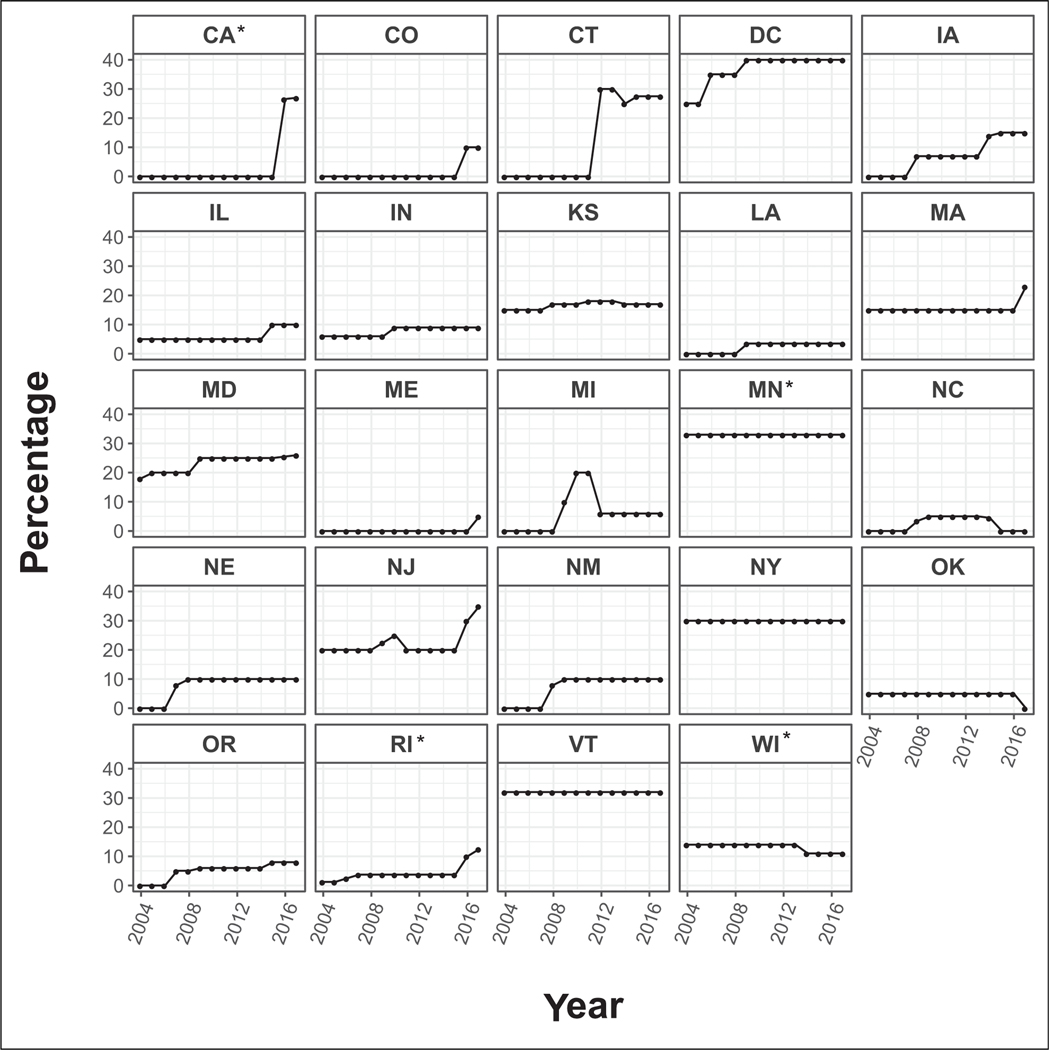
Poverty is an important predictor of child maltreatment. Social policies that strengthen the economic security of low-income families, such as the Earned Income Tax Credit (EITC), may reduce child maltreatment by impeding the pathways through which poverty leads to it. We used variations in the presence and generosity of supplementary EITCs offered at the state level and administrative child maltreatment data from the National Child Abuse and Neglect Data System (NCANDS) to examine the effect of EITC policies on state-level rates of child maltreatment from 2004 through 2017. Two-way fixed effects models indicated that a 10-percentage point increase in the generosity of refundable state EITC benefits was associated with 241 fewer reports of neglect per 100,000 children (95% Confidence Interval [CI] [-449, -33]). An increase in EITC generosity was associated with fewer reports of neglect both among children ages 0-5 (-324 per 100,000; 95% CI [-582, -65]) and children ages 6-17 (-201 per 100,000; 95% CI [-387, -15]). Findings also suggested associations between the EITC and reductions in other types of maltreatment (physical abuse, emotional abuse); however, those did not gain statistical significance. Economic support policies may reduce the risk of child maltreatment, especially neglect, and improve child wellbeing.
贫困是儿童虐待的一个重要预测因素。加强低收入家庭经济安全的社会政策,如所得税抵免(EITC),可能会通过阻碍贫困导致儿童虐待的途径来减少儿童虐待。我们利用州一级补充 EITC 的存在和慷慨程度的变化,以及来自国家儿童虐待和忽视数据系统(NCANDS)的行政儿童虐待数据,来研究 EITC 政策对 2004 年至 2017 年各州儿童虐待率的影响。双向固定效应模型表明,可退还的州 EITC 福利的慷慨程度增加 10 个百分点,与每 10 万名儿童中忽视报告减少 241 例(95%置信区间[CI] [-449, -33])有关。EITC 慷慨程度的增加与 0-5 岁儿童(每 10 万儿童减少 324 例;95%CI [-582, -65])和 6-17 岁儿童(每 10 万儿童减少 201 例;95%CI [-387, -15])的忽视报告减少有关。研究结果还表明,EITC 与减少其他类型的虐待(身体虐待、情感虐待)之间存在关联;然而,这些关联没有获得统计学意义。经济支持政策可能会降低儿童虐待的风险,特别是忽视的风险,并改善儿童的福利。