Paediatric Gastroenterology, Royal Hospital for Children, Glasgow, UK.
Blizard Institute, Queen Mary University of London, London, UK.
Clin Transl Gastroenterol. 2020 Dec 18;12(1):e00287. doi: 10.14309/ctg.0000000000000287.
Thetanix (gastroresistant capsules containing lyophilized Bacteroides thetaiotaomicron) is a live biotherapeutic, under development for Crohn's disease, that antagonizes transcription factor nuclear factor kappa B, reducing proinflammatory cytokines, particularly tumor necrosis factor alpha. We aimed to assess safety and tolerability in adolescents with Crohn's disease in remission.
Subjects who were 16-18 years with Crohn's in remission (weighted pediatric Crohn's disease activity index <12.5) were recruited. Each active dose comprised ∼108.2±1.4 colony forming units of B. thetaiotaomicron (randomized 4:1 active:placebo). Part A was single dose. Part B involved 7.5 days twice daily dosing. Serial stools were analyzed for calprotectin, 16S rRNA sequencing, and B. thetaiotaomicron real-time polymerase chain reaction. Bloods were taken serially. Subjects reported adverse events and recorded temperature twice daily.
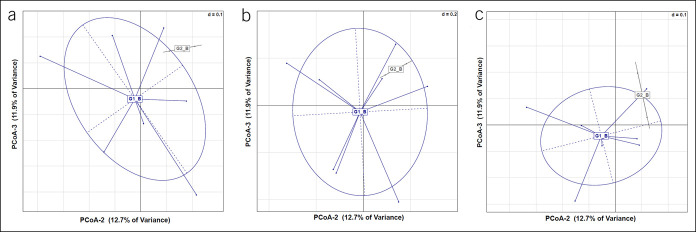
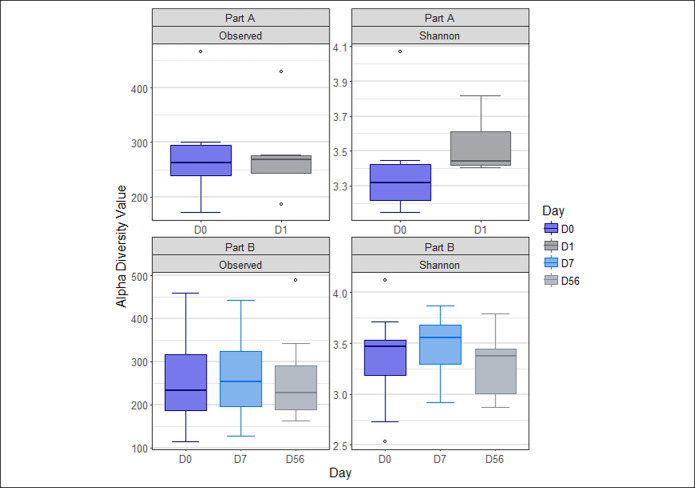
Fifteen subjects were treated-8 in part A (75% men, median 17.1 years) and 10 in part B, including 3 from part A (80% men, median 17.1 years); all 18 completed. Seventy percent took concurrent immunosuppression. Reported compliance was >99% in part B. Two subjects reported adverse events deemed related-one in part A with eructation, flatulence, and reflux; one in part B with dizziness, abdominal pain, and headache. No serious adverse events were reported. There was no significant change in median calprotectin across part B (87.8 [4.4-447] to 50.5 [5.3-572], P = 0.44 by the Fisher exact test in the active group). No significant differences were found in microbiota profiles, but diversity seemed to increase in treated subjects.
Thetanix, after single and multiple doses, was well tolerated. Although the numbers in this study were small, the safety profile seems good. Future studies should explore efficacy.
Thetanix(含有冻干脆弱拟杆菌的耐胃酸胶囊)是一种正在开发的用于治疗克罗恩病的活体生物治疗药物,它能拮抗转录因子核因子 κB,减少促炎细胞因子,特别是肿瘤坏死因子 α。我们旨在评估缓解期克罗恩病青少年的安全性和耐受性。
招募体重加权小儿克罗恩病活动指数<12.5 的缓解期(缓解期)16-18 岁的克罗恩病患者。每个活性剂量包含约 108.2±1.4 个 CFU 脆弱拟杆菌(随机 4:1 活性:安慰剂)。A 部分是单次剂量,B 部分是每日两次,持续 7.5 天。连续粪便分析钙卫蛋白、16S rRNA 测序和脆弱拟杆菌实时聚合酶链反应。连续采血。患者报告不良反应,并每天两次记录体温。
15 名患者接受了治疗-8 名在 A 部分(75%男性,中位年龄 17.1 岁)和 10 名在 B 部分,包括 3 名从 A 部分(80%男性,中位年龄 17.1 岁);所有 18 名都完成了治疗。70%的患者同时接受免疫抑制治疗。B 部分的报告依从性>99%。有 2 名患者报告的不良反应被认为与治疗相关-1 名在 A 部分有呃逆、腹胀和反流;1 名在 B 部分有头晕、腹痛和头痛。没有报告严重不良事件。B 部分中位钙卫蛋白没有显著变化(活性组中 87.8[4.4-447]至 50.5[5.3-572],Fisher 确切检验 P = 0.44)。微生物组谱无显著差异,但治疗组的多样性似乎增加。
Thetanix 单次和多次给药后均耐受良好。尽管本研究的数量较小,但安全性似乎良好。未来的研究应探索其疗效。