Centro de Encefalopatías y Enfermedades Transmisibles Emergentes, Universidad de Zaragoza IA2 IIS Aragón, 50013 Zaragoza, Spain.
ATLAS Molecular Pharma S.L., Parque tecnológico de Bizkaia, 48160 Derio, Spain.
Int J Mol Sci. 2021 Jan 5;22(1):465. doi: 10.3390/ijms22010465.
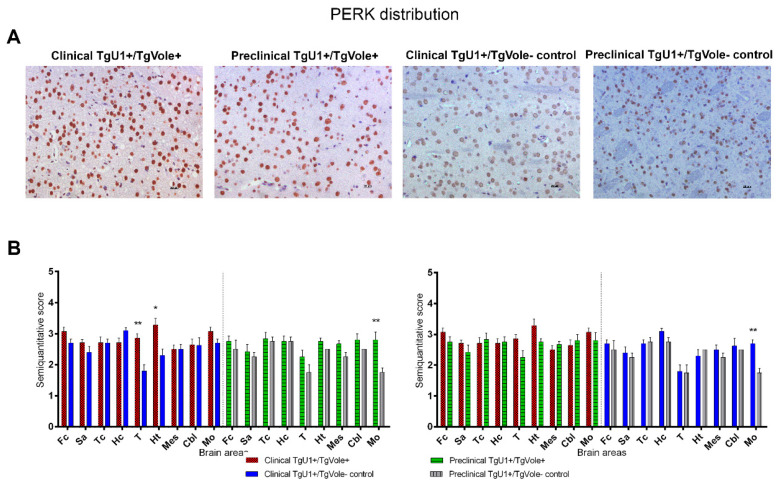
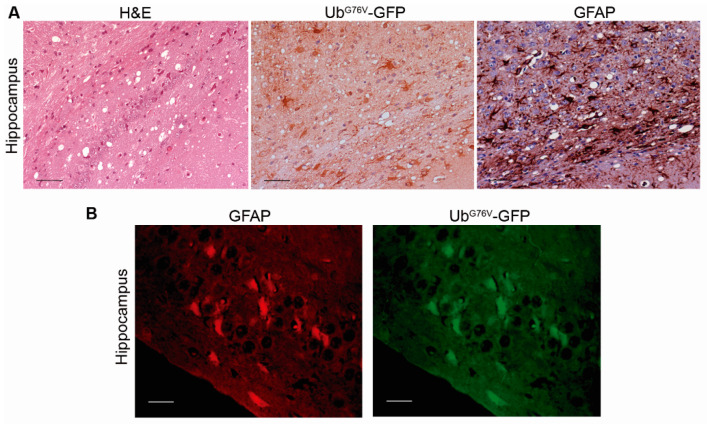
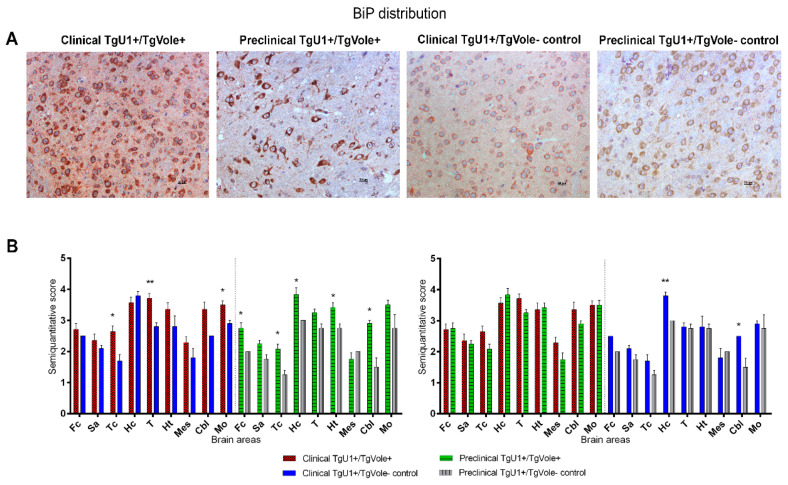
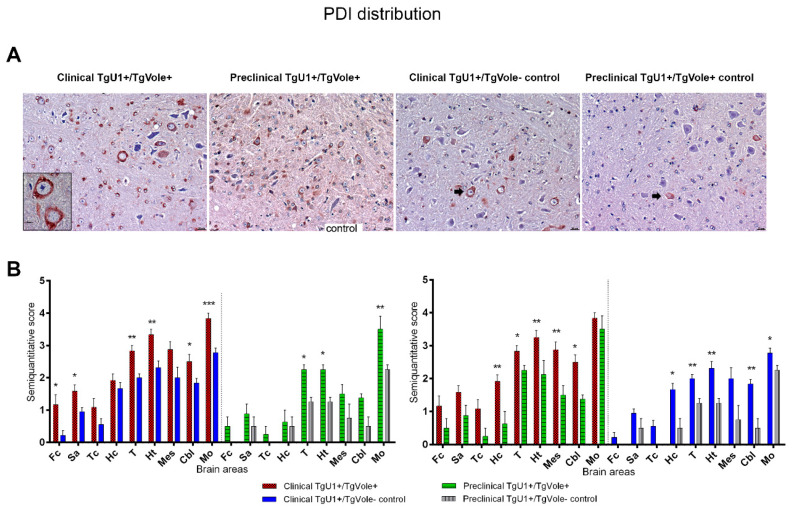
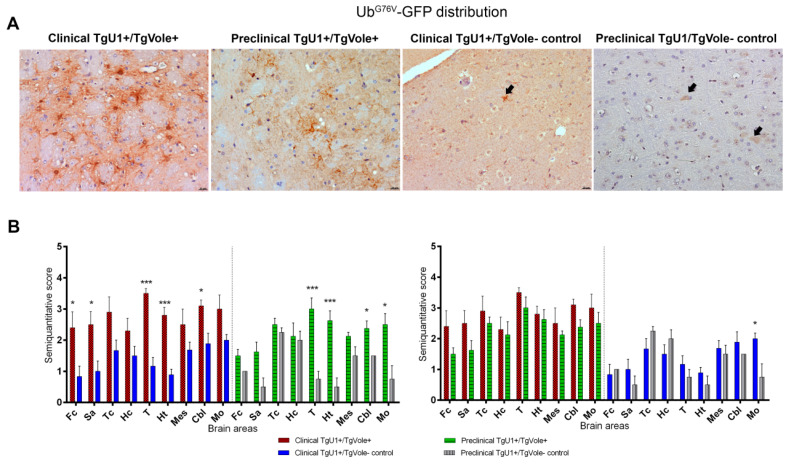
Prion diseases are a group of neurodegenerative disorders that can be spontaneous, familial or acquired by infection. The conversion of the prion protein PrP to its abnormal and misfolded isoform PrP is the main event in the pathogenesis of prion diseases of all origins. In spontaneous prion diseases, the mechanisms that trigger the formation of PrP in the central nervous system remain unknown. Several reports have demonstrated that the accumulation of PrP can induce endoplasmic reticulum (ER) stress and proteasome impairment from the early stages of the prion disease. Both mechanisms lead to an increment of PrP aggregates in the secretory pathway, which could explain the pathogenesis of spontaneous prion diseases. Here, we investigate the role of ER stress and proteasome impairment during prion disorders in a murine model of spontaneous prion disease (TgVole) co-expressing the Ub-GFP reporter, which allows measuring the proteasome activity in vivo. Spontaneously prion-affected mice showed a significantly higher accumulation of the PKR-like ER kinase (PERK), the ER chaperone binding immunoglobulin protein (BiP/Grp78), the ER protein disulfide isomerase (PDI) and the Ub-GFP reporter than age-matched controls in certain brain areas. The upregulation of PERK, BiP, PDI and ubiquitin was detected from the preclinical stage of the disease, indicating that ER stress and proteasome impairment begin at early stages of the spontaneous disease. Strong correlations were found between the deposition of these markers and neuropathological markers of prion disease in both preclinical and clinical mice. Our results suggest that both ER stress and proteasome impairment occur during the pathogenesis of spontaneous prion diseases.
朊病毒病是一组神经退行性疾病,可自发、家族性或通过感染获得。朊病毒蛋白 PrP 向其异常和错误折叠的异构体 PrP 的转化是所有起源的朊病毒病发病机制中的主要事件。在自发性朊病毒病中,触发中枢神经系统中 PrP 形成的机制仍不清楚。有几项报道表明,朊病毒病早期 PrP 的积累可诱导内质网 (ER) 应激和蛋白酶体损伤。这两种机制都导致分泌途径中 PrP 聚集物的增加,这可以解释自发性朊病毒病的发病机制。在这里,我们研究了内质网应激和蛋白酶体损伤在自发朊病毒病小鼠模型(共表达 Ub-GFP 报告基因的 TgVole)中的作用,Ub-GFP 报告基因允许在体内测量蛋白酶体活性。与年龄匹配的对照相比,自发感染朊病毒的小鼠在某些大脑区域中表现出 PKR 样 ER 激酶 (PERK)、内质网伴侣结合免疫球蛋白蛋白 (BiP/Grp78)、内质网蛋白二硫键异构酶 (PDI) 和 Ub-GFP 报告基因的积累显著增加。PERK、BiP、PDI 和泛素的上调在疾病的临床前阶段即可检测到,表明 ER 应激和蛋白酶体损伤始于自发性疾病的早期阶段。在临床前和临床小鼠中,这些标志物的沉积与朊病毒病的神经病理学标志物之间存在强烈相关性。我们的研究结果表明,内质网应激和蛋白酶体损伤均发生在自发性朊病毒病的发病机制中。