Stensland Zachary C, Cambier John C, Smith Mia J
Barbara Davis Center for Diabetes, Department of Pediatrics, University of Colorado School of Medicine, Aurora, CO 80045, USA.
Department of Immunology and Microbiology, University of Colorado School of Medicine, Aurora, CO 80045, USA.
Biomedicines. 2021 Jan 16;9(1):83. doi: 10.3390/biomedicines9010083.
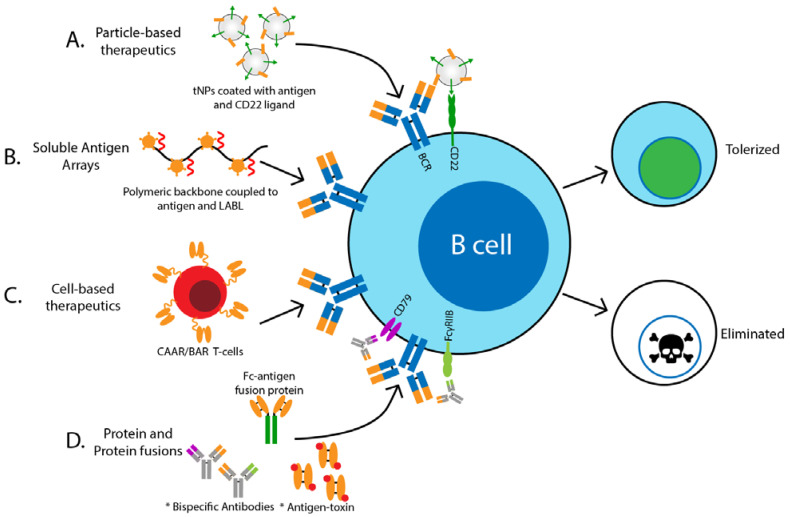
B lymphocytes play critical roles in the development of autoimmunity, acting as autoantibody manufacturers, antigen-presenting cells, and producers of cytokines. Pan-B cell depletion has demonstrated efficacy in treatment of many autoimmune disorders, but carries with it an unfavorable safety profile due to global immune suppression. Hence, attention has turned to the potential of autoantigen-specific B cell targeted therapies, which would deplete or silence pathogenic self-antigen-reactive cells while sparing B cells needed for immune defense. Here, we discuss the antigen-specific B cell-targeted approaches that are under development or are under consideration, that could be employed to allow for more precise therapy in the treatment of autoimmunity. Lastly, we discuss some of the challenges associated with antigen-specific B cell targeting that may impact their clinical applicability.
B淋巴细胞在自身免疫性疾病的发展中起着关键作用,它们作为自身抗体的制造者、抗原呈递细胞和细胞因子的生产者。全B细胞清除已在多种自身免疫性疾病的治疗中显示出疗效,但由于全身性免疫抑制,其安全性不佳。因此,人们的注意力已转向自身抗原特异性B细胞靶向疗法的潜力,这种疗法将清除或使致病性自身抗原反应性细胞失活,同时保留免疫防御所需的B细胞。在此,我们讨论正在开发或正在考虑的抗原特异性B细胞靶向方法,这些方法可用于在自身免疫性疾病治疗中实现更精确的治疗。最后,我们讨论与抗原特异性B细胞靶向相关的一些挑战,这些挑战可能会影响其临床应用。