Antonio Jose, Kenyon Madaline, Horn Christopher, Jiannine Lia, Carson Cassandra, Ellerbroek Anya, Roberts Justin, Peacock Corey, Tartar Jaime
Exercise and Sport Science, NSU Florida, Davie, FL 33328, USA.
School of Psychology and Sport Science, Anglia Ruskin University, East Road, Cambridge CB5 8DZ, UK.
J Funct Morphol Kinesiol. 2019 Jul 22;4(3):47. doi: 10.3390/jfmk4030047.
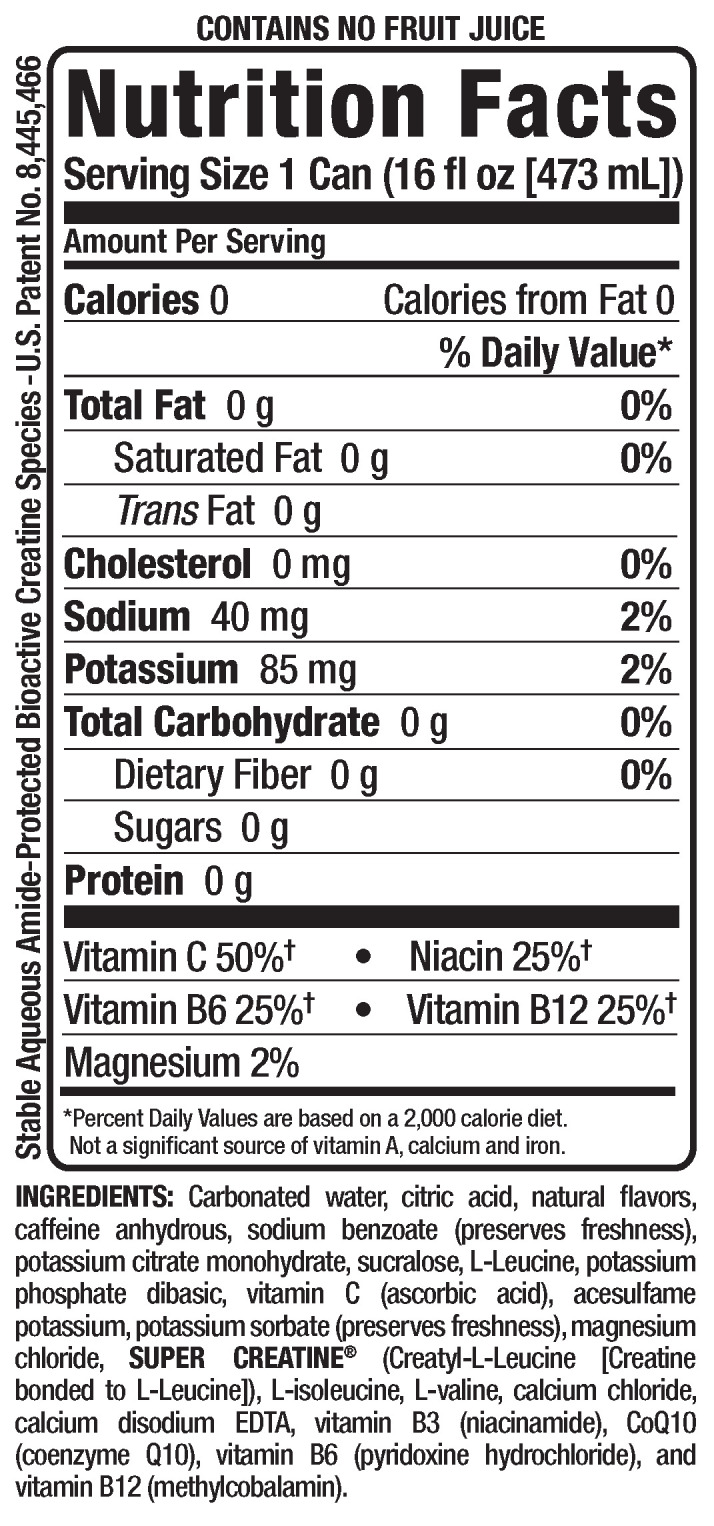
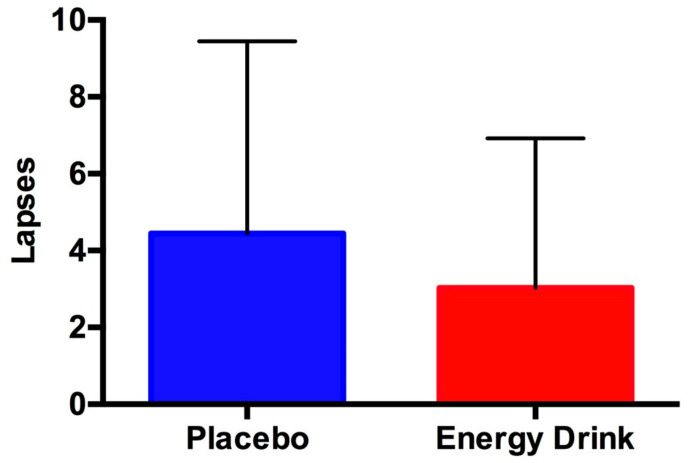
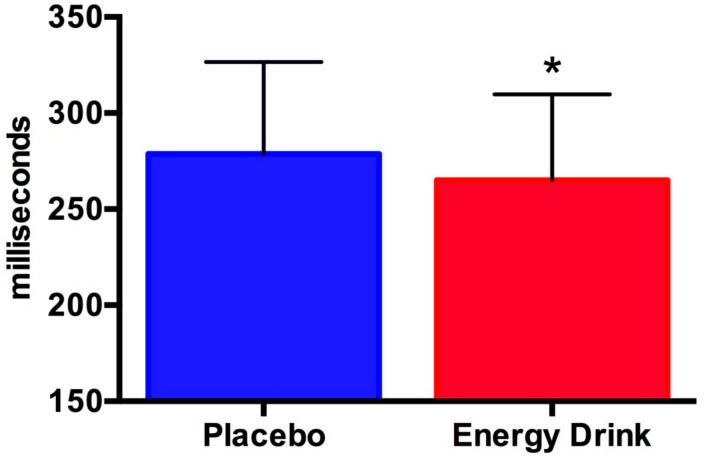
The psychomotor vigilance test (PVT) measures one's behavioral alertness. It is a visual test that involves measuring the speed at which a person reacts to visual stimuli over a fixed time frame (e.g., 5 min). The purpose of this study was to assess the effects of an energy drink on psychomotor vigilance as well as a simple measure of muscular endurance (i.e., push-ups). A total of 20 exercise-trained men ( = 11) and women ( = 9) (mean ± SD: age 32 ± 7 years; height 169 ± 10 cm; weight; 74.5 ± 14.5 kg; percent body fat 20.3 ± 6.2%; years of training 14 ± 9; daily caffeine intake 463 ± 510 mg) volunteered for this randomized, double-blind, placebo-controlled, crossover trial. In a randomized counterbalanced order, they consumed either the energy drink (ED) (product: BANG, Weston Florida) or a similar tasting placebo drink (PL). In the second visit after a 1-week washout period, they consumed the alternate drink. A full 30 min post-consumption, they performed the following tests in this order: a 5-min psychomotor vigilance test, three sets of push-ups, followed once more by a 5-min psychomotor vigilance test. Reaction time was recorded. For the psychomotor vigilance test, lapses, false starts and efficiency score are also assessed. There were no differences between groups for the number of push-ups that were performed or the number of false starts during the psychomotor vigilance test. However, the ED treatment resulted in a significantly lower (i.e., faster) psychomotor vigilance mean reaction time compared to the PL ( = 0.0220) (ED 473.8 ± 42.0 milliseconds, PL 482.4 ± 54.0 milliseconds). There was a trend for the ED to lower the number of lapses (i.e., reaction time > 500 milliseconds) ( = 0.0608). The acute consumption of a commercially available ED produced a significant improvement in psychomotor vigilance in exercise-trained men and women.
心理运动警觉性测试(PVT)用于测量一个人的行为警觉性。这是一项视觉测试,涉及在固定时间框架(如5分钟)内测量一个人对视觉刺激的反应速度。本研究的目的是评估能量饮料对心理运动警觉性以及一项简单的肌肉耐力指标(即俯卧撑)的影响。共有20名经过运动训练的男性(n = 11)和女性(n = 9)(平均±标准差:年龄32±7岁;身高169±10厘米;体重74.5±14.5千克;体脂百分比20.3±6.2%;训练年限14±9;每日咖啡因摄入量463±510毫克)自愿参加了这项随机、双盲、安慰剂对照的交叉试验。他们按照随机平衡的顺序,饮用了能量饮料(ED)(产品:BANG,佛罗里达州韦斯顿)或口味相似的安慰剂饮料(PL)。在为期1周的洗脱期后的第二次就诊时,他们饮用了另一种饮料。饮用后整整30分钟,他们按以下顺序进行了以下测试:5分钟的心理运动警觉性测试、三组俯卧撑,然后再次进行5分钟的心理运动警觉性测试。记录反应时间。对于心理运动警觉性测试,还评估了失误次数、错误启动次数和效率得分。在进行的俯卧撑次数或心理运动警觉性测试期间的错误启动次数方面,两组之间没有差异。然而,与PL相比,ED治疗导致心理运动警觉性的平均反应时间显著缩短(即更快)(P = 0.0220)(ED为473.8±42.0毫秒,PL为482.4±54.0毫秒)。ED有降低失误次数(即反应时间>500毫秒)的趋势(P = 0.0608)。急性饮用市售能量饮料可使经过运动训练的男性和女性的心理运动警觉性显著提高。