Pereira Flavia, Evans Cassandra, Rojas Jose, Curtis Jason, Andal Alyana, Thakkar Hena, Rocanelli Robert, Rodriguez Cesar Castillo, Santana Juan Carlos, Jiannine Lia, Antonio Jose
Department of Health and Human Performance, Rocky Mountain University, Provo, Utah, USA.
Department of Exercise & Sport Science, Keiser University, West Palm Beach, FL, USA.
Int J Exerc Sci. 2024 Aug 1;17(1):1208-1218. doi: 10.70252/UIEC6951. eCollection 2024.
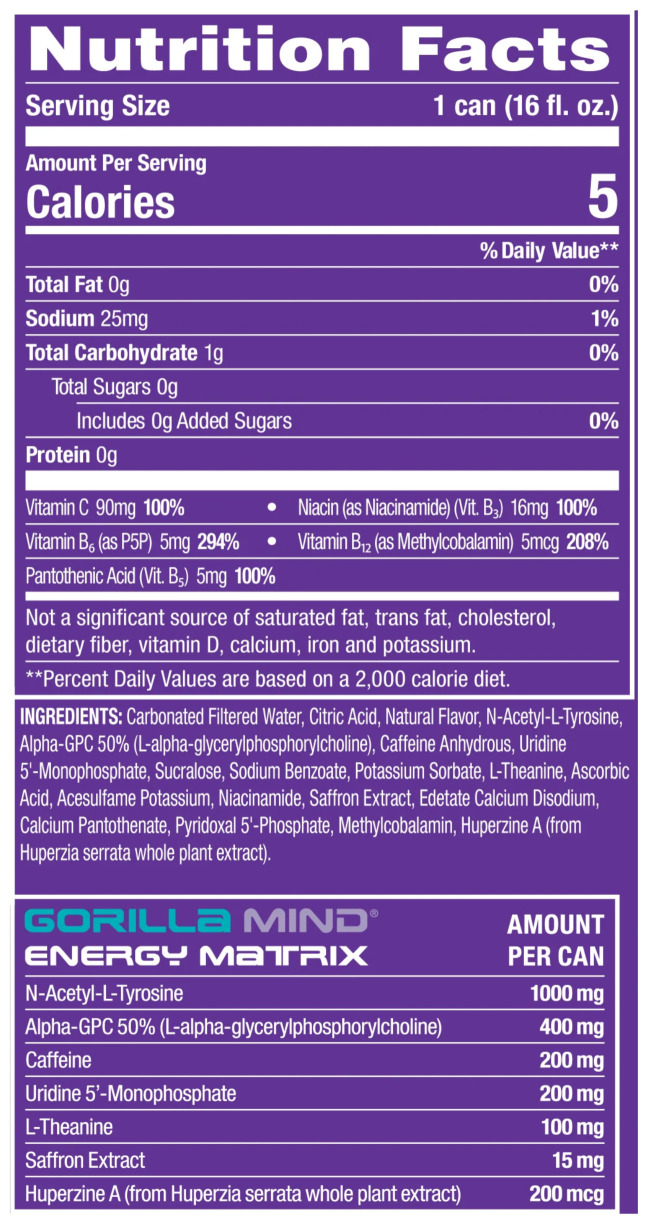
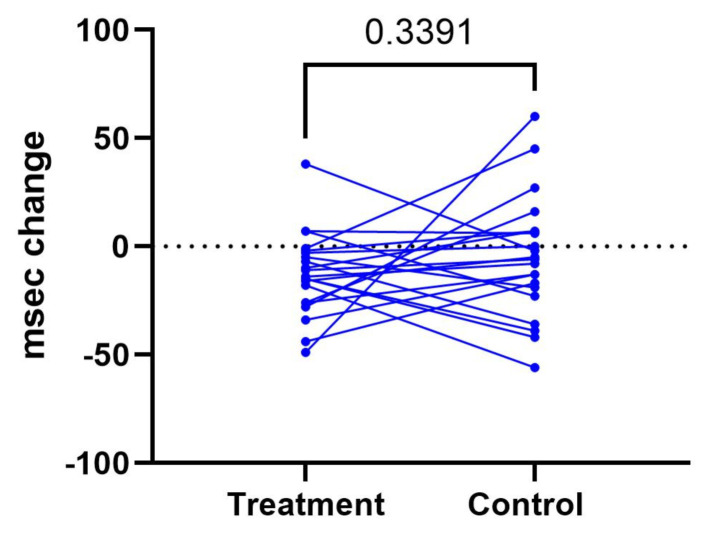
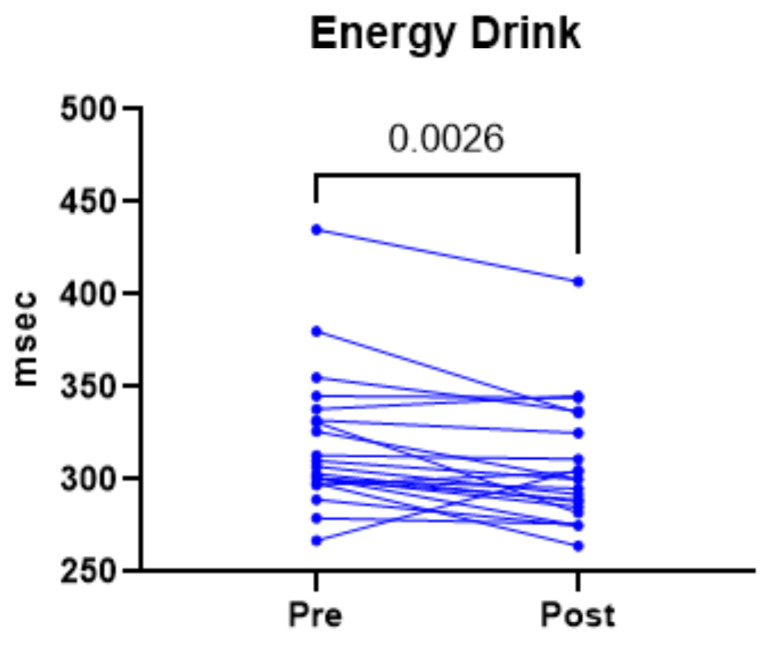
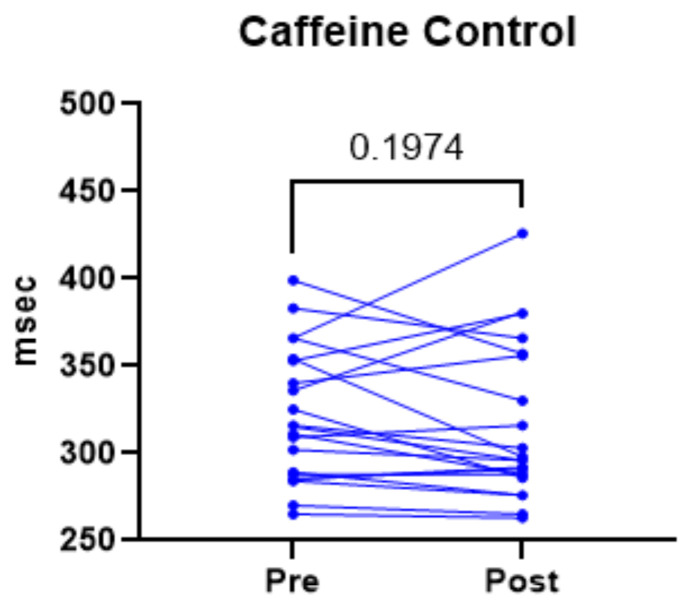
Energy drinks are marketed for enhancing mental and physical performance, often containing ingredients beyond caffeine. This study investigated whether an energy drink (ED), Gorilla Mind, exerted greater effects on sustained attention, mood, handgrip strength, and push-up performance than a caffeine-matched control drink (CAF) in exercise-trained individuals (n = 21, age: 22 ± 5.9 years). In a randomized, counterbalanced, crossover design, participants first completed tests assessing mood (Profile of Mood States; POMS), sustained attention (Psychomotor Vigilance Test; PVT), handgrip strength (HG), and 1-minute maximum push-up performance (PU). They then consumed either an ED or CAF drink (200mg caffeine) in a randomized order. After 45 minutes, the tests were repeated. Following a 1-week washout period, participants returned to consume the other drink and completed the same protocol. While the ED group improved reaction time (PVT), the Delta score between ED and CAF was not statistically significant (p = 0.3391). No significant differences were found between ED and CAF groups for other measures (POMS: p = 0.152, HG: p = 0.499, PU: p = 0.209). These findings suggest that the additional ingredients in the ED may not offer substantial benefits beyond caffeine for these measures in active individuals. It is important to note that the caffeine dose was, on average, less than 3.0 mg/kg body mass, which may have influenced the outcomes.
能量饮料的市场宣传是为了提高精神和身体表现,其所含成分通常不止咖啡因。本研究调查了一种能量饮料——大猩猩之心(Gorilla Mind),与咖啡因含量匹配的对照饮料(CAF)相比,对运动训练个体(n = 21,年龄:22±5.9岁)的持续注意力、情绪、握力和俯卧撑表现是否有更大影响。在一项随机、平衡、交叉设计中,参与者首先完成评估情绪(情绪状态剖面图;POMS)、持续注意力(心理运动警觉性测试;PVT)、握力(HG)和1分钟最大俯卧撑表现(PU)的测试。然后他们以随机顺序饮用能量饮料或对照饮料(含200毫克咖啡因)。45分钟后,重复进行测试。经过1周的洗脱期后,参与者回来饮用另一种饮料并完成相同的方案。虽然能量饮料组的反应时间(PVT)有所改善,但能量饮料组和对照饮料组之间的差值在统计学上并不显著(p = 0.3391)。在其他测量指标上,能量饮料组和对照饮料组之间未发现显著差异(POMS:p = 0.152,HG:p = 0.499,PU:p = 0.209)。这些发现表明,对于这些活跃个体,能量饮料中的额外成分可能不会带来超出咖啡因的实质性益处。需要注意的是,平均咖啡因剂量低于3.0毫克/千克体重,这可能影响了结果。