Forage Seed Laboratory, China Agricultural University, Beijing 100193, China.
Grassland Agri-Husbandry Research Center, College of Grassland Science, Qingdao Agricultural University, Qingdao 266109, China.
Int J Mol Sci. 2021 Jan 15;22(2):811. doi: 10.3390/ijms22020811.
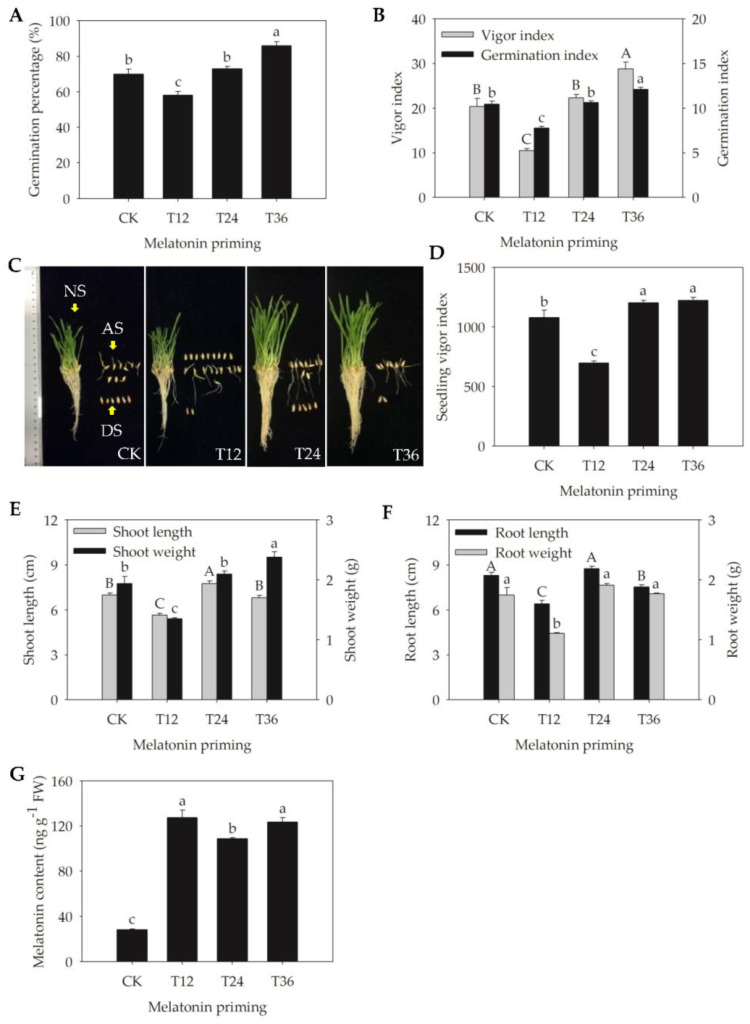
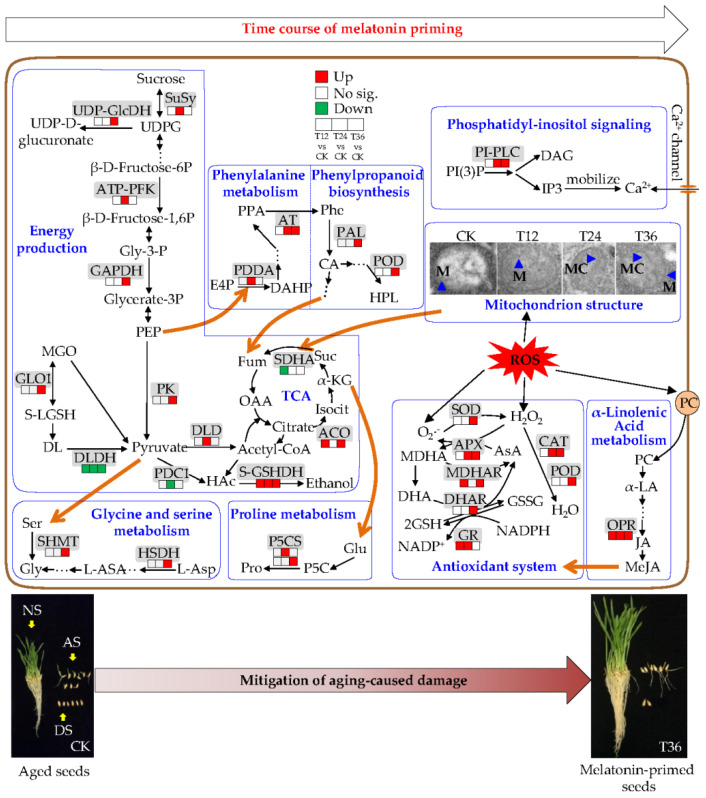
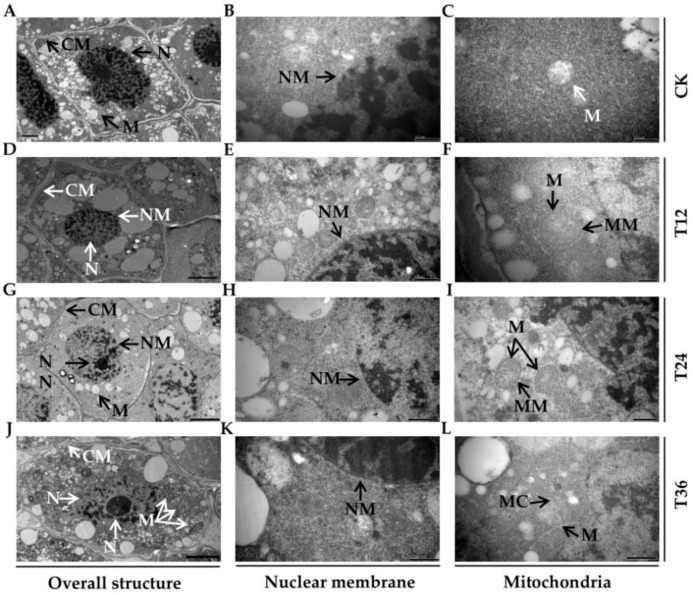
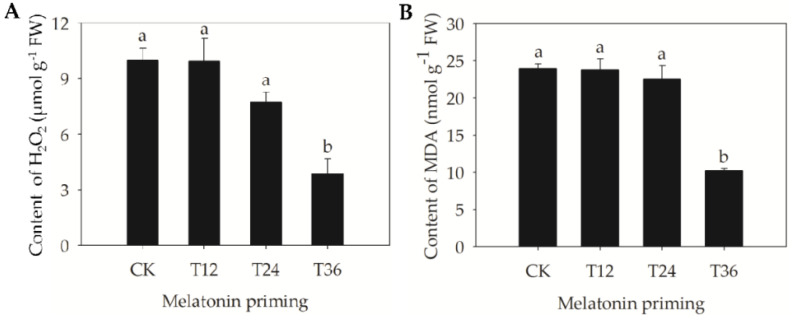
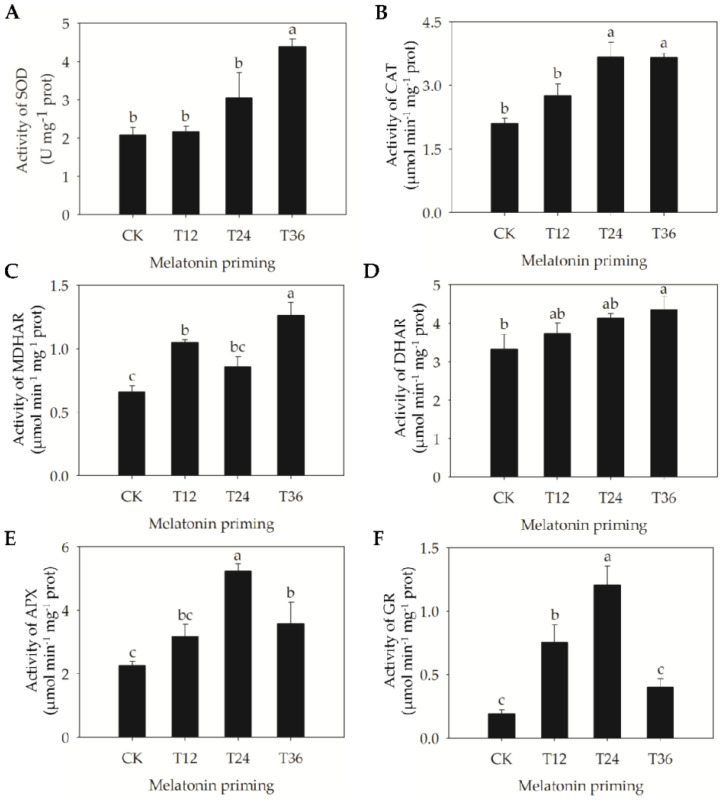
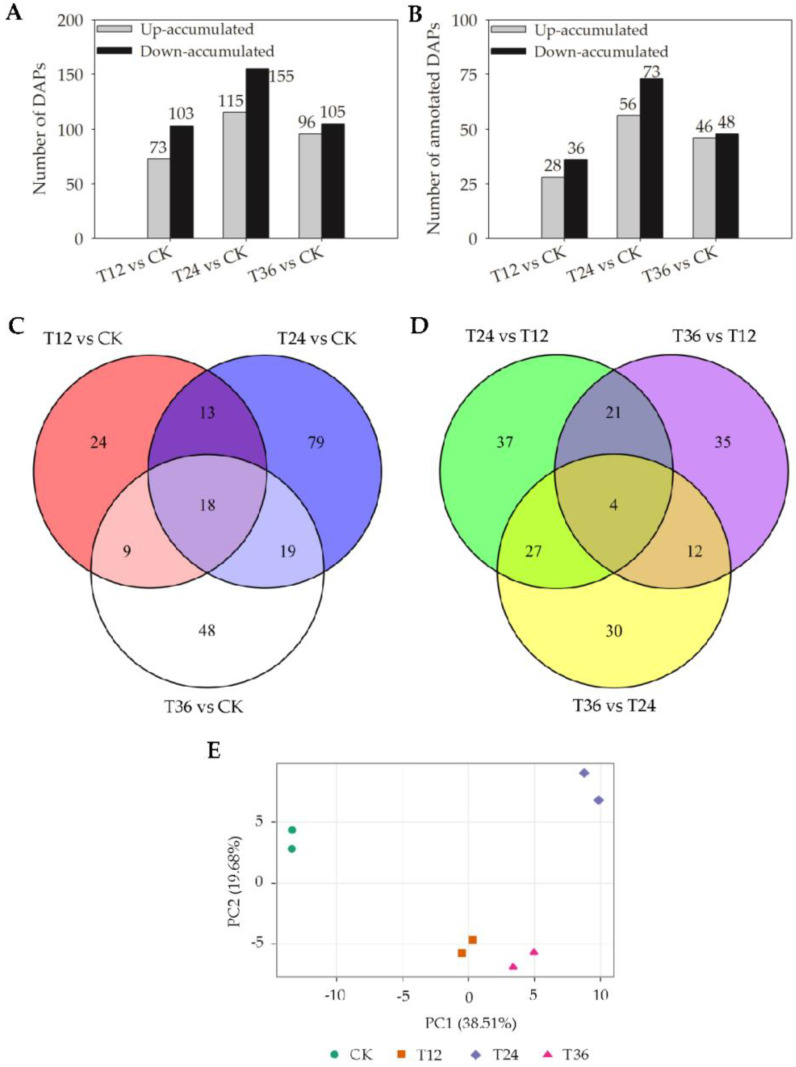
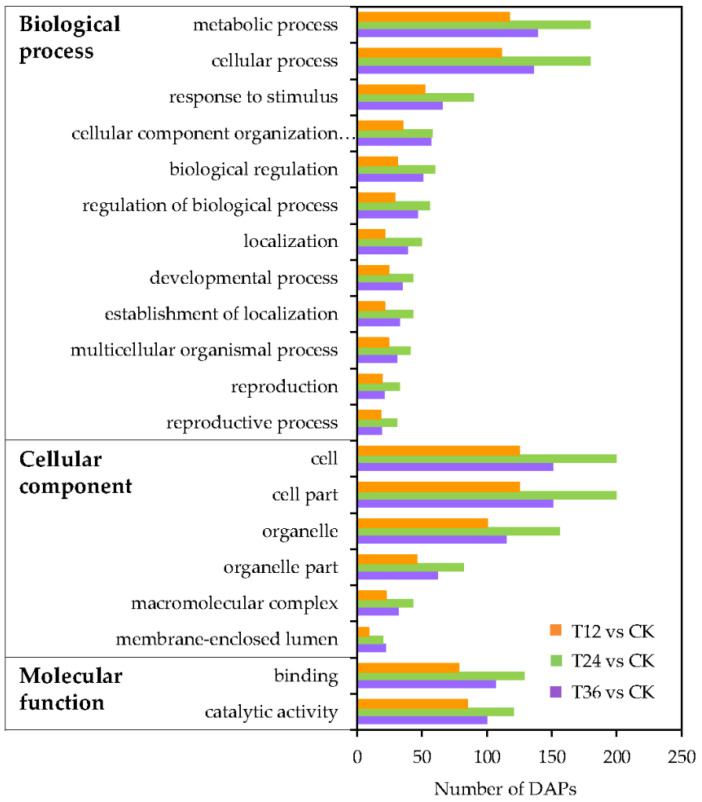
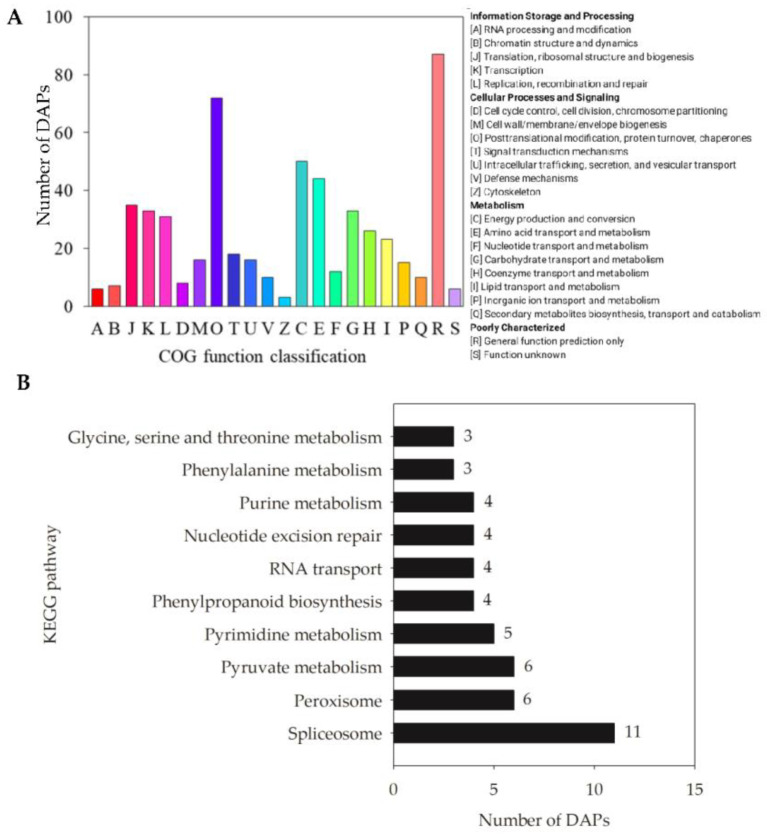
Melatonin priming is an effective strategy to improve the germination of aged oat ( L.) seeds, but the mechanism involved in its time-course responses has remained largely unknown. In the present study, the phenotypic differences, ultrastructural changes, physiological characteristics, and proteomic profiles were examined in aged and melatonin-primed seed (with 10 μM melatonin treatment for 12, 24, and 36 h). Thus, 36 h priming (T36) had a better remediation effect on aged seeds, reflecting in the improved germinability and seedlings, relatively intact cell ultrastructures, and enhanced antioxidant capacity. Proteomic analysis revealed 201 differentially abundant proteins between aged and T36 seeds, of which 96 were up-accumulated. In melatonin-primed seeds, the restoration of membrane integrity by improved antioxidant capacity, which was affected by the stimulation of jasmonic acid synthesis via up-accumulation of 12-oxo-phytodienoic acid reductase, might be a candidate mechanism. Moreover, the relatively intact ultrastructures enabled amino acid metabolism and phenylpropanoid biosynthesis, which were closely associated with energy generation through intermediates of pyruvate, phosphoenolpyruvate, fumarate, and α-ketoglutarate, thus providing energy, active amino acids, and secondary metabolites necessary for germination improvement of aged seeds. These findings clarify the time-course related pathways associated with melatonin priming on promoting the germination of aged oat seeds.
褪黑素引发是一种提高燕麦(L.)陈种子发芽率的有效策略,但其中涉及的时间响应机制在很大程度上仍不清楚。本研究中,研究了陈化和褪黑素引发种子(用 10 μM 褪黑素处理 12、24 和 36 小时)的表型差异、超微结构变化、生理特性和蛋白质组图谱。因此,36 小时引发(T36)对陈化种子具有更好的修复效果,表现在发芽率和幼苗提高、相对完整的细胞超微结构和增强的抗氧化能力。蛋白质组分析显示,陈化种子和 T36 种子之间有 201 种差异丰富的蛋白质,其中 96 种上调。在褪黑素引发的种子中,通过提高抗氧化能力来恢复膜的完整性,这可能是通过上调 12-氧-植物二烯酸还原酶来刺激茉莉酸合成而实现的,这可能是一种候选机制。此外,相对完整的超微结构使氨基酸代谢和苯丙烷生物合成成为可能,这与通过丙酮酸、磷酸烯醇丙酮酸、富马酸和α-酮戊二酸等中间产物产生的能量密切相关,从而为陈化种子发芽率的提高提供能量、活性氨基酸和次生代谢物。这些发现阐明了褪黑素引发促进燕麦陈化种子发芽的时间相关途径。