Institute of Molecular and Translational Therapeutic Strategies (IMTTS), Hannover Medical School, Carl-Neuberg-Strasse 1, 30625, Hannover, Germany.
Department of Cardiology and Angiology, Hannover Medical School, Hannover, Germany.
Sci Rep. 2021 Jan 19;11(1):1755. doi: 10.1038/s41598-020-80868-z.
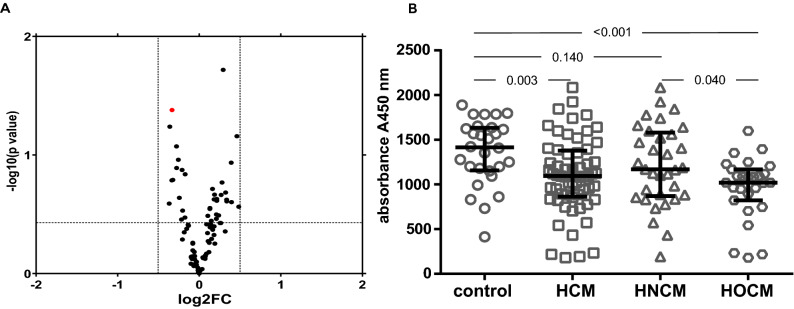
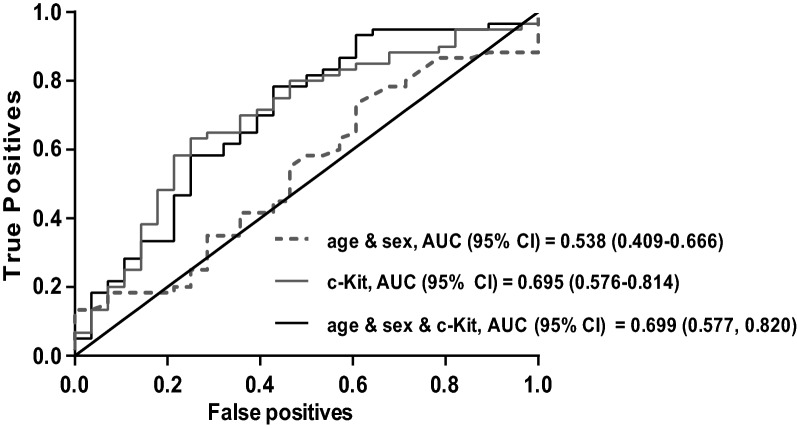
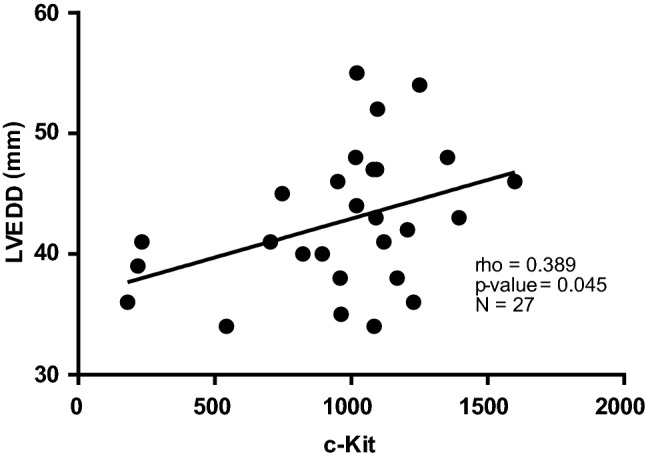
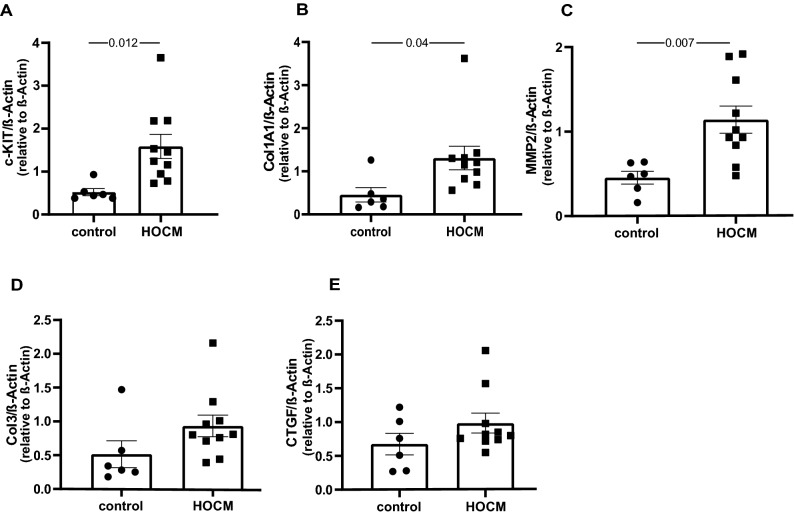
Hypertrophic cardiomyopathy (HCM) is one of the most common hereditary heart diseases and can be classified into an obstructive (HOCM) and non-obstructive (HNCM) form. Major characteristics for HCM are the hypertrophy of cardiomyocytes and development of cardiac fibrosis. Patients with HCM have a higher risk for sudden cardiac death compared to a healthy population. In the present study, we investigated the abundancy of selected proteins as potential biomarkers in patients with HCM. We included 60 patients with HCM and 28 healthy controls and quantitatively measured the rate of a set of 92 proteins already known to be associated with cardiometabolic processes via protein screening using the proximity extension assay technology in a subgroup of these patients (20 HCM and 10 healthy controls). After validation of four hits in the whole cohort of patients consisting of 88 individuals (60 HCM patients, 28 healthy controls) we found only one candidate, c-KIT, which was regulated significantly different between HCM patients and healthy controls and thus was chosen for further analyses. c-KIT is a tyrosine-protein kinase acting as receptor for the stem cell factor and activating several pathways essential for cell proliferation and survival, hematopoiesis, gametogenesis and melanogenesis. Serum protein levels of c-KIT were significantly lower in patients with HCM than in healthy controls, even after adjusting for confounding factors age and sex. In addition, c-KIT levels in human cardiac tissue of patients with HOCM were significant higher compared to controls indicating high levels of c-KIT in fibrotic myocardium. Furthermore, c-KIT concentration in serum significantly correlated with left ventricular end-diastolic diameter in HOCM, but not HCM patients. The present data suggest c-KIT as a novel biomarker differentiating between patients with HCM and healthy population and might provide further functional insights into fibrosis-related processes of HOCM.
肥厚型心肌病(HCM)是最常见的遗传性心脏病之一,可分为梗阻性(HOCM)和非梗阻性(HNCM)两种形式。HCM 的主要特征是心肌细胞肥大和心脏纤维化的发展。与健康人群相比,HCM 患者发生心源性猝死的风险更高。在本研究中,我们研究了选定蛋白质的丰度作为 HCM 患者的潜在生物标志物。我们纳入了 60 名 HCM 患者和 28 名健康对照者,并通过蛋白质筛选技术中的邻近延伸分析(PEA)在这些患者的亚组(20 名 HCM 患者和 10 名健康对照者)中定量测量了一组已知与心脏代谢过程相关的 92 种蛋白质的比率。在包含 88 名个体(60 名 HCM 患者,28 名健康对照者)的整个患者队列中验证了 4 个命中后,我们仅发现了一个候选物 c-KIT,它在 HCM 患者和健康对照者之间的调节差异显著,因此被选择用于进一步分析。c-KIT 是一种酪氨酸蛋白激酶,作为干细胞因子的受体,激活了细胞增殖和存活、造血、配子发生和黑色素生成等几个对细胞生存至关重要的途径。与健康对照组相比,HCM 患者的血清 c-KIT 水平显著降低,即使在调整年龄和性别等混杂因素后也是如此。此外,与对照组相比,HOCM 患者的心脏组织中的 c-KIT 水平显著升高,表明纤维化心肌中的 c-KIT 水平较高。此外,HOCM 患者的血清 c-KIT 浓度与左心室舒张末期直径显著相关,但在 HCM 患者中则不然。这些数据表明 c-KIT 可作为区分 HCM 患者和健康人群的新型生物标志物,并可能为 HOCM 的纤维化相关过程提供进一步的功能见解。