Lee Sin Hang, McGrath Jonathan, Connolly Stephen P, Lambert John
Milford Molecular Diagnostics Laboratory, Milford, CT, USA.
Department of Infectious Diseases, Mater Misericordiae University Hospital, Dublin, Ireland.
Int Med Case Rep J. 2021 Jan 11;14:1-10. doi: 10.2147/IMCRJ.S291166. eCollection 2021.
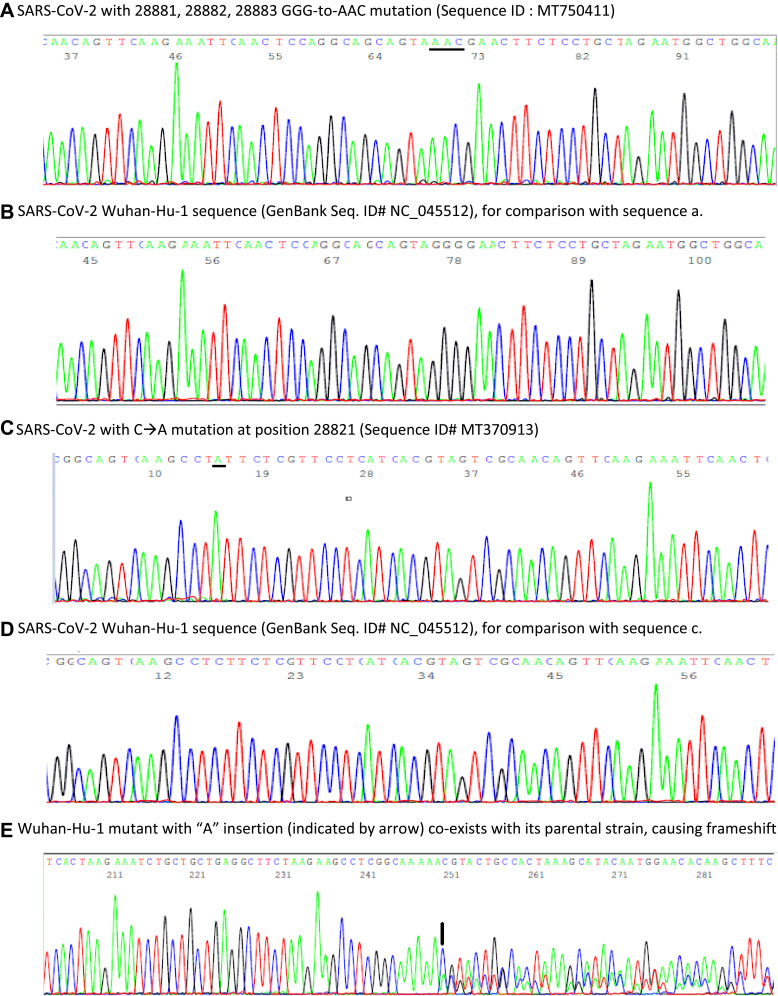
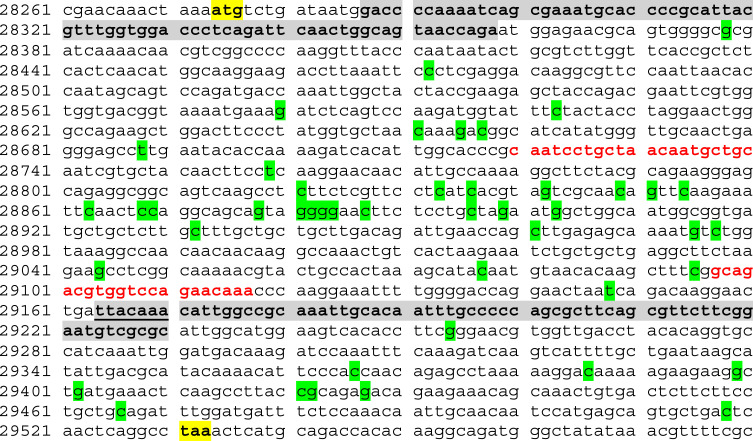
When SARS-CoV-2 prevalence is low, many RT-qPCR-positive test results are false positives. Sequencing of a 398-bp cDNA PCR amplicon derived from a highly conserved segment with single nucleotide polymorphisms of the nucleocapsid (N) gene in presumptive positive samples can verify true positives and differentiate at least 27 phylogenetically distinct strains of SARS-CoV-2 for helping track virus strain movement between individuals and across geographical areas. We report using this partial N gene sequencing method to confirm a case of mild COVID-19 disease. The patient was first seen on March 15, 2020, in the emergency department of the university hospital in Dublin, Ireland. RT-qPCR test on a nasopharyngeal swab sample was positive for SARS-CoV-2. Partial sequencing of the N gene in the residue of the tested RNA extract showed a characteristic set of 3-consecutive GGG-to-AAC mutations at positions 28881, 28882, 28883, which is known to first appear in samples collected in Continental Europe in February 2020. Using this sequencing-based method to re-test 9 reference nasopharyngeal swab samples supplied by the Connecticut State Department of Public Health Microbiology Laboratory revealed that 2 of the 9 positive samples had a single nucleotide mutation in the 398-base segment of the SARS-CoV-2 N gene. One of the 2 mutant samples showed a mutation at position 28821, which was first reported in a sample recently collected in the neighboring New York state. The other sample showed a novel frameshift nucleotide "A" insertion between position 29051 and position 29057, which co-existed with its wildtype parental virus in one sample. Routine sequencing of RT-qPCR-positive samples can minimize or eliminate false-positive SARS-CoV-2 test results that may cause unnecessary anxiety among the population and prevent false-positive tests from shutting down schools and workplaces unnecessarily as businesses try to resume normal operations in the community.
当严重急性呼吸综合征冠状病毒2(SARS-CoV-2)流行率较低时,许多逆转录定量聚合酶链反应(RT-qPCR)阳性检测结果为假阳性。对来自核衣壳(N)基因高度保守区段且具有单核苷酸多态性的398碱基对cDNA聚合酶链反应扩增子进行测序,该扩增子取自推定阳性样本,可验证真阳性,并区分至少27种系统发育上不同的SARS-CoV-2毒株,以帮助追踪病毒毒株在个体之间以及跨地理区域的传播。我们报告使用这种部分N基因测序方法确诊了一例轻度冠状病毒病2019(COVID-19)病例。该患者于2020年3月15日首次在爱尔兰都柏林大学医院急诊科就诊。对鼻咽拭子样本进行的RT-qPCR检测显示SARS-CoV-2呈阳性。对检测的RNA提取物残余物中的N基因进行部分测序,结果显示在第28881、28882、28883位出现了一组特征性的连续3个由GGG到AAC的突变,已知该突变最早于2020年2月出现在欧洲大陆采集的样本中。使用这种基于测序的方法对康涅狄格州公共卫生微生物学实验室提供的9份鼻咽拭子参考样本进行重新检测后发现,9份阳性样本中有2份在SARS-CoV-2 N基因的398碱基区段存在单核苷酸突变。2份突变样本中的1份在第28821位出现了突变,该突变首次在最近从邻近的纽约州采集的一份样本中被报道。另一份样本在第29051位和第29057位之间出现了一个新的移码核苷酸“A”插入,在一份样本中该突变与其野生型亲本病毒共存。对RT-qPCR阳性样本进行常规测序可以最大限度地减少或消除可能在人群中引起不必要焦虑的SARS-CoV-2假阳性检测结果,并防止假阳性检测在企业试图恢复社区正常运营时不必要地导致学校和工作场所关闭。