Almeneessier Aljohara S, Aleissi Salih, Olaish Awad H, BaHammam Ahmed S
The University Sleep Disorders Center, Department of Medicine, College of Medicine, King Saud University, Riyadh, Saudi Arabia.
Department of Family and Community Medicine, College of Medicine, King Saud University, Riyadh, Saudi Arabia.
Nat Sci Sleep. 2021 Jan 14;13:63-74. doi: 10.2147/NSS.S290349. eCollection 2021.
Long-term studies assessing positive airway pressure (PAP) therapy adherence in patients with obesity hypoventilation (OHS) are limited. The aim of this study was to assess PAP therapy adherence in Arab (Saudi) patients with OHS and an apnea-hypopnea index (AHI) >30/h.
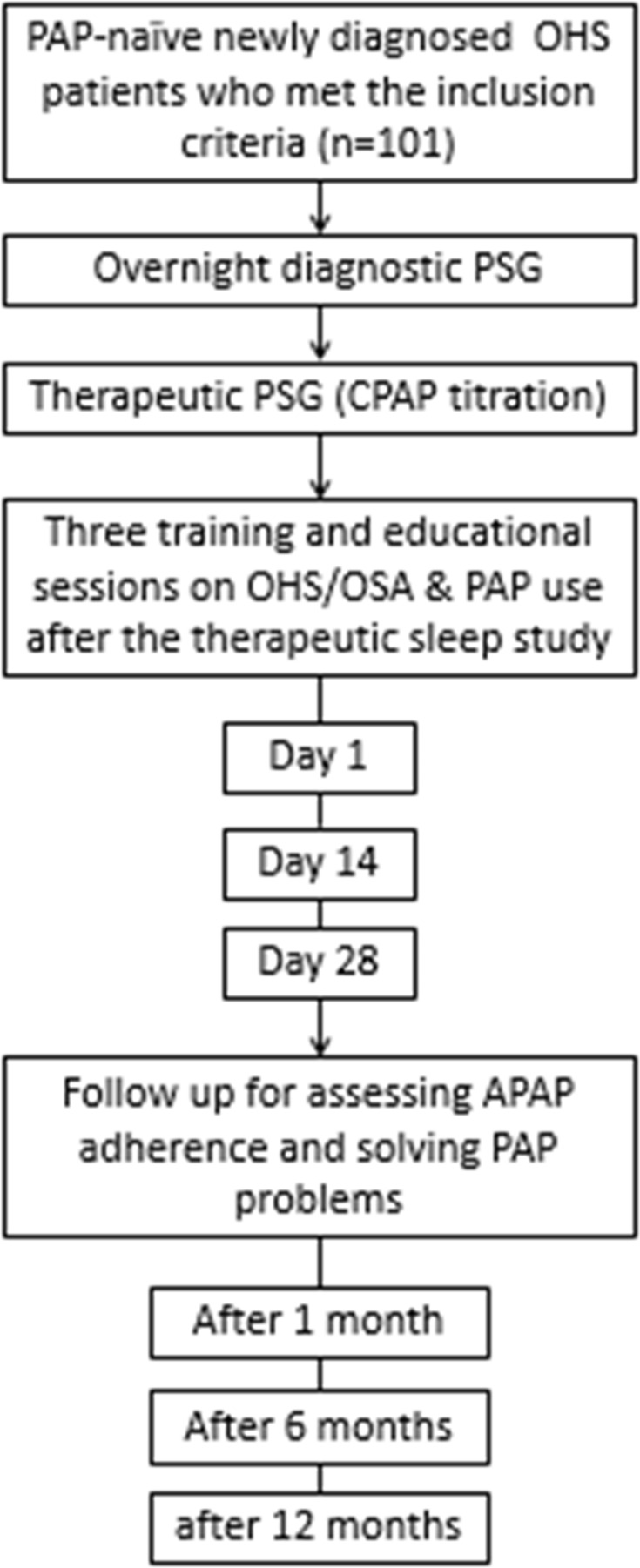
A prospective cohort study of consecutive adult patients diagnosed with OHS between March 2010 and September 2019 was conducted. During the therapeutic sleep study, all OHS patients were started on continuous PAP (CPAP). Patients who failed to maintain oxygen saturation ≥88% despite the elimination of obstructive respiratory events were shifted to bi-level PAP (BPAP). Objective assessment of adherence was performed at 1, 6, and 12 months after initiating PAP therapy. We adopted the American-Thoracic-Society criteria for PAP adherence.
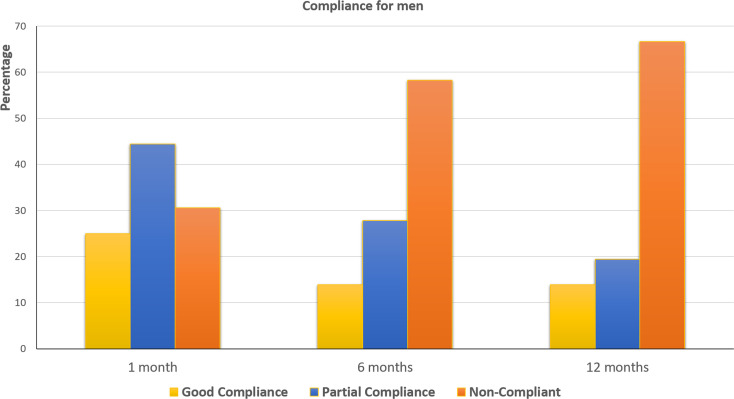
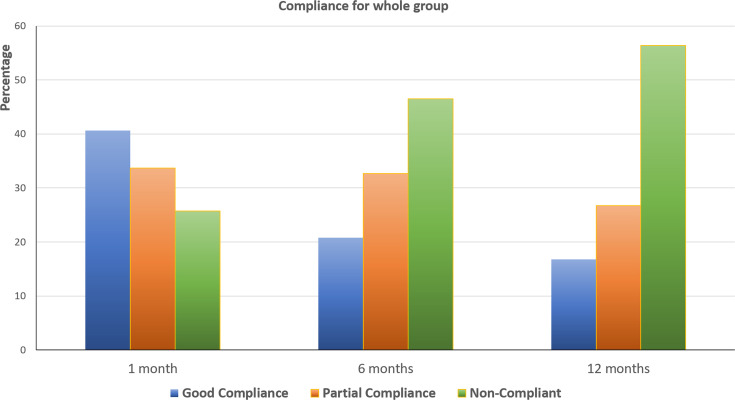
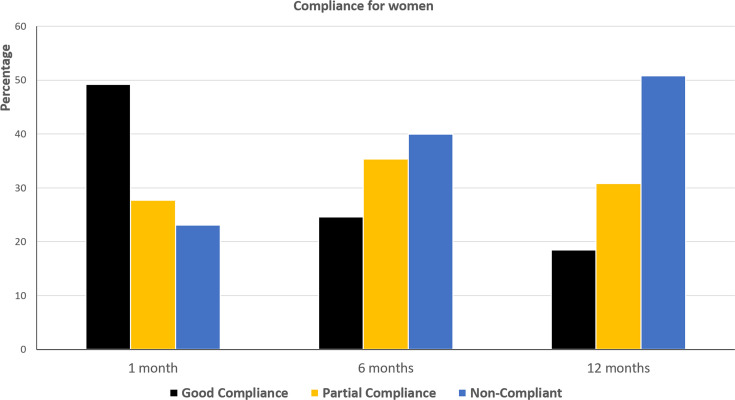
The study included 101 patients (women = 65 patients) with OHS, an AHI ≥30/h, and a mean age of 54.9 ± 12.7 years. Successful titration on CPAP was achieved in 64.4% of the patients and BPAP was required for 35.6% of the patients who failed CPAP titration. At the end of the study, 43.6% of the patients used PAP therapy in an acceptable manner. Adherence after 1 and 6 months was the only independent predictors of adherence at 12 months.
PAP adherence among Saudi patients with OHS and severe obstructive sleep apnea was relatively low. Almost two-thirds of patients tolerated CPAP titration with the elimination of respiratory events and desaturation. Early adherence to PAP therapy was the only predictor of PAP therapy adherence at the end of the study.
评估肥胖低通气综合征(OHS)患者长期坚持气道正压通气(PAP)治疗情况的研究有限。本研究旨在评估阿拉伯(沙特)OHS且呼吸暂停低通气指数(AHI)>30次/小时的患者对PAP治疗的依从性。
对2010年3月至2019年9月期间连续诊断为OHS的成年患者进行前瞻性队列研究。在治疗性睡眠研究期间,所有OHS患者均开始接受持续气道正压通气(CPAP)治疗。尽管消除了阻塞性呼吸事件,但仍未能维持氧饱和度≥88%的患者转而接受双水平气道正压通气(BPAP)治疗。在开始PAP治疗后的1、6和12个月对依从性进行客观评估。我们采用美国胸科学会的PAP依从性标准。
该研究纳入了101例OHS患者(女性65例),AHI≥30次/小时,平均年龄54.9±12.7岁。64.4%的患者成功完成了CPAP滴定,35.6%未能完成CPAP滴定的患者需要BPAP治疗。在研究结束时,43.6%的患者以可接受的方式使用PAP治疗。1个月和6个月时的依从性是12个月时依从性的唯一独立预测因素。
沙特OHS和重度阻塞性睡眠呼吸暂停患者对PAP的依从性相对较低。几乎三分之二的患者在消除呼吸事件和低氧血症的情况下耐受CPAP滴定。早期坚持PAP治疗是研究结束时PAP治疗依从性的唯一预测因素。