Ron-Angevin Ricardo, Medina-Juliá M Teresa, Fernández-Rodríguez Álvaro, Velasco-Álvarez Francisco, Andre Jean-Marc, Lespinet-Najib Veronique, Garcia Liliana
UMA-BCI Group, Departamento de Tecnología Electrónica, Universidad de Málaga, Malaga, Spain.
Laboratoire IMS, CNRS UMR5218, Cognitique Team, Bordeaux INP-ENSC, Talence, France.
Front Comput Neurosci. 2021 Jan 5;14:587702. doi: 10.3389/fncom.2020.587702. eCollection 2020.
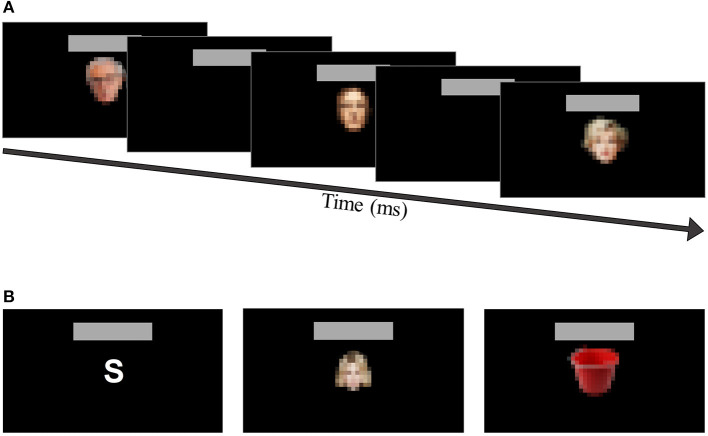
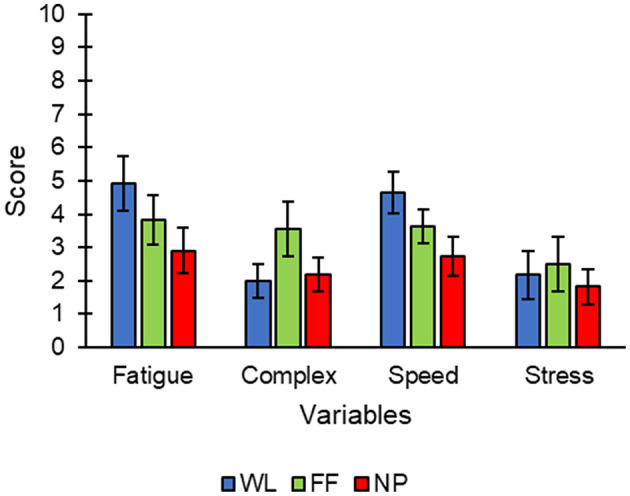
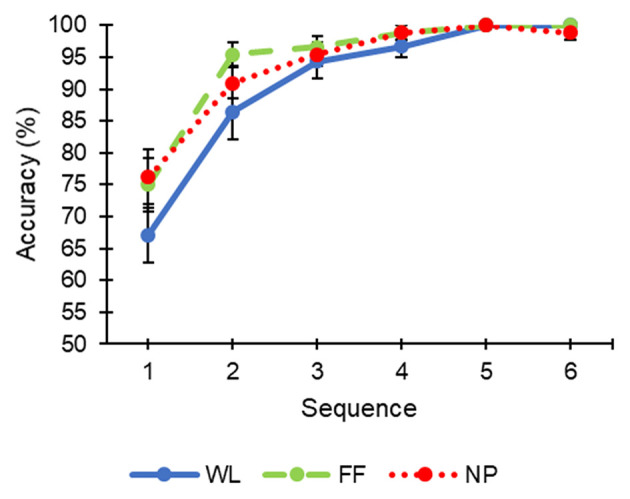
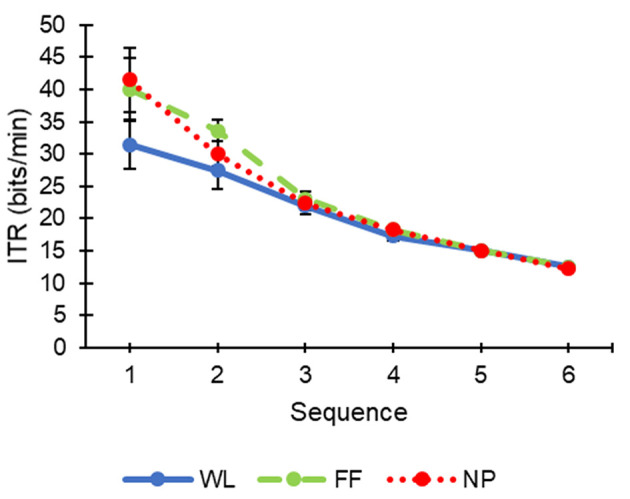
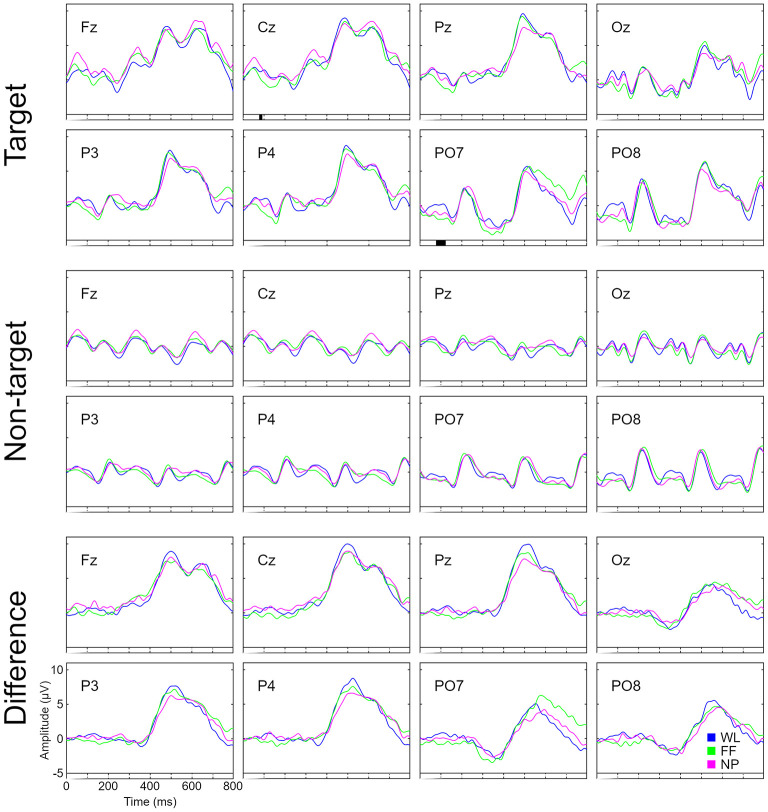
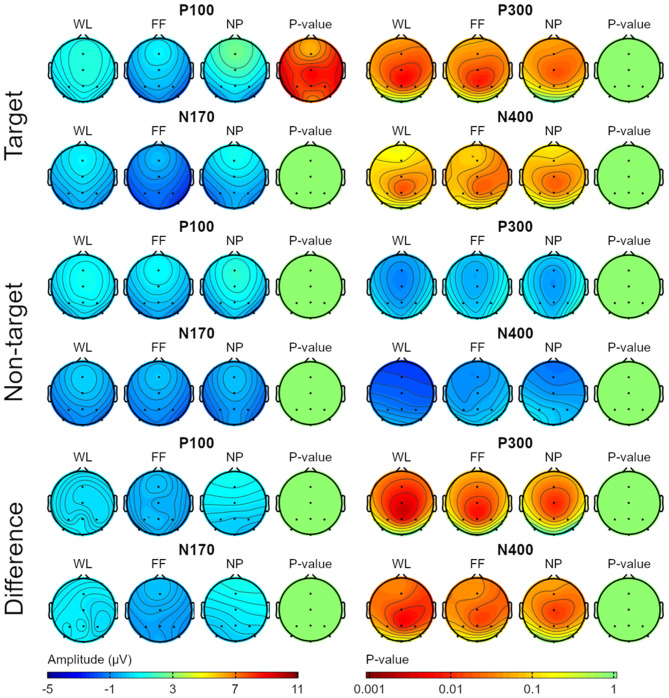
Brain-Computer Interface (BCI) systems enable an alternative communication channel for severely-motor disabled patients to interact with their environment using no muscular movements. In recent years, the importance of research into non-gaze dependent brain-computer interface paradigms has been increasing, in contrast to the most frequently studied BCI-based speller paradigm (i.e., row-column presentation, RCP). Several visual modifications that have already been validated under the RCP paradigm for communication purposes have not been validated under the most extended non-gaze dependent rapid serial visual presentation (RSVP) paradigm. Thus, in the present study, three different sets of stimuli were assessed under RSVP, with the following communication features: white letters (WL), famous faces (FF), neutral pictures (NP). Eleven healthy subjects participated in this experiment, in which the subjects had to go through a calibration phase, an online phase and, finally, a subjective questionnaire completion phase. The results showed that the FF and NP stimuli promoted better performance in the calibration and online phases, being slightly better in the FF paradigm. Regarding the subjective questionnaires, again both FF and NP were preferred by the participants in contrast to the WL stimuli, but this time the NP stimuli scored slightly higher. These findings suggest that the use of FF and NP for RSVP-based spellers could be beneficial to increase information transfer rate in comparison to the most frequently used letter-based stimuli and could represent a promising communication system for individuals with altered ocular-motor function.
脑机接口(BCI)系统为严重运动功能障碍患者提供了一种替代的通信渠道,使他们能够在不进行肌肉运动的情况下与周围环境进行交互。近年来,与最常研究的基于BCI的拼写范式(即行列呈现,RCP)相比,对非注视依赖型脑机接口范式的研究重要性日益增加。一些已经在RCP范式下为通信目的而得到验证的视觉修改,在最广泛使用的非注视依赖型快速序列视觉呈现(RSVP)范式下尚未得到验证。因此,在本研究中,在RSVP范式下评估了三组不同的刺激,具有以下通信特征:白色字母(WL)、名人面孔(FF)、中性图片(NP)。11名健康受试者参与了该实验,受试者必须经历校准阶段、在线阶段,最后是主观问卷完成阶段。结果表明,FF和NP刺激在校准和在线阶段表现出更好的性能,在FF范式中略好。关于主观问卷,与WL刺激相比,参与者再次更喜欢FF和NP,但这次NP刺激得分略高。这些发现表明,与最常用的基于字母的刺激相比,将FF和NP用于基于RSVP的拼写器可能有利于提高信息传输率,并且可能为眼动功能改变的个体提供一个有前景的通信系统。