Boncompagni Simona, Pecorai Claudia, Michelucci Antonio, Pietrangelo Laura, Protasi Feliciano
Center for Advanced Studies and Technology (CAST), University G. d'Annunzio (Ud'A) of Chieti-Pescara, Chieti, Italy.
Department of Neuroscience, Imaging and Clinical Sciences (DNICS), University G. d'Annunzio (Ud'A) of Chieti-Pescara, Chieti, Italy.
Front Physiol. 2021 Jan 5;11:601057. doi: 10.3389/fphys.2020.601057. eCollection 2020.
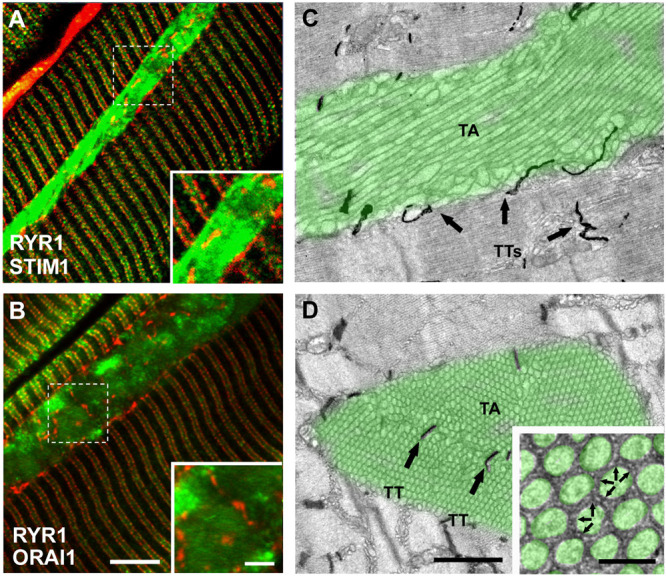
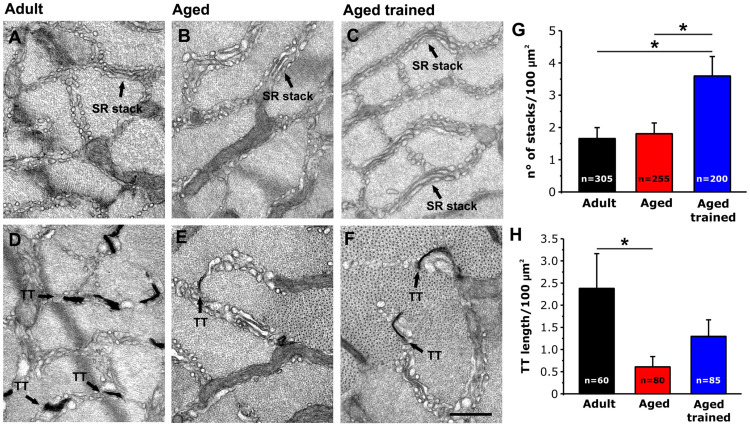
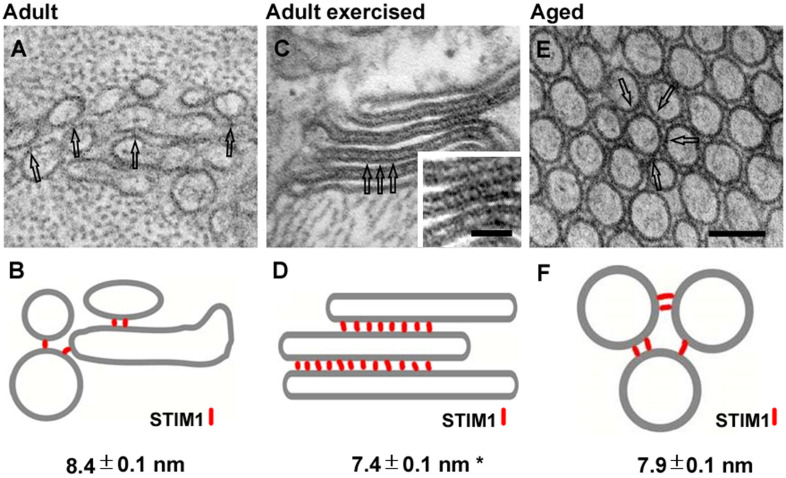
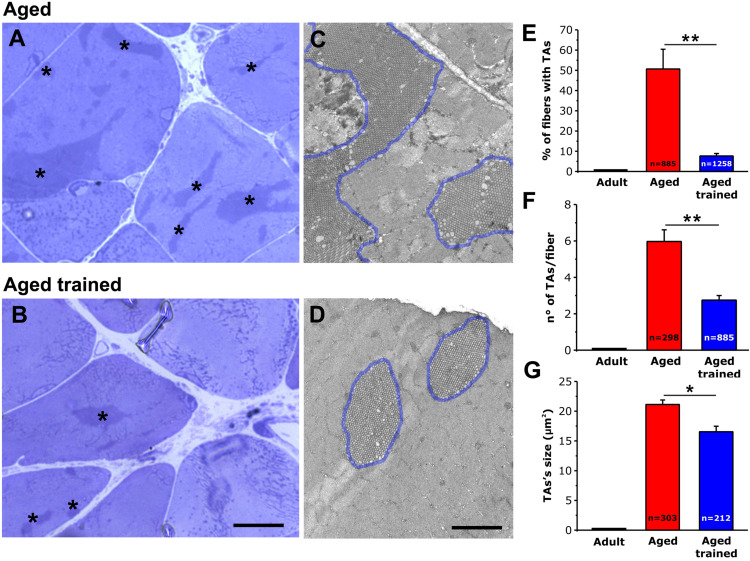
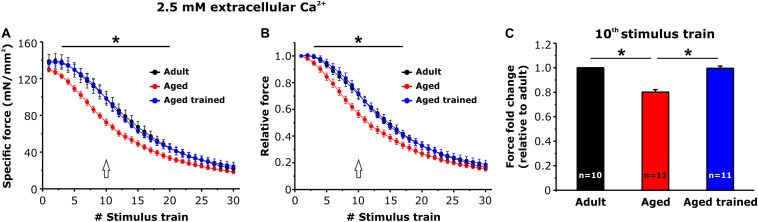
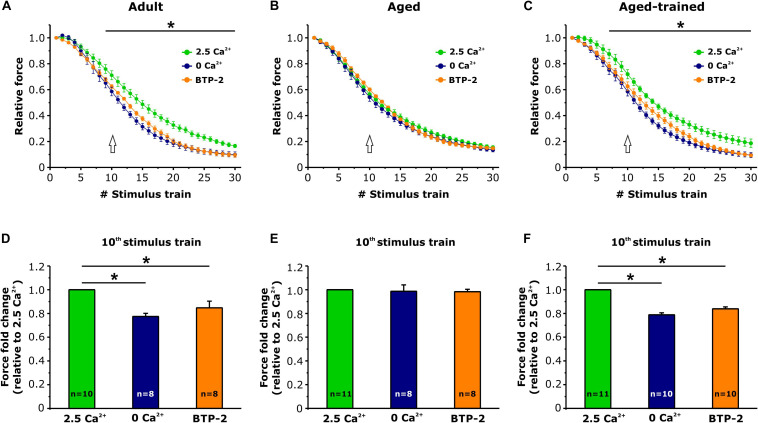
Tubular aggregates (TAs) in skeletal muscle fibers are unusual accumulation of sarcoplasmic reticulum (SR) tubes that are found in different disorders including TA myopathy (TAM). TAM is a muscular disease characterized by muscle pain, cramping, and weakness that has been recently linked to mutations in and STIM1 and ORAI1 are the two main proteins mediating store-operated Ca entry (SOCE), a mechanism activated by depletion of intracellular Ca stores (e.g., SR) that allows recovery of Ca from the extracellular space during repetitive muscle activity. We have recently shown that exercise triggers the formation of unique intracellular junctions between SR and transverse tubules named (CEUs). CEUs promote colocalization of STIM1 with ORAI1 and improve muscle function in presence of external Ca. TAs virtually identical to those of TAM patients are also found in fast-twitch fibers of aging male mice. Here, we used a combination of electron and confocal microscopy, Western blotting, and stimulation protocols (in presence or absence of external Ca) to evaluate the presence of TAs, STIM1-ORAI1 localization and expression and fatigue resistance of intact extensor digitorum longus (EDL) muscles in wild-type male adult (4-month-old) and aged (24-month-old) mice and in mice trained in wheel cages for 15 months (from 9 to 24 months of age). The results collected indicate that (i) aging causes STIM1 and ORAI1 to accumulate in TAs and (ii) long-term exercise significantly reduced formation of TAs. In addition, (iii) EDL muscles from aged mice exhibited a faster decay of contractile force than adult muscles, likely caused by their inability to refill intracellular Ca stores, and (iv) exercise in wheel cages restored the capability of aged EDL muscles to use external Ca by promoting maintenance of CEUs. In conclusion, exercise prevented improper accumulation of STIM1 and ORAI1 in TAs during aging, maintaining the capability of aged muscle to refill intracellular Ca stores SOCE.
骨骼肌纤维中的管状聚集体(TAs)是肌浆网(SR)管的异常聚集,见于包括TA肌病(TAM)在内的不同疾病中。TAM是一种肌肉疾病,其特征为肌肉疼痛、痉挛和无力,最近已发现它与 和 中的突变有关。STIM1和ORAI1是介导储存性钙内流(SOCE)的两种主要蛋白质,SOCE是一种由细胞内钙储存(如SR)耗竭激活的机制,在重复性肌肉活动期间允许从细胞外空间恢复钙。我们最近发现,运动触发了SR与横管之间独特的细胞内连接的形成,称为 (CEUs)。CEUs促进STIM1与ORAI1的共定位,并在存在外部钙的情况下改善肌肉功能。与TAM患者几乎相同的TAs也见于衰老雄性小鼠的快肌纤维中。在这里,我们结合使用电子显微镜和共聚焦显微镜、蛋白质免疫印迹以及 刺激方案(存在或不存在外部钙),以评估野生型成年(4个月大)和老年(24个月大)雄性小鼠以及在轮笼中训练15个月(从9个月到24个月大)的小鼠中完整的趾长伸肌(EDL)肌肉中TAs的存在、STIM1 - ORAI1的定位和表达以及抗疲劳能力。收集到的结果表明:(i)衰老导致STIM1和ORAI1在TAs中积累;(ii)长期运动显著减少了TAs的形成。此外,(iii)老年小鼠的EDL肌肉收缩力的衰减比成年肌肉更快,这可能是由于它们无法补充细胞内钙储存;(iv)在轮笼中运动通过促进CEUs的维持恢复了老年EDL肌肉利用外部钙的能力。总之,运动可防止衰老过程中STIM1和ORAI1在TAs中不当积累,维持老年肌肉补充细胞内钙储存 SOCE的能力。