Institute of Medical Virology, Justus Liebig University Giessen, 35392 Giessen, Germany.
Department of Medical Microbiology, Leiden University Medical Center, Leiden 2300 RC, The Netherlands.
Proc Natl Acad Sci U S A. 2021 Feb 9;118(6). doi: 10.1073/pnas.2022310118.
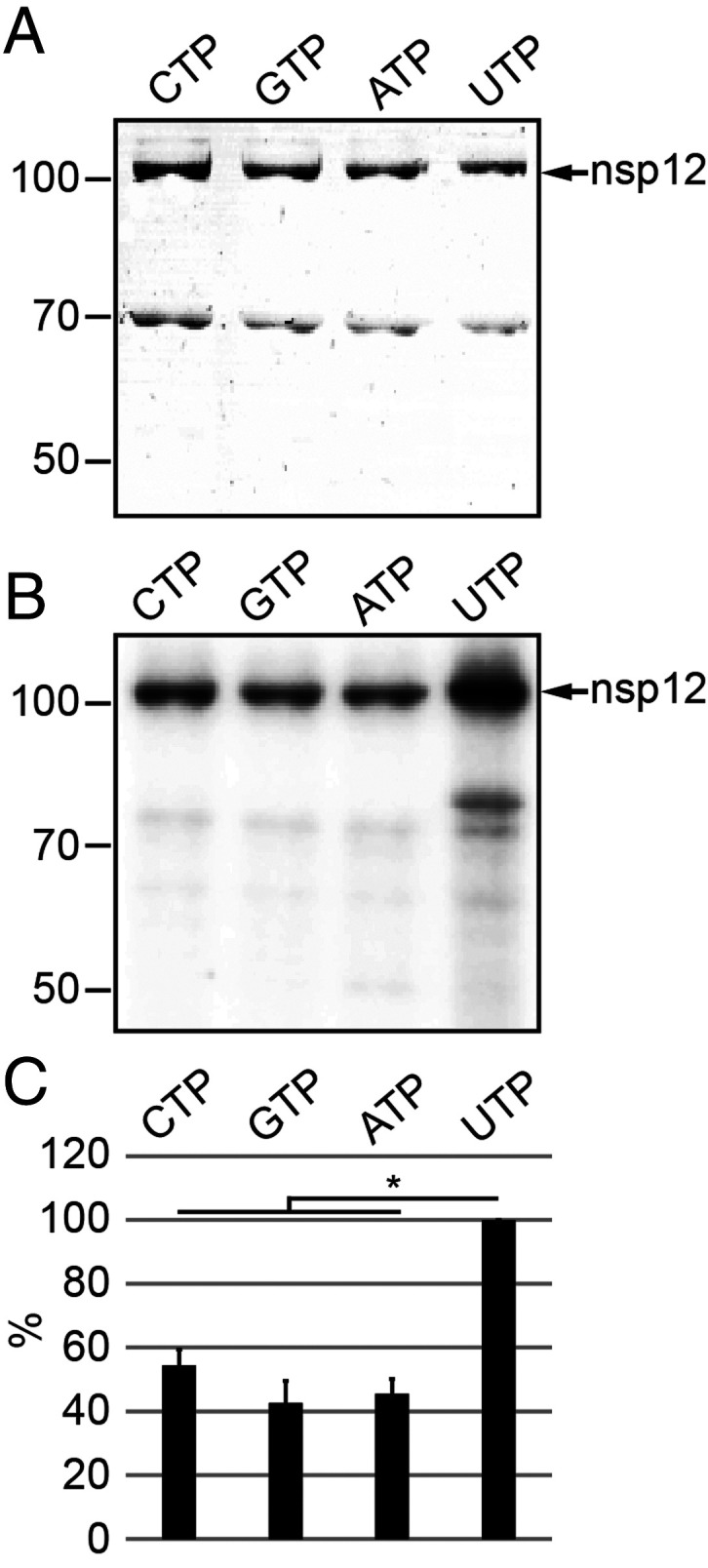
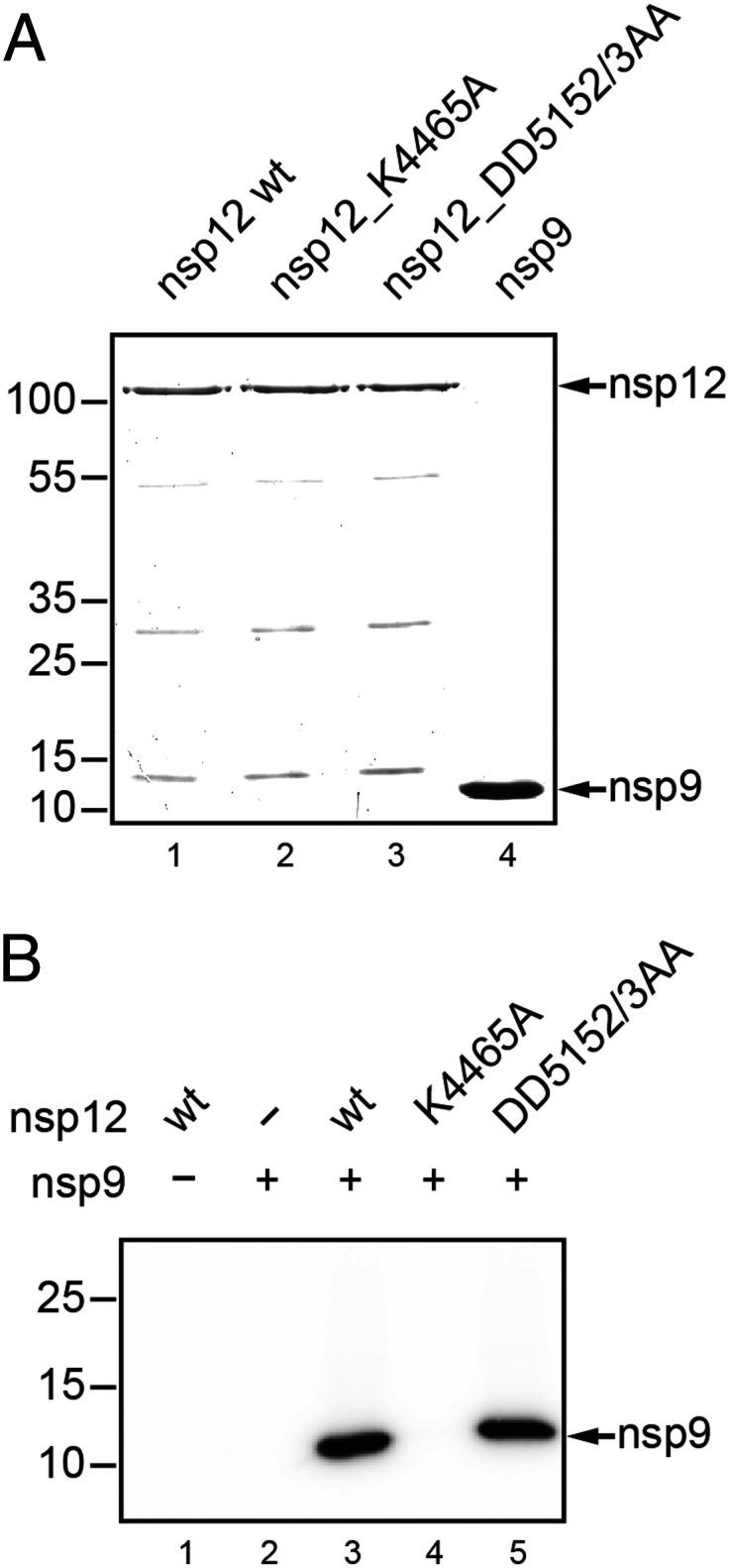
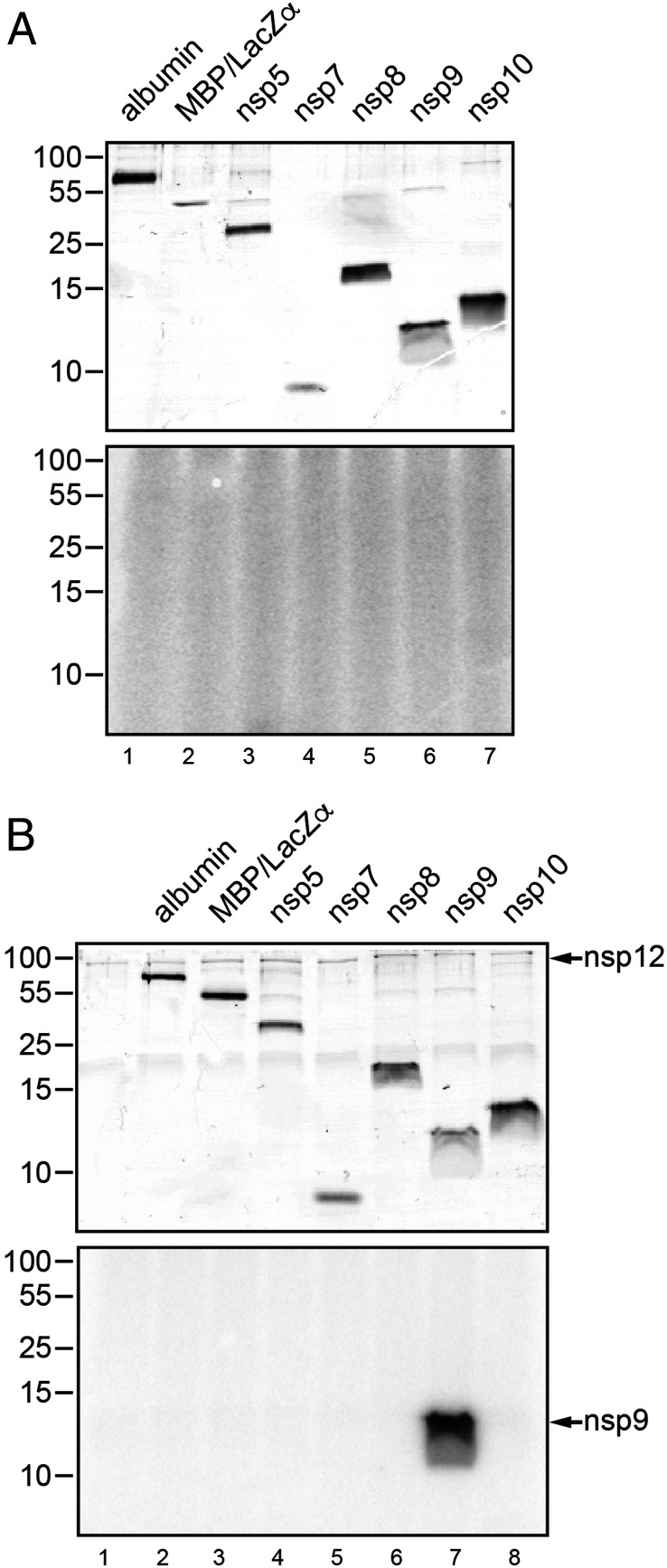
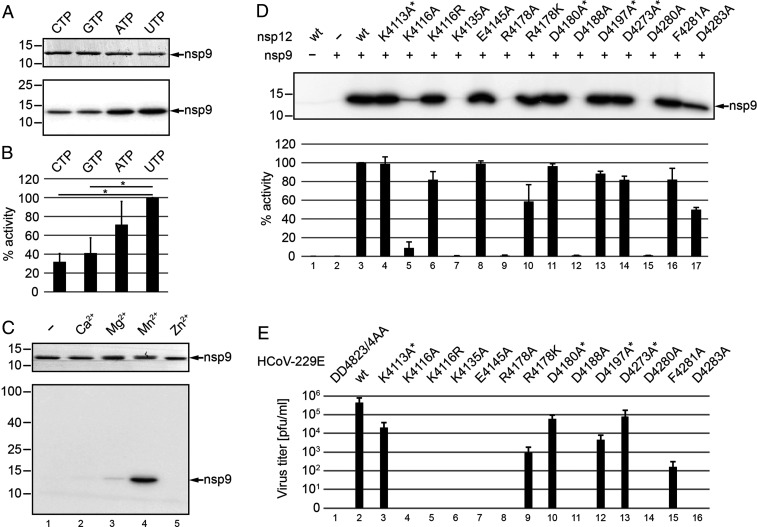
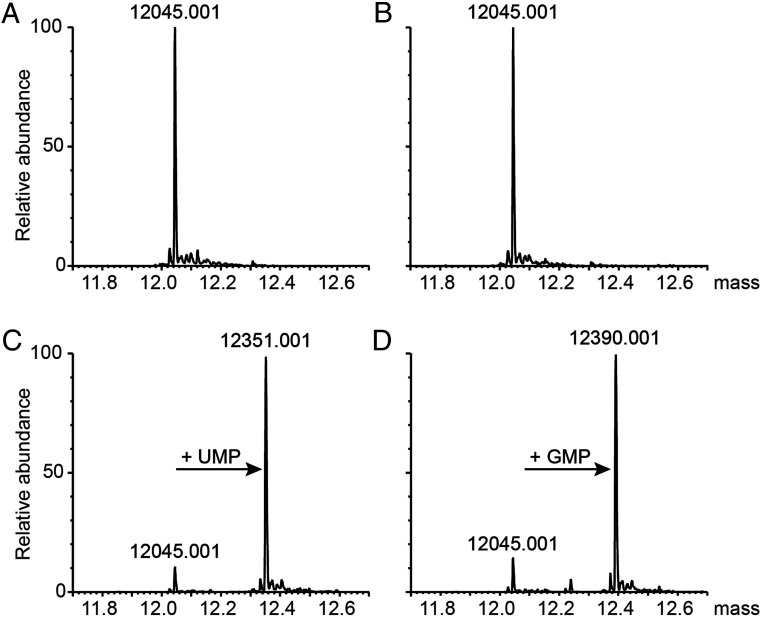
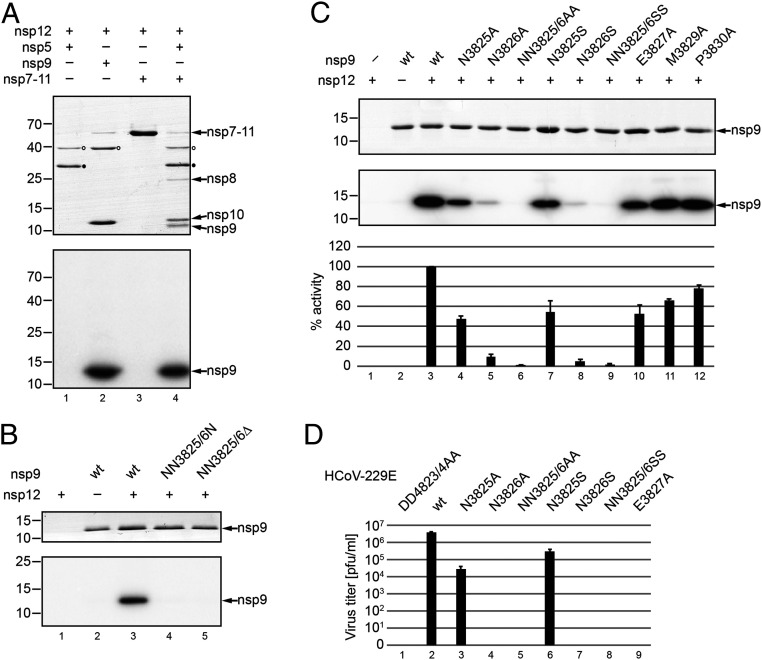
RNA-dependent RNA polymerases (RdRps) of the (, , and 12 other families) are linked to an amino-terminal (N-terminal) domain, called NiRAN, in a nonstructural protein (nsp) that is released from polyprotein 1ab by the viral main protease (M). Previously, self-GMPylation/UMPylation activities were reported for an arterivirus NiRAN-RdRp nsp and suggested to generate a transient state primed for transferring nucleoside monophosphate (NMP) to (currently unknown) viral and/or cellular biopolymers. Here, we show that the coronavirus (human coronavirus [HCoV]-229E and severe acute respiratory syndrome coronavirus 2) nsp12 (NiRAN-RdRp) has Mn-dependent NMPylation activity that catalyzes the transfer of a single NMP to the cognate nsp9 by forming a phosphoramidate bond with the primary amine at the nsp9 N terminus (N3825) following M-mediated proteolytic release of nsp9 from N-terminally flanking nsps. Uridine triphosphate was the preferred nucleotide in this reaction, but also adenosine triphosphate, guanosine triphosphate, and cytidine triphosphate were suitable cosubstrates. Mutational studies using recombinant coronavirus nsp9 and nsp12 proteins and genetically engineered HCoV-229E mutants identified residues essential for NiRAN-mediated nsp9 NMPylation and virus replication in cell culture. The data corroborate predictions on NiRAN active-site residues and establish an essential role for the nsp9 N3826 residue in both nsp9 NMPylation in vitro and virus replication. This residue is part of a conserved N-terminal NNE tripeptide sequence and shown to be the only invariant residue in nsp9 and its homologs in viruses of the family The study provides a solid basis for functional studies of other nidovirus NMPylation activities and suggests a possible target for antiviral drug development.
RNA 依赖的 RNA 聚合酶(RdRps)属于(、和 12 个其他家族),与非结构蛋白(nsp)中的一个氨基末端(N 末端)结构域 NiRAN 相连,该结构域通过病毒主要蛋白酶(M)从多蛋白 1ab 中释放出来。先前,报道了动脉病毒 NiRAN-RdRp nsp 的自我 GMP 化/UMP 化活性,并提出该活性生成一个短暂状态,为将核苷单磷酸(NMP)转移到(目前未知的)病毒和/或细胞生物聚合物做好准备。在这里,我们表明冠状病毒(人冠状病毒[HCoV]-229E 和严重急性呼吸综合征冠状病毒 2)nsp12(NiRAN-RdRp)具有 Mn 依赖性的 NMP 化活性,可通过形成磷酰胺键,将单个 NMP 转移到通过 M 介导的 nsp9 从 N 末端侧翼 nsps 中释放出来后,与 nsp9 N 末端(N3825)的伯胺反应。该反应中尿嘧啶三磷酸是首选核苷酸,但三磷酸腺苷、三磷酸鸟苷和三磷酸胞苷也是合适的共底物。使用重组冠状病毒 nsp9 和 nsp12 蛋白以及遗传工程化的 HCoV-229E 突变体进行的突变研究确定了 NiRAN 介导的 nsp9 NMP 化和病毒在细胞培养中复制所必需的残基。这些数据证实了 NiRAN 活性位点残基的预测,并确定了 nsp9 N3826 残基在 nsp9 的体外 NMP 化和病毒复制中的重要作用。该残基是保守的 N 末端 NNE 三肽序列的一部分,并且是 nsp9 及其在家族中的病毒同源物中唯一不变的残基。该研究为其他 nidovirus NMP 化活性的功能研究提供了坚实的基础,并为抗病毒药物的开发提供了一个可能的靶点。