State Key Laboratory of Proteomics, Academy of Military Medical Sciences, Academy of Military Sciences, Beijing, 100071, China.
Institute for Regenerative Medicine, Shanghai East Hospital, Shanghai Key Laboratory of Signaling and Disease Research, Frontier Science Center for Stem Cell Research, School of Life Sciences and Technology, Tongji University, Shanghai, 200092, China.
Cell Res. 2021 Jul;31(7):742-757. doi: 10.1038/s41422-021-00467-z. Epub 2021 Jan 20.
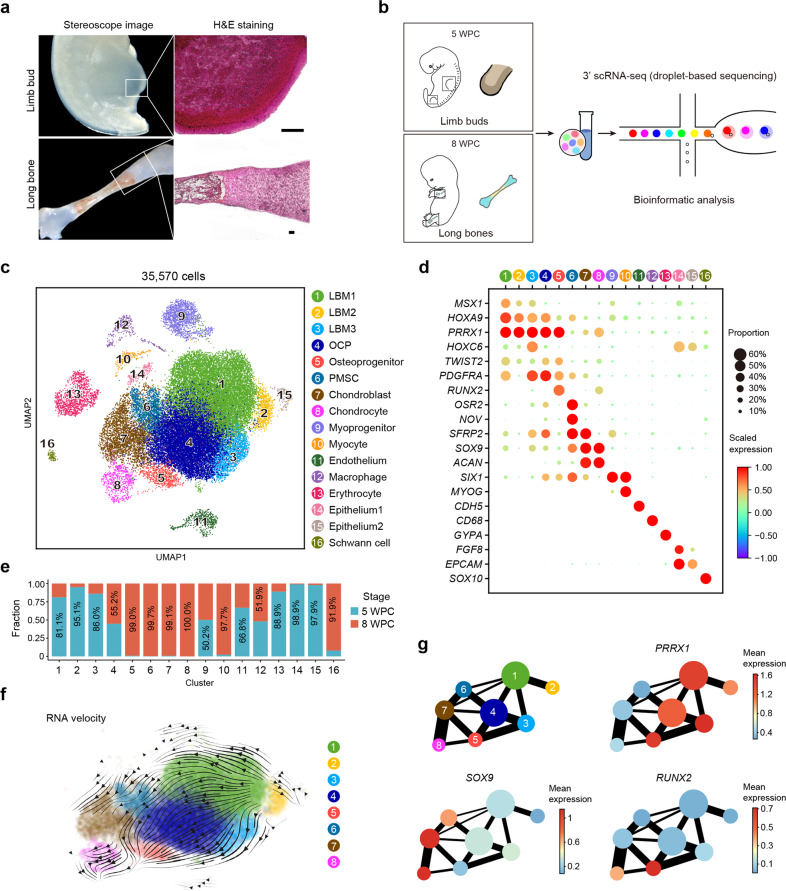
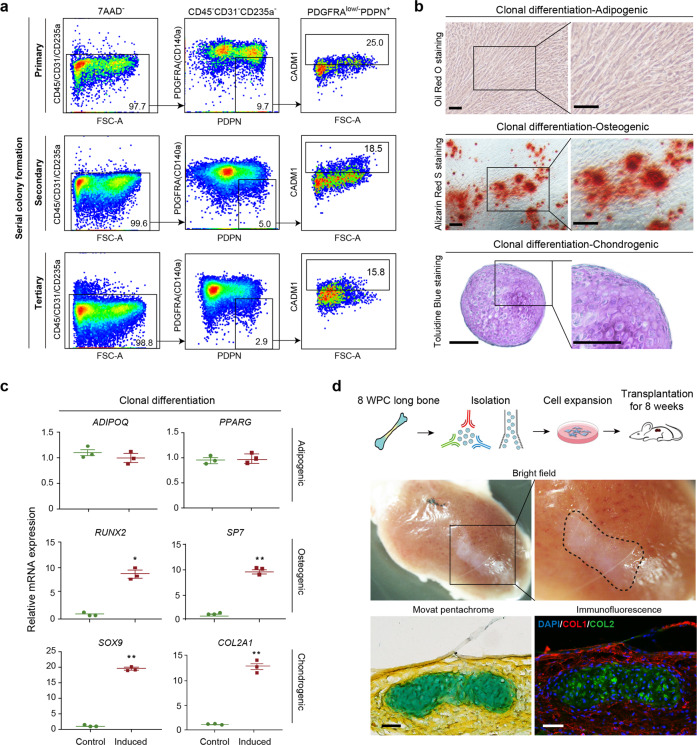
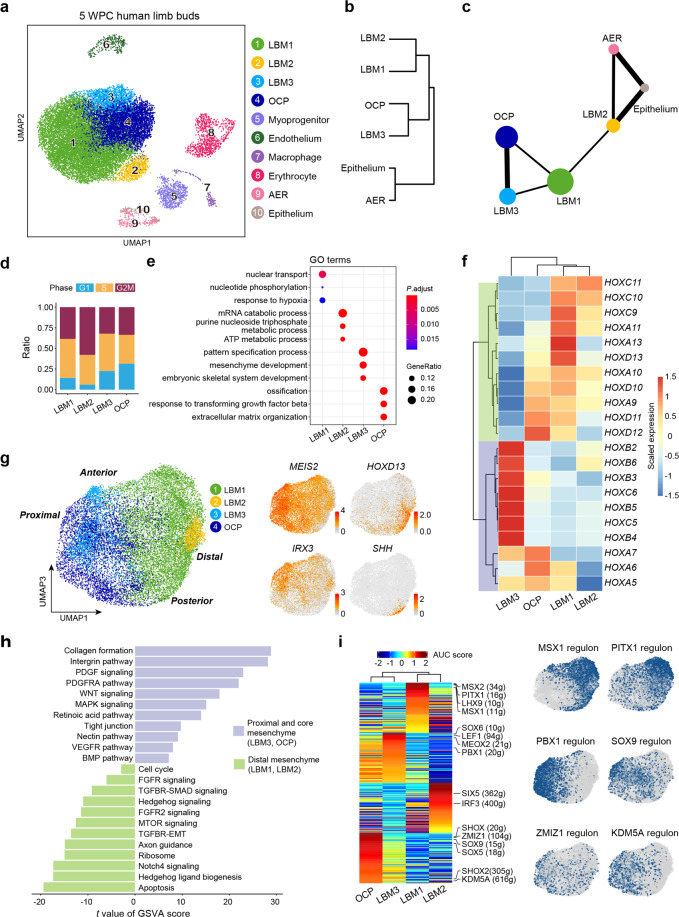
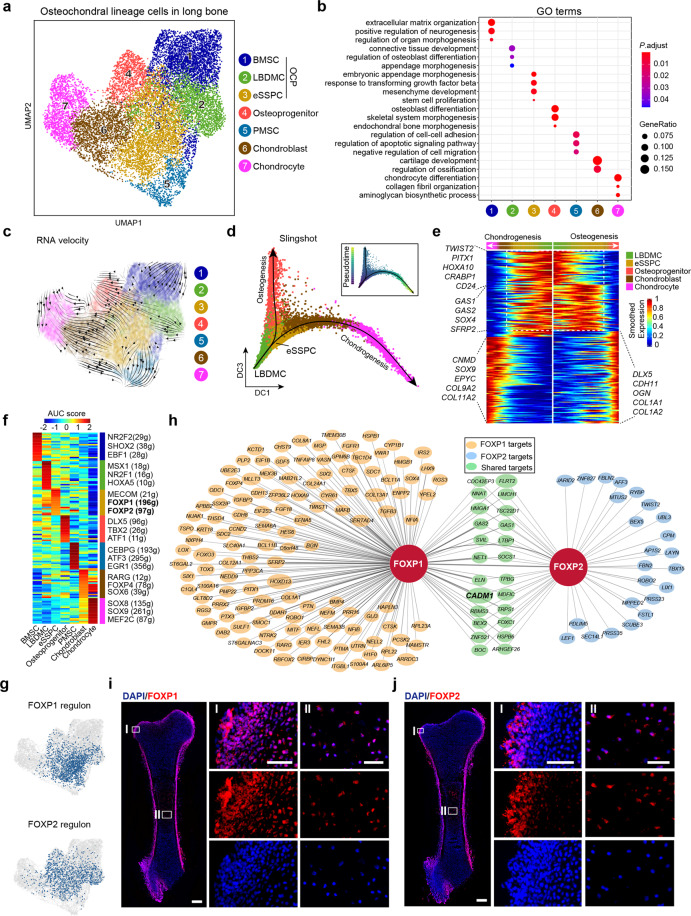
Human skeletal stem cells (SSCs) have been discovered in fetal and adult long bones. However, the spatiotemporal ontogeny of human embryonic SSCs during early skeletogenesis remains elusive. Here we map the transcriptional landscape of human limb buds and embryonic long bones at single-cell resolution to address this fundamental question. We found remarkable heterogeneity within human limb bud mesenchyme and epithelium, and aligned them along the proximal-distal and anterior-posterior axes using known marker genes. Osteo-chondrogenic progenitors first appeared in the core limb bud mesenchyme, which give rise to multiple populations of stem/progenitor cells in embryonic long bones undergoing endochondral ossification. Importantly, a perichondrial embryonic skeletal stem/progenitor cell (eSSPC) subset was identified, which could self-renew and generate the osteochondral lineage cells, but not adipocytes or hematopoietic stroma. eSSPCs are marked by the adhesion molecule CADM1 and highly enriched with FOXP1/2 transcriptional network. Interestingly, neural crest-derived cells with similar phenotypic markers and transcriptional networks were also found in the sagittal suture of human embryonic calvaria. Taken together, this study revealed the cellular heterogeneity and lineage hierarchy during human embryonic skeletogenesis, and identified distinct skeletal stem/progenitor cells that orchestrate endochondral and intramembranous ossification.
人类骨骼干细胞 (SSC) 已在胎儿和成骨中被发现。然而,在早期骨骼发生过程中人类胚胎 SSC 的时空发生仍然难以捉摸。在这里,我们以单细胞分辨率绘制了人类肢芽和胚胎长骨的转录图谱,以解决这个基本问题。我们发现人类肢芽间充质和上皮组织中存在显著的异质性,并使用已知的标记基因沿近-远轴和前-后轴对其进行排列。成骨-软骨祖细胞首先出现在核心肢芽间充质中,它们在经历软骨内骨化的胚胎长骨中产生多个干细胞/祖细胞群体。重要的是,鉴定出了一种软骨膜胚胎骨骼干细胞/祖细胞 (eSSPC) 亚群,它可以自我更新并产生骨软骨谱系细胞,但不能产生脂肪细胞或造血基质。eSSPC 被黏附分子 CADM1 标记,并富含 FOXP1/2 转录网络。有趣的是,在人类胚胎颅骨矢状缝中也发现了具有类似表型标记和转录网络的神经嵴衍生细胞。总之,这项研究揭示了人类胚胎骨骼发生过程中的细胞异质性和谱系层次结构,并鉴定出了独特的骨骼干细胞/祖细胞,它们协调软骨内骨化和膜内骨化。