Chen Hao, Li Jing, Cheng Lei, Gao Zhongshan, Lin Xiaoping, Zhu Rongfei, Yang Lin, Tao Ailin, Hong Haiyu, Tang Wei, Guo Yinshi, Huang Huaiqiu, Sun Jinlyu, Lai He, Lei Cheng, Liu Guanghui, Xiang Li, Chen Zhuanggui, Ma Han, Chan Alson Wai Ming, Hao Chuangli, Sun Baoqing
Department of Allergy and Clinical Immunology, State Key Laboratory of Respiratory Disease, National Clinical Research Center for Respiratory Disease, Guangzhou Institute of Respiratory Health, The First Affiliated Hospital, Guangzhou Medical University, Guangzhou, China.
Department of Otorhinolaryngology & Clinical Allergy Center, The First Affiliated Hospital, Nanjing Medical University, Nanjing, China.
Allergy Asthma Immunol Res. 2021 Mar;13(2):177-205. doi: 10.4168/aair.2021.13.2.177.
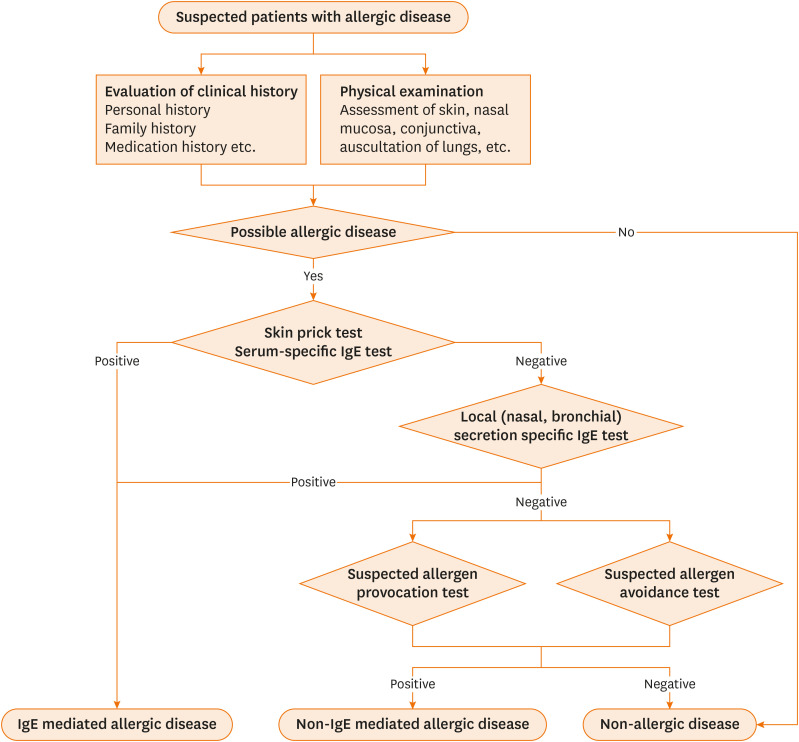
The prevalence of allergic diseases has increased dramatically in recent years in China, affecting the quality of life in 40% of the population. The identification of allergens is the key to the diagnosis of allergic diseases. Presently, several methods of allergy diagnostics are available in China, but they have not been standardized. Additionally, cross-sensitization and co-sensitization make allergy diagnostics even more complicated. Based on 4 aspects of allergic disease (mechanism, diagnosis procedures, allergen detection and as well as the distribution map of the most important airborne allergens in China) and by referring to the consensus of the European Society of Allergy and Clinical Immunology, the World Allergy Organization, and the important literature on allergy diagnostics in China in recent years, we drafted this consensus of allergy diagnostics with Chinese characteristics. It aims to standardize the diagnostic methods of allergens and provides a reference for health care givers. The current document was prepared by a panel of experts from the main stream of professional allergy associations in China.
近年来,中国过敏性疾病的患病率急剧上升,影响了40%人口的生活质量。过敏原的鉴定是过敏性疾病诊断的关键。目前,中国有几种过敏诊断方法,但尚未标准化。此外,交叉致敏和共同致敏使过敏诊断更加复杂。基于过敏性疾病的4个方面(机制、诊断程序、过敏原检测以及中国最重要的空气传播过敏原分布图),并参考欧洲变态反应和临床免疫学会、世界变态反应组织的共识以及近年来中国有关过敏诊断的重要文献,我们起草了这份具有中国特色的过敏诊断共识。其目的是规范过敏原的诊断方法,并为医护人员提供参考。本文件由中国主要专业过敏协会的专家小组编写。