Liu Lisa, Yu Lei, Li Zhichao, Li Wujiao, Huang WeiRen
Department of Urology, Shenzhen Second People's Hospital, The First Affiliated Hospital of Shenzhen University, International Cancer Center, Shenzhen University School of Medicine, Shenzhen, 518039, China.
International Cancer Center, Shenzhen University School of Medicine, Shenzhen, China.
J Transl Med. 2021 Jan 21;19(1):40. doi: 10.1186/s12967-020-02677-2.
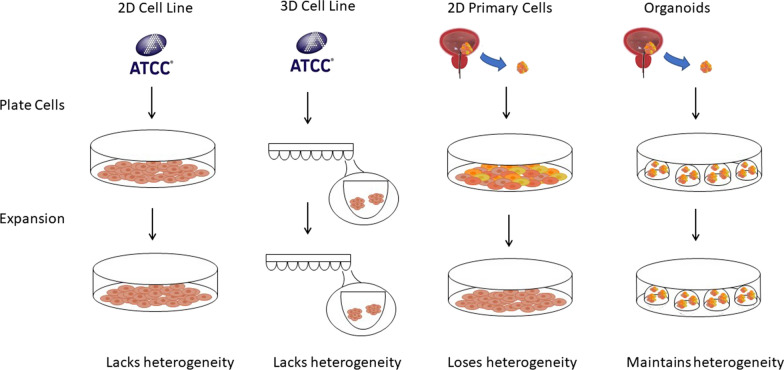
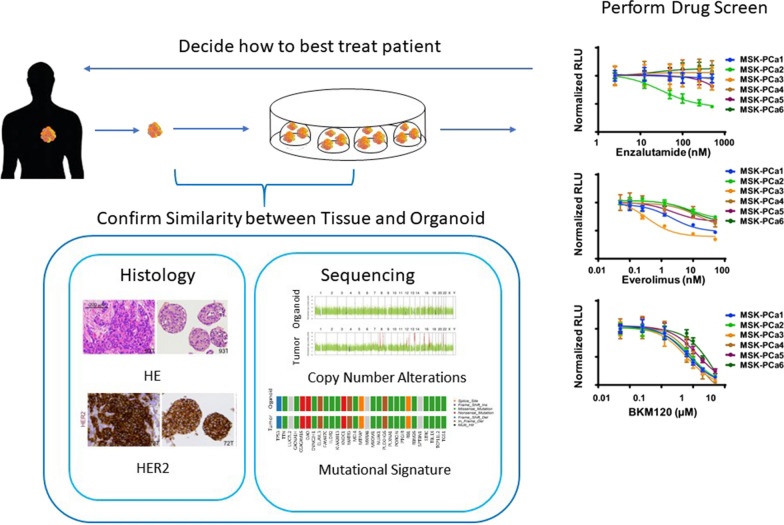
Based on recent advances in organoid research as well as the need to find more accurate models for drug screening in cancer research, patient-derived organoids have emerged as an effective in vitro model system to study cancer. Showing numerous advantages over 2D cell lines, 3D cell lines, and primary cell culture, organoids have been applied in drug screening to demonstrate the correlation between genetic mutations and sensitivity to targeted therapy. Organoids have also been used in co-clinical trials to compare drug responses in organoids to clinical responses in the corresponding patients. Numerous studies have reported the successful use of organoids to predict therapy response in cancer patients. Recently, organoids have been adopted to predict treatment response to radiotherapy and immunotherapy. The development of high throughput drug screening and organoids-on-a-chip technology can advance the use of patient-derived organoids in clinical practice and facilitate therapeutic decision-making.
基于类器官研究的最新进展以及在癌症研究中寻找更准确药物筛选模型的需求,患者来源的类器官已成为一种研究癌症的有效体外模型系统。与二维细胞系、三维细胞系和原代细胞培养相比,类器官具有众多优势,已被应用于药物筛选,以证明基因突变与靶向治疗敏感性之间的相关性。类器官还被用于联合临床试验,以比较类器官中的药物反应与相应患者的临床反应。大量研究报告了成功使用类器官预测癌症患者的治疗反应。最近,类器官已被用于预测放疗和免疫治疗的治疗反应。高通量药物筛选和芯片上类器官技术的发展可以推动患者来源的类器官在临床实践中的应用,并促进治疗决策。