Yoldemir Sengul Aydin, Arman Yucel, Akarsu Murat, Altun Ozgur, Ozcan Mustafa, Tukek Tufan
Internal Medicine Department, Okmeydanı Training and Research Hospital, Istanbul, Turkey.
Faculty of medicine, Internal Medicine Department, Istanbul University, Istanbul, Turkey.
Diabetol Metab Syndr. 2021 Jan 21;13(1):9. doi: 10.1186/s13098-021-00628-5.
Endotrophin is one of the extracellular matrix proteins secreted by adipose tissue. In this study, we aimed to investigate the effects of changes in blood glucose levels on serum endotrophin levels secreted by adipose tissue and thus on diabetes.
In this prospective pilot study included 78 patients with type 2 diabete (T2D) with hemoglobin A1c level > 9 %. Lifestyle changes were recommended and appropriate medical treatment was initiated to all patients in order to reach the target HbA1c level. Data of anthropometric measurements, urinary albumin creatinine ratio (UACR), serum lipid parameters and endotrophin were collected in patients; all examinations were repeated after 3 months. Analysis was performed using Paired-Samles T test and Spearman tests.
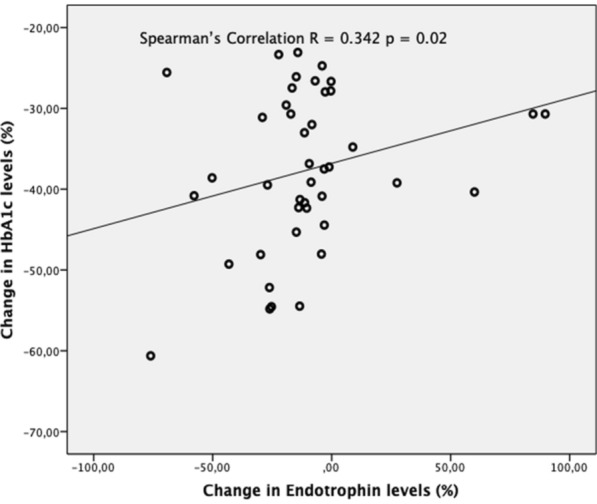
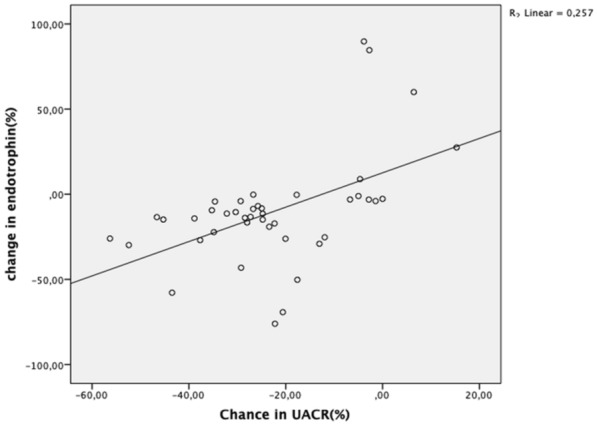
Of patients, 23 were female (54.8 %) and 19 were male (45.2 %). Mean age was 55.2 years, with mean diabetes age of 8.14 ± 5.35 years. After 3 months follow-up, HbA1c, fasting glucose, C-reactive protein(CRP), UACR and endotrophin levels were observed to clearly reduce. The variation in serum endotrophin levels examined at the start of the study and in the 3rd month was identified to have a positive correlation with the variation in HbA1c and UACR levels (r = 0.342, p = 0.02; r = 0.484, p = 0.001). Multiple linear regression analysis showed percentage variation values (δ)-endotrophin levels were only independently correlated with (δ)-UACR (model r = 0.257, p value = 0.00).
Endotrophin levels decreased significantly with the decrease in HbA1c. Unexpectedly, this reduction in endotrophin levels is closely related to the decrease in UACR, regardless of blood glucose regulation. We think that studies targeting endotrophin will contribute to the diagnosis, treatment and follow-up of diabetic nephropathy in the future.
内营养蛋白是脂肪组织分泌的细胞外基质蛋白之一。在本研究中,我们旨在探讨血糖水平变化对脂肪组织分泌的血清内营养蛋白水平的影响,进而对糖尿病的影响。
在这项前瞻性试点研究中,纳入了78例糖化血红蛋白水平>9%的2型糖尿病(T2D)患者。建议所有患者改变生活方式并开始适当的药物治疗,以达到糖化血红蛋白目标水平。收集患者的人体测量数据、尿白蛋白肌酐比值(UACR)、血脂参数和内营养蛋白数据;3个月后重复所有检查。使用配对样本t检验和Spearman检验进行分析。
患者中,23例为女性(54.8%),19例为男性(45.2%)。平均年龄为55.2岁,平均糖尿病病程为8.14±5.35年。随访3个月后,糖化血红蛋白、空腹血糖、C反应蛋白(CRP)、UACR和内营养蛋白水平均明显降低。研究开始时和第3个月检测的血清内营养蛋白水平变化与糖化血红蛋白和UACR水平变化呈正相关(r=0.342,p=0.02;r=0.484,p=0.001)。多元线性回归分析显示,内营养蛋白水平的百分比变化值(δ)仅与(δ)-UACR独立相关(模型r=0.257,p值=0.00)。
随着糖化血红蛋白的降低,内营养蛋白水平显著降低。出乎意料的是,无论血糖调节情况如何,内营养蛋白水平的这种降低与UACR的降低密切相关。我们认为,针对内营养蛋白的研究将有助于未来糖尿病肾病的诊断、治疗和随访。