Bellott Daniel W, Page David C
Whitehead Institute, Cambridge, Massachusetts 02142, USA.
Howard Hughes Medical Institute, Whitehead Institute, Cambridge, Massachusetts 02142, USA.
Genome Res. 2021 Feb;31(2):198-210. doi: 10.1101/gr.268516.120. Epub 2021 Jan 21.
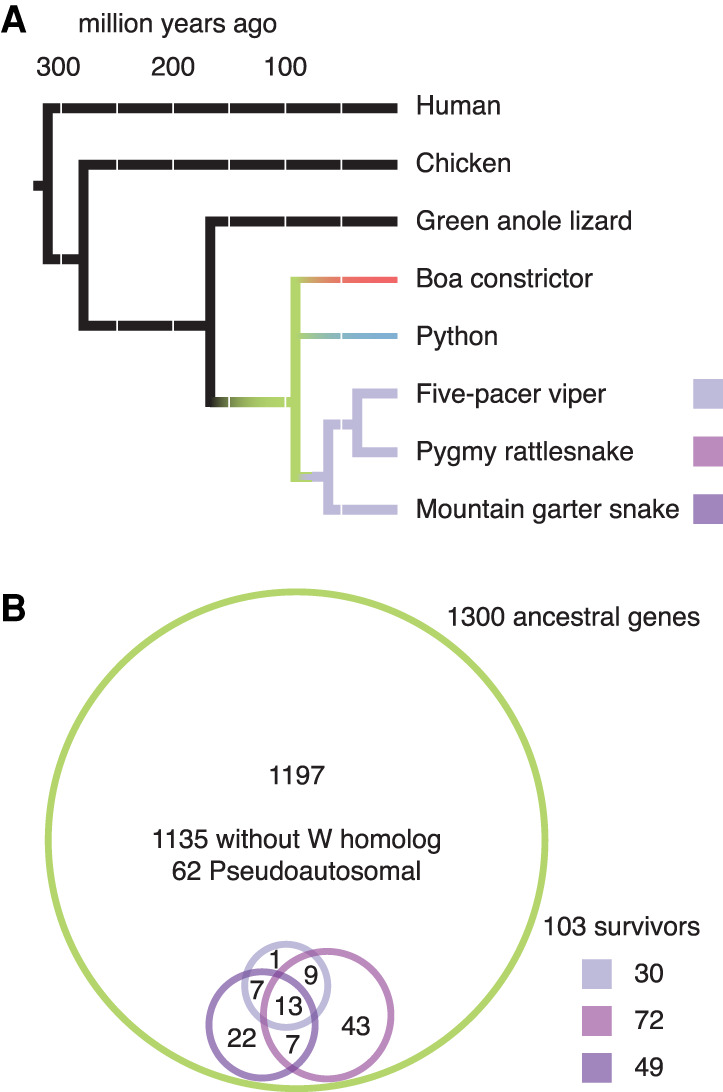
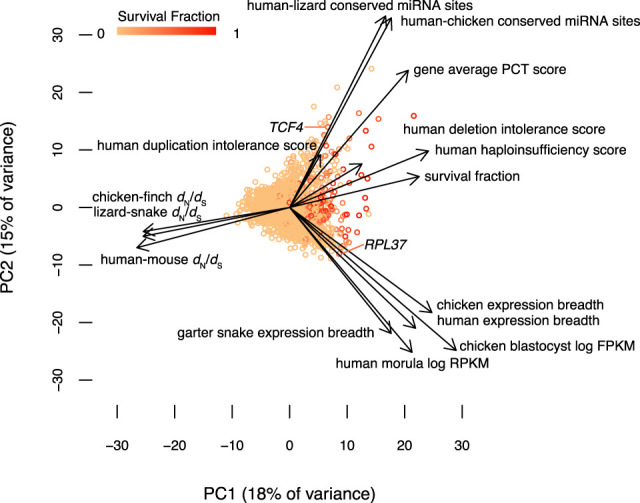
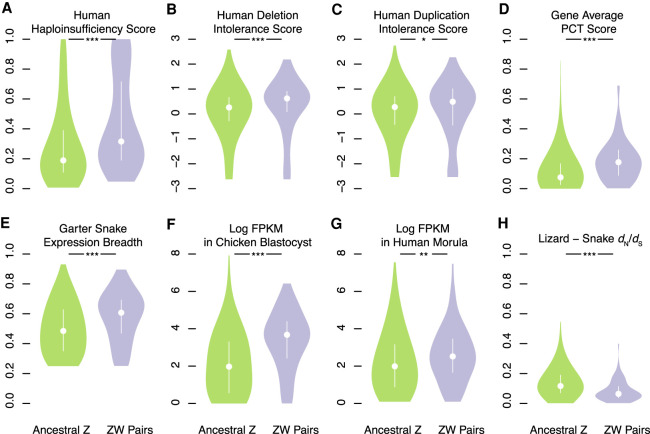
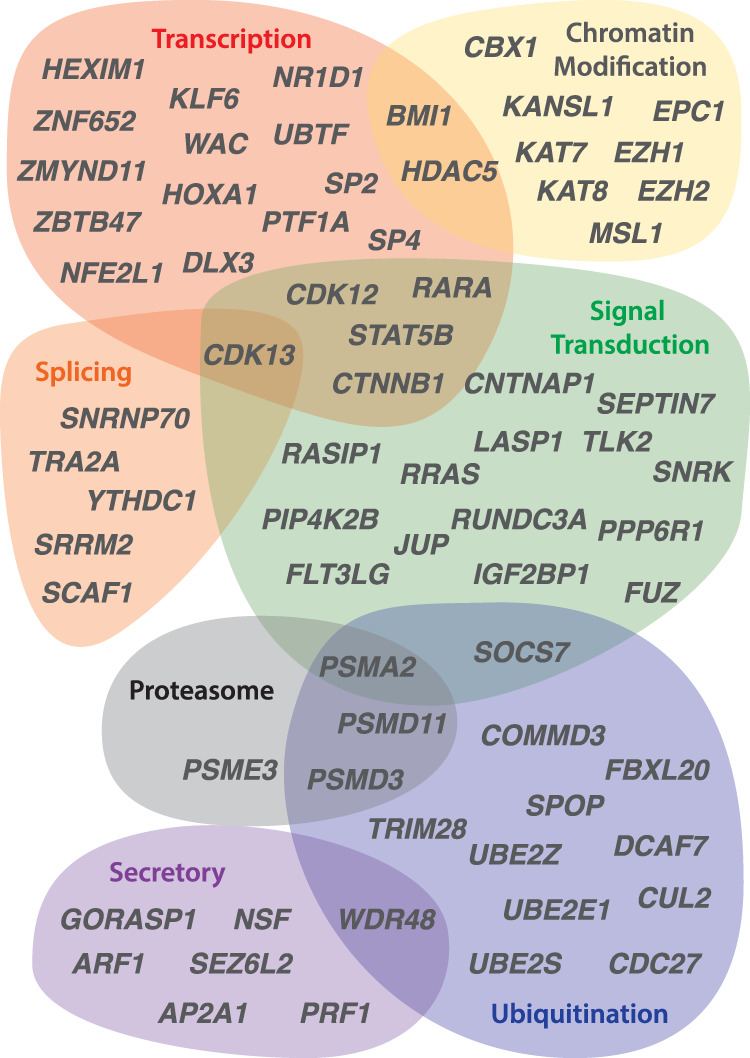
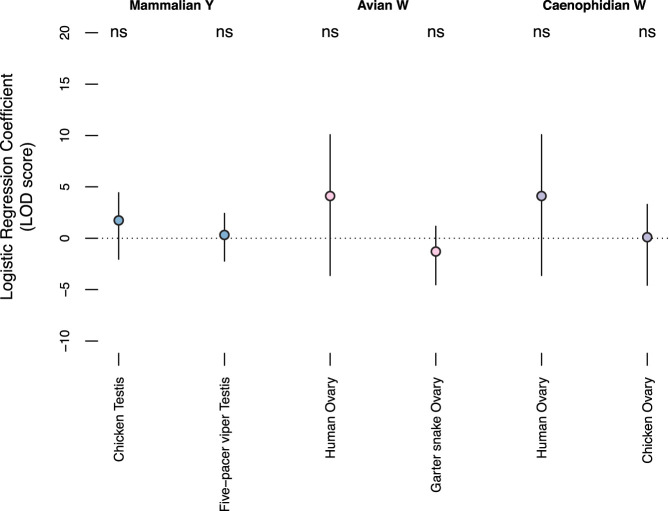
Different ancestral autosomes independently evolved into sex chromosomes in snakes, birds, and mammals. In snakes and birds, females are ZW and males are ZZ; in mammals, females are XX and males are XY. Although X and Z Chromosomes retain nearly all ancestral genes, sex-specific W and Y Chromosomes suffered extensive genetic decay. In both birds and mammals, the genes that survived on sex-specific chromosomes are enriched for broadly expressed, dosage-sensitive regulators of gene expression, subject to strong purifying selection. To gain deeper insight into the processes that govern survival on sex-specific chromosomes, we carried out a meta-analysis of survival across 41 species-three snakes, 24 birds, and 14 mammals-doubling the number of ancestral genes under investigation and increasing our power to detect enrichments among survivors relative to nonsurvivors. Of 2564 ancestral genes, representing an eighth of the ancestral amniote genome, only 324 survive on present-day sex-specific chromosomes. Survivors are enriched for dosage-sensitive developmental processes, particularly development of neural crest-derived structures, such as the face. However, there was no enrichment for expression in sex-specific tissues, involvement in sex determination or gonadogenesis pathways, or conserved sex-biased expression. Broad expression and dosage sensitivity contributed independently to gene survival, suggesting that pleiotropy imposes additional constraints on the evolution of dosage compensation. We propose that maintaining the viability of the heterogametic sex drove gene survival on amniote sex-specific chromosomes, and that subtle modulation of the expression of survivor genes and their autosomal orthologs has disproportionately large effects on development and disease.
在蛇类、鸟类和哺乳动物中,不同的祖传常染色体独立进化为性染色体。在蛇类和鸟类中,雌性为ZW型,雄性为ZZ型;在哺乳动物中,雌性为XX型,雄性为XY型。虽然X染色体和Z染色体保留了几乎所有的祖传基因,但特异性别的W染色体和Y染色体却经历了广泛的基因衰退。在鸟类和哺乳动物中,在特异性别染色体上存活下来的基因富集了广泛表达、对基因表达剂量敏感的调控因子,受到强烈的纯化选择。为了更深入地了解决定基因在特异性别染色体上存活的过程,我们对41个物种(3种蛇、24种鸟类和14种哺乳动物)的基因存活情况进行了荟萃分析,使所研究的祖传基因数量增加了一倍,并增强了我们检测存活基因相对于非存活基因富集情况的能力。在代表羊膜动物祖先基因组八分之一的2564个祖传基因中,如今只有324个在特异性别的染色体上存活。存活基因富集了对剂量敏感的发育过程,特别是神经嵴衍生结构(如面部)的发育。然而,在特异性别组织中的表达、参与性别决定或性腺发生途径或保守的性别偏向表达方面并没有富集。广泛表达和剂量敏感性对基因存活有独立贡献,这表明基因多效性对剂量补偿的进化施加了额外的限制。我们提出,维持异配性别个体的生存能力推动了羊膜动物特异性别染色体上基因的存活,并且存活基因及其常染色体直系同源基因表达的细微调节对发育和疾病有着不成比例的巨大影响。