Department of Respiratory and Critical Care Medicine, Affiliated Jinling Hospital, Medical School of Nanjing University, 210002, Nanjing, Jiangsu, China.
Department of Respiratory and Critical Care Medicine, Jinling Hospital, Nanjing University School of Medicine, 210002, Nanjing, China.
Signal Transduct Target Ther. 2021 Jan 22;6(1):28. doi: 10.1038/s41392-020-00418-x.
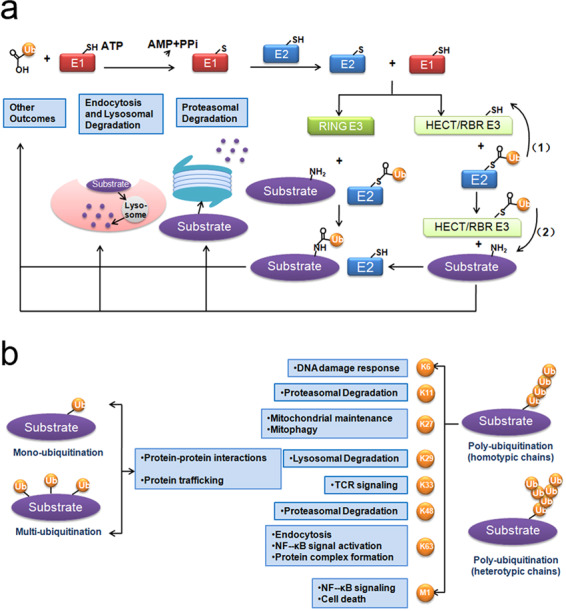
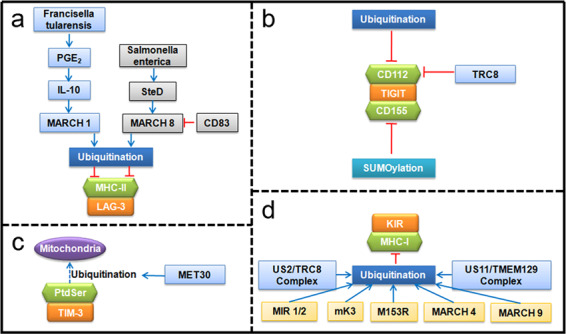
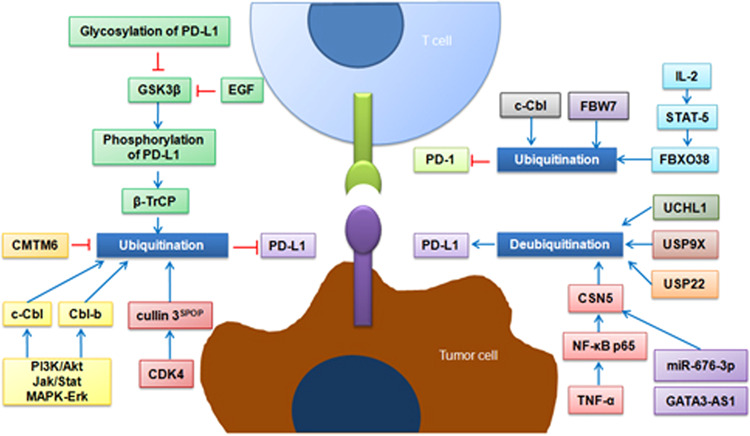
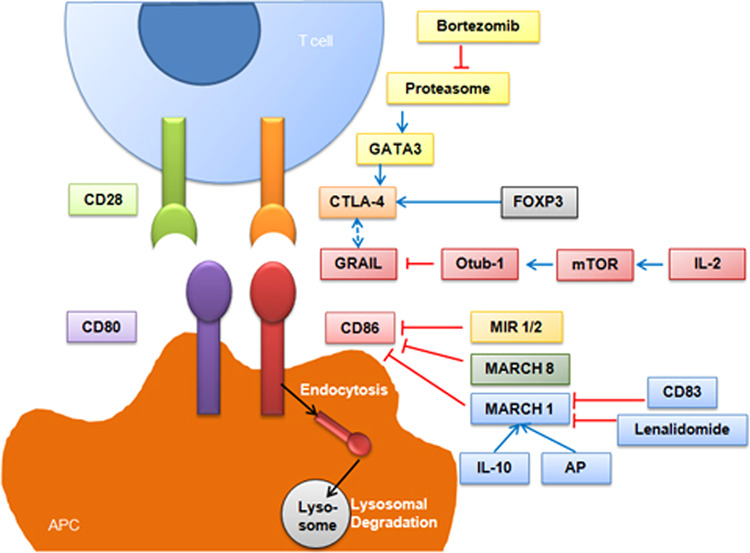
The immune system initiates robust immune responses to defend against invading pathogens or tumor cells and protect the body from damage, thus acting as a fortress of the body. However, excessive responses cause detrimental effects, such as inflammation and autoimmune diseases. To balance the immune responses and maintain immune homeostasis, there are immune checkpoints to terminate overwhelmed immune responses. Pathogens and tumor cells can also exploit immune checkpoint pathways to suppress immune responses, thus escaping immune surveillance. As a consequence, therapeutic antibodies that target immune checkpoints have made great breakthroughs, in particular for cancer treatment. While the overall efficacy of immune checkpoint blockade (ICB) is unsatisfactory since only a small group of patients benefited from ICB treatment. Hence, there is a strong need to search for other targets that improve the efficacy of ICB. Ubiquitination is a highly conserved process which participates in numerous biological activities, including innate and adaptive immunity. A growing body of evidence emphasizes the importance of ubiquitination and its reverse process, deubiquitination, on the regulation of immune responses, providing the rational of simultaneous targeting of immune checkpoints and ubiquitination/deubiquitination pathways to enhance the therapeutic efficacy. Our review will summarize the latest findings of ubiquitination/deubiquitination pathways for anti-tumor immunity, and discuss therapeutic significance of targeting ubiquitination/deubiquitination pathways in the future of immunotherapy.
免疫系统会发起强烈的免疫反应,抵御入侵的病原体或肿瘤细胞,保护身体免受损伤,从而起到身体的堡垒作用。然而,过度的反应会导致有害的影响,如炎症和自身免疫性疾病。为了平衡免疫反应并维持免疫稳态,存在免疫检查点来终止过度的免疫反应。病原体和肿瘤细胞也可以利用免疫检查点途径来抑制免疫反应,从而逃避免疫监视。因此,靶向免疫检查点的治疗性抗体取得了重大突破,特别是在癌症治疗方面。然而,由于只有一小部分患者从 ICB 治疗中受益,免疫检查点阻断 (ICB) 的总体疗效并不令人满意。因此,强烈需要寻找其他可以提高 ICB 疗效的靶点。泛素化是一个高度保守的过程,参与许多生物活动,包括先天和适应性免疫。越来越多的证据强调了泛素化及其逆过程去泛素化在调节免疫反应中的重要性,为同时靶向免疫检查点和泛素化/去泛素化途径以提高治疗效果提供了合理依据。我们的综述将总结泛素化/去泛素化途径在抗肿瘤免疫中的最新发现,并讨论在未来免疫治疗中靶向泛素化/去泛素化途径的治疗意义。