School of Public Policy, University of Calgary, Calgary, Alberta, Canada.
W21C Research and Innovation Centre, University of Calgary, Calgary, Alberta, Canada.
PLoS One. 2021 Jan 22;16(1):e0245212. doi: 10.1371/journal.pone.0245212. eCollection 2021.
In response to the Coronavirus disease-19 (COVID-19) pandemic, in-patient units in hospitals around the world have altered their patient care routines and Infection Prevention and Control (IPC) practices. Our interdisciplinary team of applied Human Factors (HF), ethnography, and IPC experts assisted one Unit, normally serving general surgical and orthopedic patients, as it rapidly converted to deliver COVID-19-specific care. This paper describes the conversion experience of the Unit, and outlines broader lessons for other acute care teams faced with similar issues.
We deployed walkthroughs, simulations, and ethnography to identify important safety gaps in care delivery processes on the Unit. These interventions were undertaken using interdisciplinary theories of implementation that combined systems-level HF perspectives, ethnographic approaches, and individual-level IPC perspectives. Timely recommendations were developed and delivered to Unit staff for feedback and implementation.
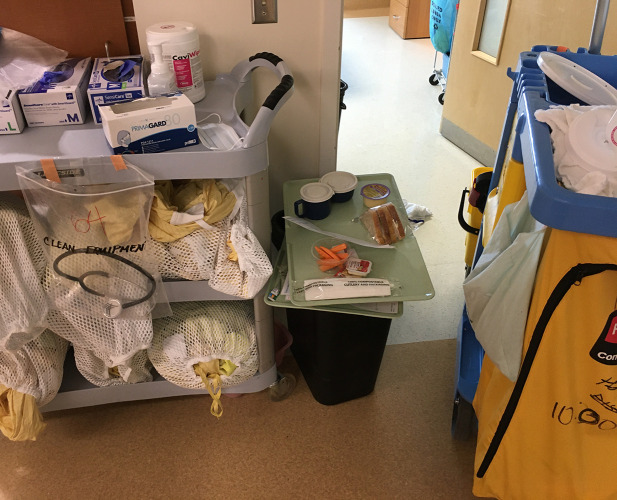
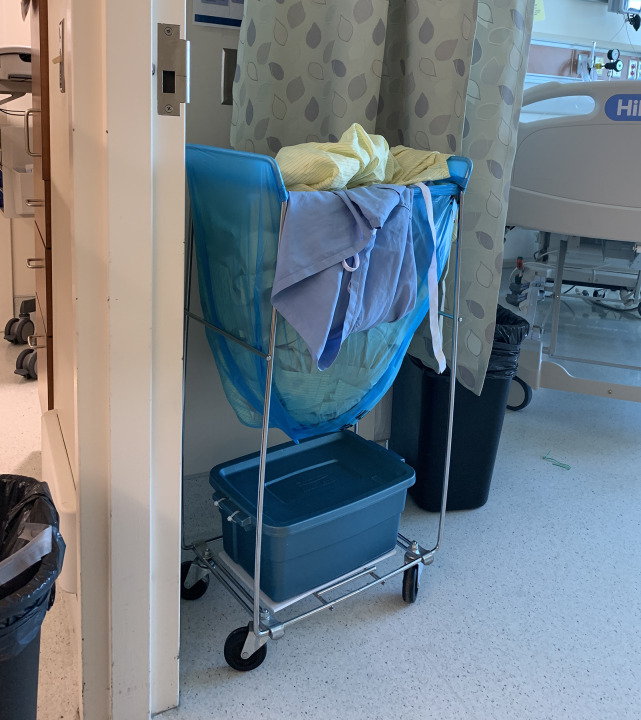
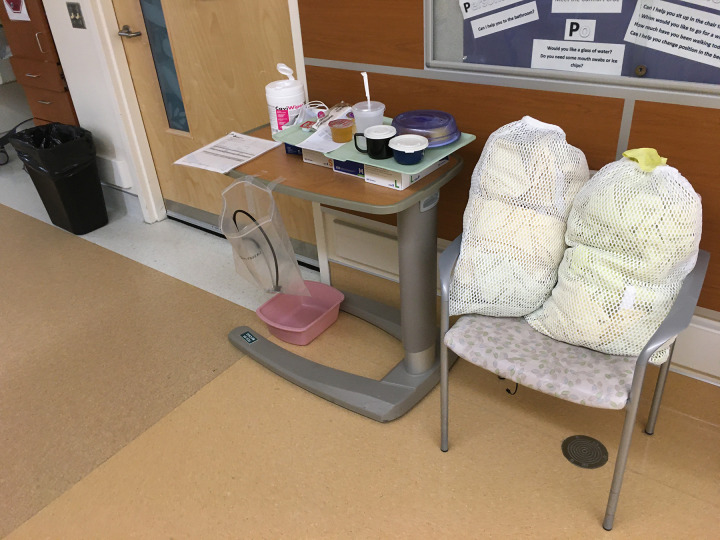
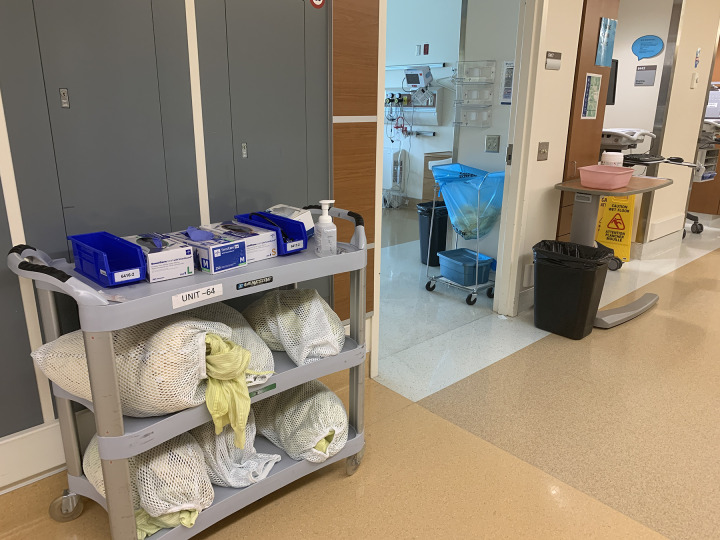
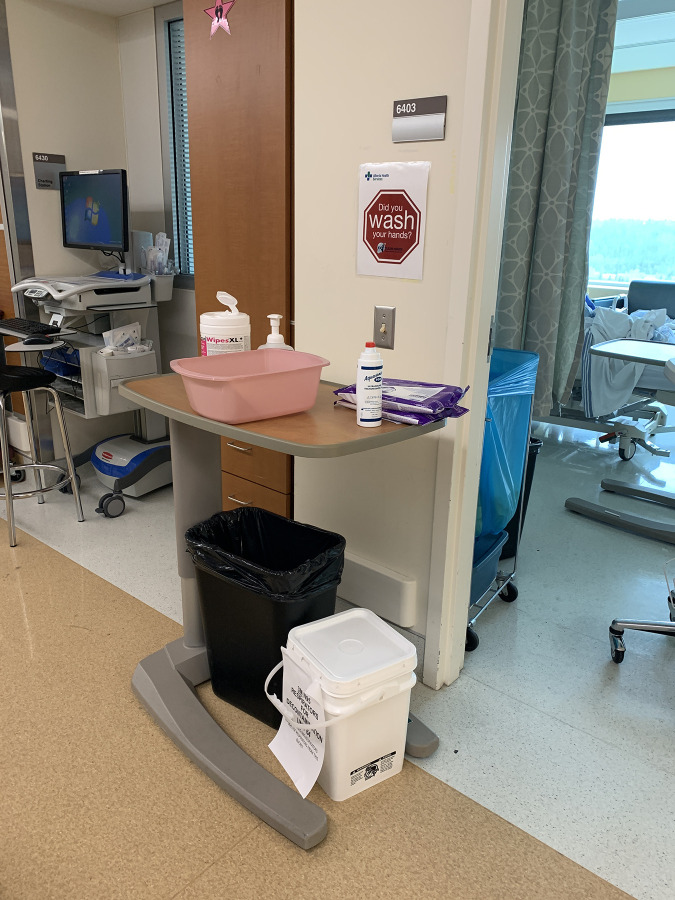
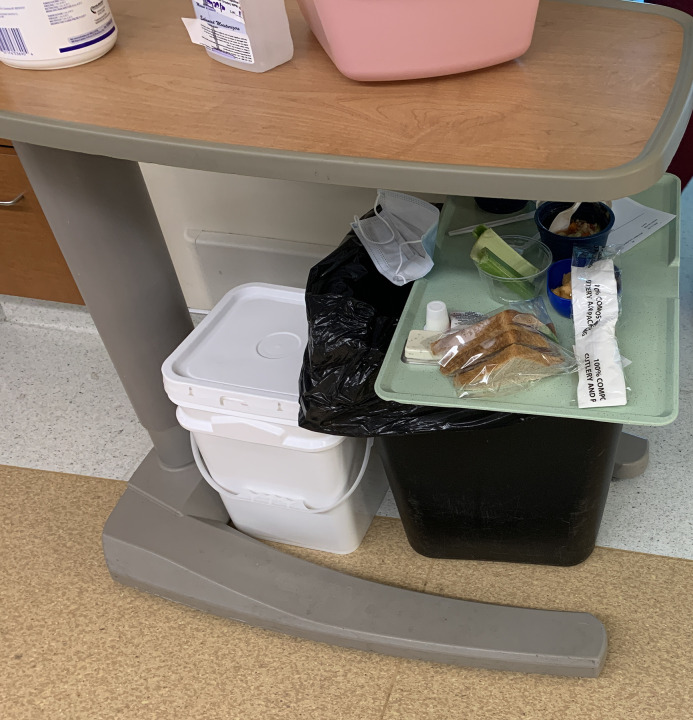
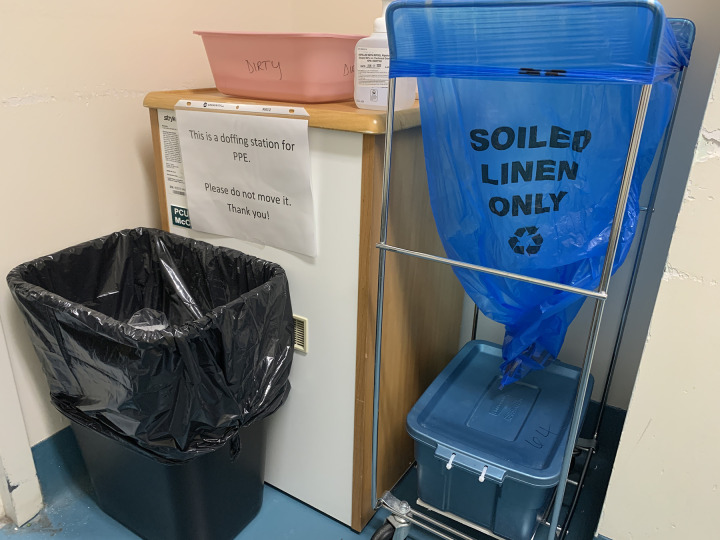
We describe three interventions on the Unit: 1) the de-cluttering and re-organization of personal protective equipment (PPE); 2) the reconfiguring of designated 'dirty' tray tables and supplies; and 3) the redesign of handling pathways for 'dirty' linens and laundry. Each of these interventions was implemented to varying degrees, but all contributed to discussions of safety and IPC implementation that extended beyond the Unit and into the operations of the broader hospital.
Leveraging our team's interdisciplinary expertise and blended approaches to implementation, the interventions assisted in the Unit's rapid conversion towards providing COVID-19-specific care. The deployment and implementation of the interventions highlight the potential of collaboration between HF, ethnography, and IPC experts to support frontline healthcare delivery under pandemic conditions in an effort to minimize nosocomial transmission potential in the acute healthcare setting.
为应对 2019 冠状病毒病(COVID-19)大流行,世界各地医院的住院病房改变了患者护理常规和感染预防与控制(IPC)实践。我们的跨学科应用人类因素(HF)、民族志学和 IPC 专家团队协助了一个单元,该单元通常为普通外科和骨科患者提供服务,因为它正在迅速转变为提供 COVID-19 特定护理。本文描述了该单元的转换经验,并为其他面临类似问题的急性护理团队概述了更广泛的经验教训。
我们采用实地考察、模拟和民族志学方法,确定了该单元护理提供过程中的重要安全差距。这些干预措施是使用跨学科的实施理论进行的,该理论结合了系统层面的 HF 观点、民族志方法和个人层面的 IPC 观点。及时提出了建议,并向单元工作人员征求反馈意见并付诸实施。
我们描述了该单元的三项干预措施:1)整理和重新组织个人防护设备(PPE);2)重新配置指定的“脏”托盘和用品;3)重新设计“脏”亚麻布和衣物的处理途径。这些干预措施都在不同程度上得到了实施,但都促进了对安全和 IPC 实施的讨论,这些讨论不仅限于该单元,还扩展到了更广泛的医院运营。
利用我们团队的跨学科专业知识和混合实施方法,这些干预措施协助该单元快速转向提供 COVID-19 特定护理。这些干预措施的部署和实施突显了 HF、民族志学和 IPC 专家之间合作的潜力,有助于在大流行条件下支持一线医疗服务,努力最大限度地减少急性医疗保健环境中的医院内传播潜力。